Showing posts with label devotional meditations. Show all posts

Thursday, May 17, 2012

THE ASCENSION OF OUR LORD

PRESENCE OF GOD - O Jesus, who ascended into heaven, grant that I, too, may live there in spirit.

MEDITATION1. The central idea in the liturgy today is the raising of our hearts toward heaven, so that we may begin to dwell in spirit where Jesus has gone before us. "Christ's Ascension" says St Leo, "is our own ascension; our body has the hope of one day being where its glorious Head has preceded it" (RB). In fact, Our Lord had already said in His discourse after the Last Supper, "I go to prepare a place for you, I will come again and will take you to Myself; that where I am, you also may be" (Jn 14:2,3). The Ascension is, then, a feast of joyful hope, a sweet foretaste of heaven. By going before us, Jesus our Head has given us the right to follow Him there some day, and we can even say with St Leo, "In the person of Christ, we have penetrated the heights of heaven" (RB). As in Christ Crucified we die to sin, as in the risen Christ we rise to the life of grace, so too, we are raised up to heaven in the Ascension of Christ. This vital participation in Christ's mysteries is the essential consequences of our incorporation in Him. He is our Head; we, as His members, are totally dependent upon Him and intimately bound to His destiny. "God, who is rich in mercy," says St Paul, "for His exceeding charity wherewith He loved us...hath quickened us together in Christ..., and hath raised us up...and hath made us sit together in the heavenly places through Christ Jesus" (Eph 2:4-6). Our right to heaven has been given us, our place is ready; it is for us to live in such a way that we may occupy it some day. Meanwhile, we must actualize the beautiful prayer which the liturgy puts on our lips: "Grant, O almighty God, that we, too, may dwell in spirit in the heavenly mansions" (Collect)."Where thy treasure is, there is thy heart also" (Mt 6:21), Jesus said one day. If Jesus is really our treasure, our heart cannot be anywhere but near Him in heaven. This is the great hope of the Christian soul, so beautifully expressed in the hymn of Vespers: "O Jesus, be the hope of our hearts, our joy in sorrow, the sweet fruit of our life" (RB).

2. Besides the hope and the joyful expectancy of heaven so characteristic of the Ascension feast there is a note of melancholy. Before the final departure of Jesus, the Apostles must have been very much disturbed: each felt the distress of one who sees his dearest friend and companion going away forever, and finds himself alone to face all the difficulties of life. The Lord realized their state of mind and consloed them once more, promising the coming of the Holy Spirit, the Comforter: "He commanded them," we read in the Epistle (Acts 1:1-11), "that they should not depart from Jerusalem, but should wait for the promise of the Father....you shall be baptized with the Holy Ghost, not many days hence." but even this time the Apostles did not understand! How much they neede to be enlightened and transformed by the Holy Spirit, in order to accomplish the great mission which was to be entrusted to them! Jesus continued: which was to be entrusted to them! Jesus continued : "You shall receive the power of the Holy Ghost coming upon you and you shall be witnesses unto Me...even to the uttermost part of the earth". For the moment, however, they were there, around the Master, weak, timid, frightened, like little children watching their mother leave for a distant, unknown land. In fact, "while they looked on, He was raised up, and a cloud received Him out of their sight." Two angels came to distract them from their great amazement and to make them realize what had happened. Then, placing their trust in the word of Jesus, which would henceforth be their only support, they returned to Jerusalem where, in the Cenacle, they awaited in prayer the fulfillment of the promise. It was the first novena in preparation for Pentecost: "All these were persevering with one mind in prayer with...Mary, the Mother of Jesus" (ibid 1:14).
Silence, recollection, prayer, peace with our brethren, and union with Mary: these are the characteristics of the novena we too should make in preaparation for the coming of the Holy Spirit.

COLLOQUY
..."Ah! my works are poor, my God, even if I could perform many! Then why should I remain in this life, so full of misery? Only to do Your will. Could I do anything better than that? Hope, therefore, my soul, hope. Watch carefully, for you know not the day nor the hour. Everything passes quickly, even though your desire makes you struggle, the greater the proofs of love you will be giving to your God, and afterwards the more you will enjoy your Beloved in happiness and felicity without end" (T.J. Exc., 15). 


Text after 'Divine Intimacy' - Ven Gabriel of St Mary Magdalen, OCD
Read whole post......

Friday, April 17, 2009

Friday in the Octave of Easter


Read whole post......

Tuesday, February 17, 2009

Thoughts on the Parable of the Sower.


Jesus, the divine Sower, comes to scatter the good seed in His vineyard the Church. He wishes to prepare our souls for a new blossoming of grace and virtue. "The seed is the word of God." Jesus Christ, the Word Incarnate, eternal Utterance of the Father, came to sow this word in the hearts of men; it is, as it were, a reflection of Himself. The divine word is not a sound which strikes the air and disappears rapidly like the word of men; it is a supernatural light which reveals the true value of things; it is grace, the source of power and strength to help us live according to the light of God. Thus it is a seed of supernatural life, of sanctity, of eternal life. This seed is never sterile in itself; it always has a vital, powerful strength, capable of producing not only some fruits of Christian life, but abundant fruits of sanctity. This seed is not entrusted to an inexperienced husbandman who, because of his ignorance, might ruin the finest sowing. It is Jesus Hi,self, the Son of God, who is the Sower.

Then why does the seed not always bring forth the desired fruit? Because very often the ground which receives it does not have the requisite qualities. God never stops sowing the seed in the hearts of men; He invites them, He calls them continually by His light and His appeals; He never ceases giving His grace by means of the Sacraments; but all this is vain and fruitless unless man offers to God a good ground, that is his heart, well prepared and disposed. God wills our salvation and sanctification, but He never forces us; he respects our liberty.

Fragments of meditation from "Divine Intimacy" by Fr Gabriel of St Mary Magdalen OCD
Painting by Bruegel "Landscape for Parable of the Sower"


Read whole post......

Saturday, January 31, 2009

Fourth Sunday after Epiphany


PRESENCE OF GOD
O, Lord, I adore You in the little boat of my soul. Since You are with me, I shall not fear.

MEDITATION
1. In today's liturgy, especially the Gospel (Mt 8:23-27), Jesus appears in our midst as the ruler of the elements, the conqueror of all tempests. "And behold a great tempest arose in the sea, so that the boat was covered with waves." Let us think of all the persecutions which have beaten against Peter's barque, the Church, down through the ages; or we can think of the trials which God still permits individual souls to undergo. Whatever happens, the spirit of faith tells us that every struggle and tempest is willed, or at least permitted by God: "Everything is grace"; everything is the result of His infinite love. God is not a tyrant who crushes us, but a Father, who tests us because He loves us. If He permits sorrow, interior or exterior trials, personal or public vicissitudes, it is only to draw out of them some great good.


Virtue and goodness are strengthened in time of difficulty; the efforts made in the bearing trials tend to make us surpass what we would have done had we enjoyed calm. Jesus was sleeping peacefully in the stern of the boat when the terrified Apostles awakened Him: He answered them reproachfully, "Lord, save us, we perish!""Why are you fearful, O ye of little faith?". If we are disturbed and upset by trials, it means that we lack faith. Even when God conceals Himself, when everything seems to fail us and we feel terribly alone, we can be absolutely certain that God will never abandon us if we do not first abandon Him. Instead of becoming bitter or falling into despair, it is the moment to intensify our faith, to make strong acts of faith. St. Therese of the Child Jesus used to say, "I count on Him. Suffering may go to its limit, but I am sure He will never abandon me".

2. The Apostles were saved only when they called upon Jesus. As long as they laboured and struggled alone, they had no success. Many times we fail to surmount interior difficulties because we work alone. God wants us to experience our own insufficiency; therefore, He let us struggle until we have recourse to Him with full confidence. Certainly God wants our efforts, but He does not want us to place all our hope in them. This accounts for the small progress so many make on the road to sanctity - too much reliance on their own resources, too little on God's help. We must be firmly convinced that "our sufficiency is from God" (2Cor 3:5). We must have less confidence in ourselves and more in God. Jesus can do all things, and confidence works miracles. "We receive from God as much as we hope for" (J.C. Dark Night of the Soul II: 21,8). There are other kinds of tempests, too, such as those provoked by the difficulties we sometimes experience in our relations with our neighbor. St. Paul in the Epistle (Rom 13:8-10) gives us the remedy: "Owe no man anything, but to love one another." Love conquers all. Our love for God overcomes our interior storms; our love for our neighbour, in whom we love Christ, overcomes the tempest which arise from dissensions, misunderstanding, and clashes of temperaments. If from certain people we receive only pain and trouble, let us follow the precious advice of St.John of the Cross:"Where there is no love, put love, and you will find love" (Letters, 22).

COLLOQUY
"O my Lord, how true a friend You are, and how powerful! For you can do all You will and never do You cease to love! Let all things praise You, Lord of the world! Oh, if someone would but proclaim throughout the world how faithful You are to your friends! All things fail, but You, Lord of them all, never fail. How little is the suffering that You allow to those who love You! O my Lord, how delicately and skillfully and tenderly do You deal with them! Oh, happy are they who never loved anyone save You! You seem, Lord, to give severe trials to those who love You, but only that in the excess of their trials they may learn the greater excess of Your love. O my God, had I but understanding and learning to find new words with which to exhalt Your works as my soul knows them! These, my Lord, I lack, but if You forsake me not, I shall never fail You. Let all learned men arise up against me, let all created things persecute me, let the devils torment me; but You, Lord, do not fail me; for I have already experienced the benefits which come to him who trusts only in You!" (T.J. Life, 25).
Take away from me, O Lord, all trust in my own strength. Make me see that I can do nothing without You. Show it to me in a practical way, even if it causes me sorrow and humiliation. O Lord, I no longer desire to rely on my own strength; in You alone do I place all my trust. With Your help I shall continue to strive to practice virtue and to advance in Your ways, but with my eyes always fixed on You, O divine Sun, who alone can make my feeble efforts bring forth fruits of virtue! When storms arise, I will take refuge in You; I will call upon You with all the strength of my heart and with all my faith, certain that you will give me that peace and that victory which I would seek in vain apart from You.
Read whole post......

Saturday, December 20, 2008

St John Vianney, the Cure of Ars "The Little Catechism - Exhortations and Explanations" - click for link


Advent should be spent best in reflection and recollection both in preparation for joyful celebration of the coming of the Word Incarnate into this world and in expectation for the second Coming of Our Lord. This is also perfect time for devotion to Our Lady and the coming Feast of Immaculate Conception may bring many graces to the faithfuls.
For reflections, prayers, Novenas please follow the link: Seasonal Devotions-Advent

I will try my best to limit posting during the Season of Advent in the spirit of self-denial and I will pray for the visitors and followers of this blog and ask for your prayers.

Picture is 'Judgement' by Hieronimus Bosch.


Read whole post......

Saturday, December 06, 2008

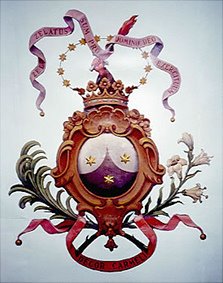
Saturday - Day of Our Lady and coming Feast of Immaculate Conception


REGINA SINE LABE ORIGINALI CONCEPTA

And a great sign appeared in heaven: A woman clothed with the sun, and the moon under her feet, and on her head a crown of twelve stars (Apoc 12:1).


Behold, thou art fair, O my love; behold, thou art fair (Cant. 1:14).
Thou wast perfect in Thy ways from the day of thy creation (Ezec 27:15).
Thou wast in the pleasures of the paradise of God, and every precious stone was thy covering: the sardius, the topaz and the jasper, the chrysolite, and the onyx, and the beryl. the sapphire, and the carbuncle, and the emerald; gold the work of thy beauty....Thou wast a cherub stretched out, and protecting, and I set thee in the holy mountain of God (Ezec 13:14).
Thou art all fair, O My love, and there is not a spot in thee (Cant 4:7).

What a joy it must have been to the angels and the whole heavenly court to see Mary's soul, which had gone forth radiantly fair from the hand of its Creator, return to Him, after a sojourn of sixty or seventy years in this wicked world, not only unspotted by a single stain, but with its beauty and brilliancy increased to an incredible degree! And might not Mary have said, what Judith said to the ancients of Israel: "As the same Lord liveth, His angel hath been my keeper both going hence and abiding there, and returning from thence hither; the Lord hath not suffered me, His handmaid, to be defiled, but hath brought me back to you without pollution of sin, rejoicing by His victory for my escape and for your deliverance"? Yes, dearest Mother, thy joy is threefold. Thy sinlessness is a triumph for God's power and goodness, an honour for thyself, and a glory for the whole human race. Thou art indeed the glory of thy people. And we, what can we say of ourselves? Though we were not, it is true, conceived without sin, did we not receive a spotless robe of grace at our baptism? have we not had one of God's angels ever at our side throughout life? Shall we be able to give back our souls unstained to their Creator, and adorned with many graces? O sinless Mother, obtain for us that, at any rate, they may be washed in the Blood of the Lamb, and purified by tears of contrition. God has said that, though our sins be as scarlet, they shall be made white as snow, if we cease to do evil and learn to do well. So, Queen conceived without sin, pray for us that we, as children of the Church, Christ's spotless Bride, may have a holy emulation to keep our souls unsullied by actual sin, wilful sin. Help us to conquer our evil inclinations, to do penance for the past, that when invited to the marriage feast of the Lamb in the heavenly kingdom, we may be found clothed with the nuptial garment and adorned with the virtues befitting our state.

O Mary conceived without sin, pray for us.


Picture credit to Hallowedground blog

Read whole post......

Monday, November 10, 2008

Spiritual or worldly riches?

How profitable for the soul is spiritual richness that comes from trials and humble practice of virtue and how superior it is to worldly riches always corruptible.


Sirach 31:8-11
Blessed is the rich man that is found without blemish: and that hath not gone after gold, nor put his trust in money nor in treasures.

Who is he, and we will praise him? for he hath done wonderful things in his life. Who hath been tried thereby, and made perfect, he shall have glory everlasting. He that could have transgressed, and hath not transgressed: and could do evil things, and hath not done them: Therefore are his goods established in the Lord, and all the church of the saints shall declare his alms.


Read whole post......

Tuesday, October 07, 2008

St Therese's week


O Jesus, the sight of Your precious blood flowing from Your wounds strikes me deeply, and I feel pang of sorrow in thinking that this blood is falling to the ground without anyone's hastening to gather it up.


I want to remain here in spirit at the foot of the cross to receive this divine dew and to pour it out upon souls. O Jesus, Your cry sounds continually in my heart. "I thirst!" These words ignite in me an unknown and very living fire. I wish to give You to drink, O my Beloved, and I feel myself consumed with a thirst for souls. It is the souls of great sinners that attract me, and I burn with the desire to snatch them from eternal flames. My desire to save souls grows form day to day, adn I seem to hear You say to me what You said to the Samaritan woman" "Give me to drink!" What a wonderful interchange of love! To souls I give Your blood, to You I offer these same souls refreshed by Your divine dew. i hope thus to slake Your thirst, and the more I give You to drink, the more the thirst of my poor little soul increases, but truly this ardent thirst You are giving me is the most delightful drink of Your love. (Story of the Soul")


Read whole post......

Saturday, October 04, 2008

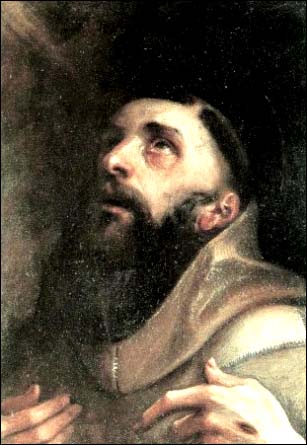
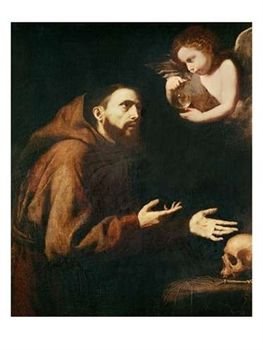
Feast of St Francis of Assisi


ST. FRANCIS OF ASSISI
Founder of the Franciscan Order, born at Assisi in Umbria, in 1181.

In 1182, Pietro Bernadone returned from a trip to France to find out his wife had given birth to a son. Far from being excited or apologetic because he'd been gone, Pietro was furious because she'd had his new son baptized Giovanni after John the Baptist. The last thing Pietro wanted in his son was a man of God -- he wanted a man of business, a cloth merchant like he was, and he especially wanted a son who would reflect his infatuation with France.


So he renamed his son Francesco -- which is the equivalent of calling him Frenchman.Francis enjoyed a very rich easy life growing up because of his father's wealth and the permissiveness of the times. From the beginning everyone -- and I mean everyone -- loved Francis. He was constantly happy, charming, and a born leader. If he was picky, people excused him. If he was ill, people took care of him. If he was so much of a dreamer he did poorly in school, no one minded. In many ways he was too easy to like for his own good. No one tried to control him or teach him.
As he grew up, Francis became the leader of a crowd of young people who spent their nights in wild parties. Thomas of Celano, his biographer who knew him well, said, "In other respects an exquisite youth, he attracted to himself a whole retinue of young people addicted to evil and accustomed to vice." Francis himself said, "I lived in sin" during that time.
Francis fulfilled every hope of Pietro's -- even falling in love with France. He loved the songs of France, the romance of France, and especially the free adventurous troubadours of France who wandered through Europe. And despite his dreaming, Francis was also good at business. But Francis wanted more..more than wealth. But not holiness! Francis wanted to be a noble, a knight. Battle was the best place to win the glory and prestige he longed for. He got his first chance when Assisi declared war on their longtime enemy, the nearby town of Perugia.
Most of the troops from Assisi were butchered in the fight. Only those wealthy enough to expect to be ransomed were taken prisoner. At last Francis was among the nobility like he always wanted to be...but chained in a harsh, dark dungeon. All accounts say that he never lost his happy manner in that horrible place. Finally, after a year in the dungeon, he was ransomed. Strangely, the experience didn't seem to change him. He gave himself to partying with as much joy and abandon as he had before the battle.
The experience didn't change what he wanted from life either: Glory. Finally a call for knights for the Fourth Crusade gave him a chance for his dream. But before he left Francis had to have a suit of armor and a horse -- no problem for the son of a wealthy father. And not just any suit of armor would do but one decorated with gold with a magnificent cloak. Any relief we feel in hearing that Francis gave the cloak to a poor knight will be destroyed by the boasts that Francis left behind that he would return a prince.But Francis never got farther than one day's ride from Assisi. There he had a dream in which God told him he had it all wrong and told him to return home. And return home he did. What must it have been like to return without ever making it to battle -- the boy who wanted nothing more than to be liked was humiliated, laughed at, called a coward by the village and raged at by his father for the money wasted on armor.
Francis' conversion did not happen over night. God had waited for him for twenty-five years and now it was Francis' turn to wait. Francis started to spend more time in prayer. He went off to a cave and wept for his sins. Sometimes God's grace overwhelmed him with joy. But life couldn't just stop for God. There was a business to run, customers to wait on.
One day while riding through the countryside, Francis, the man who loved beauty, who was so picky about food, who hated deformity, came face to face with a leper. Repelled by the appearance and the smell of the leper, Francis nevertheless jumped down from his horse and kissed the hand of the leper. When his kiss of peace was returned, Francis was filled with joy. As he rode off, he turned around for a last wave, and saw that the leper had disappeared. He always looked upon it as a test from God...that he had passed.
His search for conversion led him to the ancient church at San Damiano. While he was praying there, he heard Christ on the crucifix speak to him, "Francis, repair my church." Francis assumed this meant church with a small c -- the crumbling building he was in. Acting again in his impetuous way, he took fabric from his father's shop and sold it to get money to repair the church. His father saw this as an act of theft -- and put together with Francis' cowardice, waste of money, and his growing disinterest in money made Francis seem more like a madman than his son. Pietro dragged Francis before the bishop and in front of the whole town demanded that Francis return the money and renounce all rights as his heir.The bishop was very kind to Francis; he told him to return the money and said God would provide. That was all Francis needed to hear. He not only gave back the money but stripped off all his clothes -- the clothes his father had given him -- until he was wearing only a hair shirt. In front of the crowd that had gathered he said, "Pietro Bernadone is no longer my father. From now on I can say with complete freedom, 'Our Father who art in heaven.'" Wearing nothing but castoff rags, he went off into the freezing woods -- singing. And when robbers beat him later and took his clothes, he climbed out of the ditch and went off singing again. From then on Francis had nothing...and everything.Francis went back to what he considered God's call. He begged for stones and rebuilt the San Damiano church with his own hands, not realizing that it was the Church with a capital C that God wanted repaired. Scandal and avarice were working on the Church from the inside while outside heresies flourished by appealing to those longing for something different or adventurous.Soon Francis started to preach. (He was never a priest, though he was later ordained a deacon under his protest.) Francis was not a reformer; he preached about returning to God and obedience to the Church. Francis must have known about the decay in the Church, but he always showed the Church and its people his utmost respect. When someone told him of a priest living openly with a woman and asked him if that meant the Mass was polluted, Francis went to the priest, knelt before him, and kissed his hands -- because those hands had held God.Slowly companions came to Francis, people who wanted to follow his life of sleeping in the open, begging for garbage to eat...and loving God. With companions, Francis knew he now had to have some kind of direction to this life so he opened the Bible in three places. He read the command to the rich young man to sell all his good and give to the poor, the order to the apostles to take nothing on their journey, and the demand to take up the cross daily. "Here is our rule," Francis said -- as simple, and as seemingly impossible, as that. He was going to do what no one thought possible any more -- live by the Gospel. Francis took these commands so literally that he made one brother run after the thief who stole his hood and offer him his robe!
Francis never wanted to found a religious order -- this former knight thought that sounded too military. He thought of what he was doing as expressing God's brotherhood. His companions came from all walks of life, from fields and towns, nobility and common people, universities, the Church, and the merchant class. Francis practiced true equality by showing honor, respect, and love to every person whether they were beggar or pope.Francis' brotherhood included all of God's creation. Much has been written about Francis' love of nature but his relationship was deeper than that. We call someone a lover of nature if they spend their free time in the woods or admire its beauty. But Francis really felt that nature, all God's creations, were part of his brotherhood. The sparrow was as much his brother as the pope.In one famous story, Francis preached to hundreds of birds about being thankful to God for their wonderful clothes, for their independence, and for God's care. The story tells us the birds stood still as he walked among him, only flying off when he said they could leave.Another famous story involves a wolf that had been eating human beings. Francis intervened when the town wanted to kill the wolf and talked the wolf into never killing again. The wolf became a pet of the townspeople who made sure that he always had plenty to eat.Following the Gospel literally, Francis and his companions went out to preach two by two. At first, listeners were understandably hostile to these men in rags trying to talk about God's love. People even ran from them for fear they'd catch this strange madness! And they were right. Because soon these same people noticed that these barefoot beggars wearing sacks seemed filled with constant joy. They celebrated life. And people had to ask themselves: Could one own nothing and be happy? Soon those who had met them with mud and rocks, greeted them with bells and smiles.Francis did not try to abolish poverty, he tried to make it holy. When his friars met someone poorer than they, they would eagerly rip off the sleeve of their habit to give to the person. They worked for all necessities and only begged if they had to. But Francis would not let them accept any money. He told them to treat coins as if they were pebbles in the road. When the bishop showed horror at the friars' hard life, Francis said, "If we had any possessions we should need weapons and laws to defend them." Possessing something was the death of love for Francis. Also, Francis reasoned, what could you do to a man who owns nothing? You can't starve a fasting man, you can't steal from someone who has no money, you can't ruin someone who hates prestige. They were truly free.Francis was a man of action. His simplicity of life extended to ideas and deeds. If there was a simple way, no matter how impossible it seemed, Francis would take it. So when Francis wanted approval for his brotherhood, he went straight to Rome to see Pope Innocent III. You can imagine what the pope thought when this beggar approached him! As a matter of fact he threw Francis out. But when he had a dream that this tiny man in rags held up the tilting Lateran basilica, he quickly called Francis back and gave him permission to preach.Sometimes this direct approach led to mistakes that he corrected with the same spontaneity that he made them. Once he ordered a brother who hesitated to speak because he stuttered to go preach half-naked. When Francis realized how he had hurt someone he loved he ran to town, stopped the brother, took off his own clothes, and preached instead.Francis acted quickly because he acted from the heart; he didn't have time to put on a role. Once he was so sick and exhausted, his companions borrowed a mule for him to ride. When the man who owned the mule recognized Francis he said, "Try to be as virtuous as everyone thinks you are because many have a lot of confidence in you." Francis dropped off the mule and knelt before the man to thank him for his advice.Another example of his directness came when he decided to go to Syria to convert the Moslems while the Fifth Crusade was being fought. In the middle of a battle, Francis decided to do the simplest thing and go straight to the sultan to make peace. When he and his companion were captured, the real miracle was that they weren't killed. Instead Francis was taken to the sultan who was charmed by Francis and his preaching. He told Francis, "I would convert to your religion which is a beautiful one -- but both of us would be murdered."Francis did find persecution and martyrdom of a kind -- not among the Moslems, but among his own brothers. When he returned to Italy, he came back to a brotherhood that had grown to 5000 in ten years. Pressure came from outside to control this great movement, to make them conform to the standards of others. His dream of radical poverty was too harsh, people said. Francis responded, "Lord, didn't I tell you they wouldn't trust you?"He finally gave up authority in his order -- but he probably wasn't too upset about it. Now he was just another brother, like he'd always wanted.Francis' final years were filled with suffering as well as humiliation. Praying to share in Christ's passion he had a vision received the stigmata, the marks of the nails and the lance wound that Christ suffered, in his own body.Years of poverty and wandering had made Francis ill. When he began to go blind, the pope ordered that his eyes be operated on. This meant cauterizing his face with a hot iron. Francis spoke to "Brother Fire": "Brother Fire, the Most High has made you strong and beautiful and useful. Be courteous to me now in this hour, for I have always loved you, and temper your heat so that I can endure it." And Francis reported that Brother Fire had been so kind that he felt nothing at all.How did Francis respond to blindness and suffering? That was when he wrote his beautiful Canticle of the Sun that expresses his brotherhood with creation in praising God.Francis never recovered from this illness. He died on October 4, 1226 at the age of 45. Francis is considered the founder of all Franciscan orders and the patron saint of ecologists and merchants.


Copyright 1996-2000 by Terry Matz. All Rights Reserved.

text after www.catholicsaints.org

Read whole post......

Saturday, August 09, 2008

Saturday - day of Our Lady

The life of Jesus before His Passion

Mary speaketh: I have spoken to thee of my dolors; but that dolor was not the least which I experienced when I bore my Son in my flight to Egypt, and when I heard the innocents slaughtered, and Herod pursuing my Son. But although I knew what was written of my Son, yet my heart, for the excessive love I bore my Son, was filled with grief and sadness. You may perhaps ask what my Son did all that time of His life before His Passion. I reply that, as the Gospel says, He was subject to His parents, and He acted like other children till He reached His majority. Nor were wonders wanting in His youth: how idols were silenced, and fell in numbers in Egypt at His coming; how the Wise Men foretold that my Son should be a sign of great things to come; how, too, the ministers of angels appeared; how too, no uncleanness appeared upon Him, nor entanglement in His hair, all which it is unnecessary for thee to know, as signs of His divinity and humanity are set forth in the Gospel, which may edify thee and others. But when He came to more advanced years, He was in constant prayer, and obediently went up with us to Jerusalem and elsewhere to the appointed feasts; so wonderful then were His sight and words, and so acceptable, that many in affliction said: "Let us go to Mary's Son, by whom we may be consoled." But increasing in age and wisdom, wherewith He was replete from the first, He laboured with His hands in such things as are becoming, and spoke to us separately words of consolation and divinity, so that we were continually filled with unspeakable joy. But when we were in fear, poverty, and difficulty, He did not make for us gold and silver, but exhorted us to patience, and we were wonderfully preserved from the envious. Necessaries were occasionally furnished to us by the compassion of pious souls, sometimes from our own labour, so that we had what was necessary for our actual support, but not for superfluity, for we only sought to serve God. After this, He conversed familiarly with friends who came to the house, on the law, and its meanings and figures; He also openly disputed with the learned, so that they wondered, saying: "Ho! Joseph's Son teaches the masters; some great spirit speaketh in Him." Once as I was thinking of His Passion, seeing my sadness, He said: "Dost thou not believe, Mother, that I am in the Father, and the Father in Me? Wast thou sullied when I entered thee, or in pain when I came forth? Why art thou contracted by sadness? For it is the will of My Father that I suffer death; nay, My will with the Father. What I have of the Father cannot suffer; but the flesh which I took of thee shall suffer, that the flesh of others may be redeemed, and their spirits saved." He was so obedient that when Joseph by chance said: Do this or that, He immediately did it, because He so concealed the power of His divinity that it sould not be discerned excepth by me, adn sometimes Joseph, who both often saw an admirable light poured around Him, and heard angelic voices singing over Him. We also saw that unclean spirits, which could not be expelled by tried exorcists in our law, departed at the sight of my Son's presence.

The picture is of Our Lady of Mt Carmel.

Read whole post......

Thursday, May 22, 2008

Feast of Corpus Christi

I invite all the visitors to this blog, to read this beautiful devotional meditation written by Fr Gabriel of St Mary Magdalen, OCD, which may help us to understand better Our Lord's love and compassion for us, poor sinners that prompted Him to remain with us for ever in the Most Holy Sacrament of the altar.


PRESENCE OF GOD: "The eternal tide flows hid in living bread. That with its heavenly life to be fed" (St John of the Cross 'Poems').

MEDITATION
1. We have gone, step by step, in the course of the liturgical year, from the consideration of the mysteries of the life of Jesus to the contemplation of the Blessed Trinity, whose feast we celebrated last Sunday. Jesus, our Mediator, our Way, has taken us by the hand and led us to the Trinity; and today it seems as though the three Persons Themselves wish to take us back to Jesus, considered in His Eucharist. "No man cometh to the Father but by Me" (Jn 14:6), Jesus said, and He added, "No man can come to Me except the Father...draw him" (Jn 6:44). This is the journey of the Christian soul: from Jesus to the Father, to the Trinity; from the Trinity, from the Father, to Jesus. Jesus brings us to the Father, the Father draws us to Jesus A Christian cannot do without Christ; He is, in the strictest sense of the word, our Pontiff, the great Bridge-builder who has spanned the abyss between God and us. At the end of the liturgical cycle in which we commemorate the mysteries of the Savior, the Church, who like a good Mother knows that our spiritual life cannot subsist without Jesus, leads us to Him, really and truly present in the Most Holy Sacrament of the altar. The solemnity of the Corpus Christ is not just the simple memorial of an historical event which took place almost two thousand years ago at the Last Supper; rather, it recalls us to the ever-present reality of Jesus always living in our midst. We can say, in truth, that He has not "left us orphans", but has willed to remain permanently with us, in the integrity of His Person in the fullness of His humanity and His divinity. "There is no other nation so great," the Divine Office enthusiastically sings, "as to have its gods so near as our God is present to us" (Roman Breviary). In the Eucharist, Jesus is really Emmanuel, God with us.

2. The Eucharist is not only Jesus actually living among us, but it is jesus become our Food. This is the chief aspect under which today's liturgy present the mystery to us; there is no part of the Mass which does not treat of it directly, or which does not, at least, make some allusion to it. The Introit refers to it when it mentions the wheat and honey with which God once fed the Hebrews in the desert, a miraculous food, and yet a very poor representation of the living, life-giving bread of the Eucharist. The Epistle (1 Cor 11: 23-39) speaks of it, recalling the institution of this Sacrament, when Jesus "took bread, and giving thanks, broke, and said, 'Take ye, and eat; this is My Body'"; the Gradual chants, "The eyes of all hope in You, O Lord, and You give them meat in due season". The very beautiful Sequence, Lauda Sion, celebrates it at length, and the Gospel (Jn 6: 56-59), echoing the Alleluia, cites the most significant passage in the discourse when Jesus Himself announced the Eucharist, "My Flesh is meat indeed, and My Blood is drink indeed":

Listen to Benedictine Monks of Clervaux singing the Lauda Sion hymn in the fifties HERE More info and text of Lauda Sion in English and Latin HERE

The Communion Hymn repeats a sentence of the Epistle, and reminds us that we receive the Body of the Lord worthily. Finally, the Postcommunion tells us that Eucharistic Communion is the pledge of eternal communion, in heaven. But in order to have a better understanding of the immense value of the Eucharist, we must go back to the very words of Jesus, most opportunely recalled in the Gospel of the day, "He that eateth My Flesh and drinketh My Blood, abideth in Me and I in Him." Jesus made Himself our food in order to assimilate us to Himself, to make us live His life, to make us live in Him, as He Himself lives in His Father. The Eucharist is truly the Sacrament of the union and at the same time it is the clearest and most convincing proof that God calls us and pleads with us tp come to intimate union with Himself.

COLLOQUY

"O God, O Creator, O Spirit of life overwhelming Your creatures with ever new graces! You grant to Your chosen ones the gift which is ever renewed: the Body and Blood of Jesus Christ!...O my soul, how can you refrain yourself from plunging deeper and deeper into the love of Christ, who did not forget you in life or in death, but who willed to give Himself wholly to you, and to unite to Himself forever "(St Angela of Foligno).

To learn more of the Solemnity of the Most Holy Body and Blood of Christ, Corpus Christi Prayers & Devotions CLICK HERE


Read whole post......

Friday, May 16, 2008

EMBER FRIDAY

LOVE ONE ANOTHER AS I HAVE LOVED YOU (JOHN 15:12)

St. Paul points out three most important spiritual gifts, which we must all possess, and they includes: faith, hope and charity; but the greatest of them is charity (cf.
1Cor. 13:13). The reason for this is that all the other spiritual gifts will come to an end, but charity lasts forever (cf. 1 Cor. 13:8-12). Indeed, charity is the virtue that rules in heaven; it is there that charity is practiced in its perfect state. That is why there is also purgatory, where souls are detained and purified of any atom of selfishness or lack of charity in them; any act that opposes loving God and showing God's love to one another, even murmuring, scorning or wishing evil to one another must be purified before we can enter heaven where perfection reigns (cf. Psalm 15, Rev 14:4-5)

Jesus said:
“My command to you is to love one another” (John. 15:17); “children, our love must not be just words or mere talk but something active and genuine”(1 John 3:18); “let us love one another, since love is from God and everyone who loves is a child of God and knows God. Whoever fails to love does not know God, because God is love” (1 John 4:8, 1 John 3:14-15). At this level of chairty, we are called, first, to carry out spiritual works of mercy to one another. Support and encourage the spiritual growth of one another, never be envy of your brothers spiritual gifts, and help even by prayers and desires to see that the light of the gospel gets to those who are in darkness and in the shadow of death. Pity the poor miserable sinners who have obstinately refused to benefit from the merit of the incarnation, life and death of Jesus Christ; think of the everlasting sentence that stands waiting for them for rejecting God's love: eternal pains, suffering, anguish, sorrows and regret. If you truly love, pray and make sacrifices for the graces needed for their conversion. Remember your obligation to souls in purgatory. This is very vital because everyone must answer how much love he has shown to souls imprisoned above, who can easily be helped by those on earth- “blessed are the merciful, for they shall obtain mercy” (Matt. 5:7); “judgment without mercy, to him that had not shown mercy” (Jn. 2:13); “I was in prison and you never visited Me” (Matt. 25:43).
The second aspect of love at this level is the corporal works of mercy. First of all, we must be charitable with our tongue and the way we use our mouth (cf.
James 1:26). If you are truly a temple of the Holy Ghost (I Cor.3:16), your tongue most be a channel that convey gracious words to one another and not for cursing nor to injure his soul (cf. Matt. 5:22). Try always to defend the image of your neighbour in his absence, be kind in speeches and absolve injuries and misunderstanding from others and forgive them for God's sake. Be tolerant to those who do not hold your views; love enemies and pray for them, wishing them well. In your thoughts, always fight to push away evil thoughts of hatred, malice, revenge, envy, greed, lust and wishing evil to one another. Finally, show your love by coming to the material needs of your brothers and sisters especially those in difficult situations -“pure, unspoilt religion, in the eyes of God our Father, is this: coming to the help of Orphans and Widows in their hardships, and keeping oneself uncontaminated by the world” (1 John 2:27); if one of the brothers or one of the sisters is in need of clothes and has not enough food to live on and one of you says to them; I wish you well; keep yourself warm and eat plenty; without giving them these bare necessities of life, then what good is that? In the same way faith, if good deeds do not go with it is quite dead” (James 2:15-17, 1 John 3:17)

To learn more about Ember days click
HERE

Read whole post......

Thursday, May 15, 2008


NO GREATER LOVE THAN THIS THAT ONE SHOULD LAY DOWN HIS LIFE FOR HIS FRIENDS JN. 15:13
As already explained, love demands sacrifice. The depth of love one has for another can only be measured by the amount of sacrifice he offers for him. God sent His Son who is co-equal with Him in glory and dignity to come and partake in our human nature, so as to rise the poor miserable mortals to share in His glory (
Roms. 8:17). This is love that surpasses all human comprehension. In addition to this, being in human nature, God the Son reduced Himself to the position of a slave (Ph. 2:6-9), and accepted all sorts of suffering, pains, insults, humiliation and shameful death on the Cross so as to atone for all the sins of man and reconcile him back to God.

Now, He is calling us to reciprocate the love He has shown to us by loving Him more than the transitory pleasures of the world -
“do not love the world or what is in the world. If anyone does love the world, the love of the Father finds no place in him, because everything there is in the world: disordered bodily desires, disordered desires of the eyes, pride in possession is not from the Father but is from the world. And the world, with all its disordered desires is passing away. But whoever does the will of God remains forever” (1John 2:15-17). This love of the world include: dressing in the way that pleases the world, thereby creating scandals (cf Matt. 18:6-7) and attacking the holiness of the children of God (cf. Matt.5:28), evil gathering, seeking vainglories and empty praises of the world, training your family with the standard set by the modern world, deliberate act in conjugal love to prevent pregnancy (Gen. 38:9), enjoying worldly films, lack of justice, truthfulness and fear of God in the purist of the things of life. Indeed the world and all that it offers are mere shadows, vanities that may distract us and separate us from the love of God (Rom. 8:35).
The passage quoted above (
Rom. 8:17) says that we must share in His suffering before we can share in His glory. And that is why God permits crosses, tribulations and sufferings to befall His lovers, through which He measures the love they have for Him (cf. James 1:2); sometimes, it demands giving up our life for Him. We are also expected to give up time for some worldly enjoyments, so as to create time for daily prayers, attending masses, visit of the Blessed Sacrament, time to work in the Lord's vineyard and time to acquire the knowledge of God.
St. Paul said:
my life is already being poured away as a libation” (2Tim. 4:6). Indeed, love of God must be expressed by often denying the flesh, those comfort and pleasures it loves and sacrifice them so as to acquire Divine graces. That is why giant lovers of God like St. Bridget of Sweden prays for nine hours in a day before the Blessed Sacrament. Blessed Cyprian Tansi do often pray the Rosary throughout the night, and lived in a monastery where each member has a specific number of words to speak in a day. St. Magdalen de Pazzi who often received visions and visits from the suffering souls in purgatory offers great sacrifices for their release; sometimes, she exposes herself to excessive cold or hot weather. This same love of God inspired the holy martyrs and virgins like St. Potamiena, St. Agatha, St. Lucy, St. Agnes, St. Cecilia, St. Maria Goretti, St. Philomena etc to reject all the earthly promises made to them and accepted to endure painful tortures till death; instead of offering sacrifice to false gods or defiling their bodies -“If any man wants to follow Me, let him deny himself, and take up his Cross, and follow Me. For he that will save his life (i.e comfort of the flesh), shall lose it; and he that shall lose his life for My sake, shall find it. For what does it profit a man; if he gain the whole world, and suffer the loss of his own soul? Or what exchange shall a man give for his soul?” (Matt. 16:24-26).

Credit: picture is Giotto's "Pentecost"
Read whole post......

Friday, May 09, 2008


THE HOLY SPIRIT

Presence of God - O Holy Spirit, teach me to know, to want You, to love You, and to prepare myself to second Your action in my soul.

MEDITATION.
1. The approach of Pentecost reminds us to turn our mind and heart to the Holy Spirit; with His help, we want to know Him better so as to love Him more ardently, invoke Him more fervently, and dispose ourselves in the best manner possible for the furtherance of His action in our soul. The catechism teaches us that there are three Persons, equal and distinct, in God: the Father, the Son, and the Holy Spirit. Ab aeterno the Father, knowing Himself, generates His Word, the perfect, substantial Idea in whom the Father is expressed and to whom He communicates all His goodness, lovableness, divine nature and essence. The Father and the Word, mutually beholding Their infinite goodness and beauty, love each other from all eternity, and the expression of this unitive love is a third Person, the Holy Spirit. As the Word is generated by the Father by way of knowledge, so the Holy Spirit proceeds from the Father and the Son by the way of love. The Holy Spirit is, therefore, the terminus, and the effusion of the reciprocal love of the Father and the Son, an effusion so substantial and perfect that it is a Person, the third Person of the Most Holy Trinity, to whom the Father and the Son, by the sublime fruitfulness of their love, communicates their very own nature and essence, without losing any of it Themselves. Because the Holy Spirit is the effusion of divine love, He is called "Spirit", according to the Latin sense of the word which means air, respiration, the vital breath. In us, respiration is a sign of life; in God, the Holy Spirit is the expression, the effusion of the life and love of the Father and the Son, but a substantial personal effusion, which is a Person. It is in this scene that the third Person of the Blessed Trinity is called the "Spirit of the Father and the Son," and also "the Spirit of love in God," that is, the "breath" of love of the Father and the Son, the "breath" of divine love. It was in this sense that the Fathers of the Church called the Holy Spirit "osculum Patris et Filii," the kiss of the Father and the Son, a "sweet, but secret kiss," according to the tender expression of St Bernard. Let us invoke the Holy Spirit, the Spirit of love, so that He may come to enkindle in our hearts the flame of charity.

2. According to our human concept, a person is a being who is complete and distinct from other beings; a substantial being, existing by itself; an intelligent being, free and capable of willing; and an affectionate being, capable of loving. All this is verified in the Holy Spirit in the most perfect manner: He, the breath of love of the Father and the Son, is a Person, and a divine Person. He is a complete being. He is God, and wholly God, not a part of God; although absolutely equal to the other two divine Persons. He is distinct from them, He is subsistent in Himself, knowing and loving. Becasue the Holy Spirit is a divine Person, we can have relations with Him just as we do with the Father and the Son. The Church invites us to do so proposing to us many beautiful invocations to the Holy Spirit, especially in the hymn Veni Creator Spiritus, in which she mentions all the titles by which the divine Paraclete can be addressed. We can listen to the Hymn now


The Hymn begins by calling the Holy Spirit "Creator Spirit", reminding us that He, together with the Father and the Son, is one only God, our Creator. Then, she invokes Him as our Sanctifier, that is, as the One who diffuses grace in our souls: Imple superna gratia, quae to creasti pectora, fill with heavenly grace the souls which You have created. Although all the external acts of God - such as creation, sanctification of souls redemptions - are common to the three divine Persons, "by a certain relation and, as it were, an affinity which exists between the exterior works and the character proper to each Persons, these works are attributed to one Person rather than to another" (Divinum Illud). Thus the work of sanctification, which is a work of love, is especially attributed to the Holy Spirit, who is the breath of divine love. Leo XIII teaches: "The Holy Spirit gives a sweet, strong impulse, and puts, so to speak, the final touch to the noble work of our eternal predestination" (ibid.) Under this special aspect of Sanctifier, then, the Church urges us to invoke the Holy Spirit. Altissimi donum Dei, fons vivus, ignis, caritas et spiritalis unctio, gift of the Most High God, gift given to our souls to lead them to sanctity; living fount of grace, fire, divine love, spiritual sweetness. And again: Septiformis munere, digitus paternae dexterae, dispenser of the seven gifts by which He makes our spiritual life perfect, finger of the right hand of the Father which indicates to us the road to sanctity. With what joy, love, and desire we should invoke the Holy Spirit, the Sanctifier.

COLLOQUY
..."Holy Spirit, I see You coming down into the soul like the sun which, finding no obstacle, no impediment, illumines everything; I see You descending like a fiery thunderbolt which, in falling, goes to the lowest place it finds and there it reposes, never stopping on the way nor resting on the mountainous or high places but rather in the center of the earth. Thus You, O Holy Spirit, when You come down from heaven with fiery dart of Your divine love, You do not repose in proud hearts or in arrogant spirits, but You make Your abode in souls that are humble and contemptible in their own eyes" (St Mary Magdalen de Pazzi).


Read whole post......

Monday, May 05, 2008

Mary Our Mediatrix

Presence of God - O Mary, since Jesus willed to come to us through you, grant that I may go to Him through you.

Meditation
1. The Church teaches us to invoke Mary as Mediatrix of all graces. This title summarizes what the Blessed Virgin is for us, in our relations with her beloved Son: the Mediatrix of grace, of mercy, the treasurer of all the graces which Jesus merited for us. "By the communion of sorrows and of will between Christ and Mary," says St. Pius X, "she merited to become the dispenser of all the benefits which Jesus acquired for us by shedding His Blood" (Encyclical: Ad Diem Illum). Mary, who was associated in the closest and most intimate way with the life, the work, and the Passion of her Son, cooperated with Him in our redemption to such an extent that the grace, which Jesus alone could merit for us condignly, was merited also by Mary, although in a secondary way and by congruity only. Thus Mary obtained real power over all the supernatural treasures acquired by her Son; and since she obtained them together with Him, she also distributes them to us with Him. Leo XIII says, "It may be affirmed that, according to God's will, nothing comes to us without going through Mary's hands. Just as no one can approach the Almighty Father except through the Son, so no one can approach Christ except through His Mother" (Encyclical : Octobri Mense). After Jesus, who is the only Mediator, Mary is the Mediatrix : as Jesus continually intercedes with the Father in heaven on our behalf, so Mary intercedes with Jesus for us; she obtains and dispenses to us all the graces we need. The Introit of the Mass for the Feast of Mary Mediatrix of All Graces [May 8 in some places] very fittingly applies to Mary the words spoken by St. Paul about Jesus : "Let us approach the throne of grace with confidence, to obtain mercy and pardon." Next to Jesus, Mary is really the "throne of grace," and she can obtain everything for us from her Son. She is the omnipotentia supplex, the all-powerful intercessor: all-powerful in her prayer as Mother.

2. Mary is the Mediatrix between her Son and us for a twofold reason: she gives Jesus to us and she brings us to Him. The Gospel tells us this several times, showing us the typically maternal attitude of Mary as she brought Jesus to mankind. Our Lady offered the Infant Jesus to the adoration of the shepherds and the Wise Men; she took Him to the Temple and presented Him to Simeon; by her intercession at Cana, she obtained the first miracle from her Son. On Calvary, Mary received into her arms the martyred, lifeless Body of her beloved Son, whom she offered to mankind as the price of its redemption. In the Cenacle, she begged the plenitude of the Holy Spirit for the Apostles and, from that day to the day of her Assumption, she sustained the infant Church by her prayers and maternal encouragement. To find Mary is to find Jesus. This is the whole reason for her existence and her mission: to give Jesus to the world and to souls, and with Jesus, to give His grace and blessings. As St. Bernard says, Mary is truly the channel which carries the living water of grace to mankind; furthermore, she brings Jesus, the very source of grace. As Mediatrix, Mary also leads men to Jesus by teaching them the way to her Son and showing them how to please Him. We are always poor little children incapable of making presentable gifts to God, but Mary our Mother, with maternal delicacy, arranges and embellishes our gifts, our acts, our prayers and sacrifices, and offers them with her own hands to her divine Son. She, like a true mother, gives particular attention to our hearts, which she desires to make pleasing to Jesus : Mary wants to form in each one of us a heart which is pure, full of love and goodness, a heart which can beat in unison with the heart of her Son. Let us then, place our hearts in Mary's hands, that she may fill them "with grace and truth, life and virtue"
(RM).


Read whole post......

Sunday, May 04, 2008

Sixth Sunday after Easter

EPISTLE (1 Peter 4: 7-11)
Dearly beloved, be prudent, and watch in prayers. But before all things, have a constant mutual charity among yourselves; for charity covereth a multitude of sins. Using hospitality one towards another without murmuring: as every man hath received grace, ministering the same one to another, as good stewards of the manifold grace of God. If any man speak, let him speak as the words of God: if any man minister, let him do it as of the power which God administereth; that in all things God may be honored through Jesus Christ, our Lord.

EXPLANATION
The practice of the virtues which St. Peter here prescribes for the faithful, is an excellent preparation for the reception of the Holy Ghost, for nothing renders us more worthy of His visit than true love for our neighbor, the good use of God's gifts; and the faithful discharge of the duties of our state of life. Strive, therefore, to practise these virtues and thus make yourself less unworthy of the gifts of the Holy Ghost. Say daily during the week the following prayer: Come, Holy Spirit, who hast assembled the people of all tongues in unity of faith, fill the hearts of Thy faithful, and kindle in them the fire of Thy divine love.

GOSPEL (John 15:26-27 to 16: 1-4)
At that time, Jesus said to his disciples: When the Paraclete cometh, whom I will send you from the Father, the Spirit of truth, who proceedeth from the Father, he shall give testimony of me: and you shall give testimony, because you are with me from the beginning. These things have I spoken to you, that you may not be scandalized. They put you out of the synagogues: yea, the hour cometh, that whomsoever killeth you will think that he doth a service to God. And these things will they do to you, because they have not known the Father, nor me. But these things I have told you, that, when the hour shall come, you may remember that I told you.

Why is the Holy Ghost called the Paraclete?
Through the apostles and disciples whom He made so eloquent and so courageous that they intrepidly professed and preached Christ to be the Son of God, and the true Messiah. This doctrine He confirmed by astounding miracles, and sealed it by their blood which they shed in its defence The Holy Ghost still gives testimony of Christ through the Church, that is, the clergy, through whom He speaks, and who must, therefore, be listened to reverently. We must also give testimony of Christ and profess by our lives, by patience in crosses and afflictions that He is our Teacher, our Lord, and our God; for if we do not thus acknowledge' Him in this world He will deny us before His Father in heaven (Matt 10: 33)

Did the Jews sin in persecuting and putting to death the apostles?
Undoubtedly; for although they erroneously believed they were doing God a service, their ignorance and error were very sinful and deserving of punishment, because they could easily have known and been instructed in the truth. Those Christians who neglect all religious instruction hardly know what is necessary for salvation, and make light of many things which are grievous sins; as also those who are in doubt whether they justly or unjustly possess certain goods, and yet through fear of being compelled to make restitution, neglect to settle the doubts such are in culpable ignorance.

What must every Christian know and believe in order to be saved?
That there is but one God, who has created and governs all things; that God is a just judge, who rewards the good and punishes the wicked; that there are in the Deity three persons, the Father, the Son, and the Holy Ghost; that the Son of God became man for love of us, taught us, and by His death on the cross redeemed us; that the Holy Ghost sanctifies us by His grace, without which we cannot become virtuous or be saved; that man's soul is immortal.

PETITION
Send us, O Lord Jesus ! the Paraclete, that He may console and strengthen us in all our afflictions. Enlighten us by Thy Holy Spirit that we may learn and live in accordance with the truths of faith. Amen.


INSTRUCTION ON SCANDAL
These things have I spoken to you, that you may not be scandalized (John 16: 1)

How is scandal given?
By speaking, doing or omittihg that which will be, to others an occasion, of sin: Scandal is given in different ways, for instance: if you dress improperly, speak improper words, or sing bad songs; by which you can see, that your neighbor will be tempted to think, desire or act wrongly; or what is worse, if you act sinfully, in the presence of, others, or bring bad books, books against good morals, or against the holy faith, among people; if you incite others to anger, cursing, and vengeance, or if you prevent them from attending church, the sermon, or catechetical instruction, etc. In all these things you become guilty of scandal, as well as of all the sins to which it gives rise. If at the Last judgment we will be unable to, give an account of our own sins, how, then can we answer for the innumerable sins caused by, he scandal we have given? Therefore Christ pronounces a terrible, woe upon those who give scandal. Woe to that man, He says, by whom the scandal cometh! It were better for him, that a millstone should be hanged about his neck, and that he should be drowned in the depth of the sea (Matt. 18).

How do parents give scandal?
By giving their children bad example; by excessive anger, cursing and swearing; by avarice, injustice and cheating; by discord and quarrels; by gluttony in eating and drinking; by extravagance and vanity in dress; by sneering at religion, good morals, etc.; by not keeping their children from evil company, but sometimes even bringing them into it; by not punishing and endeavoring to eradicate their children's vices. How much parents sin, through such scandals, cannot be expressed; at the Day of judgment their children will be their accusers!

How do masters give scandal to their servants and those under their care?
In the same way as parents do to their children; by keeping them away from, or not urging them by their own example or command to attend church on Sundays and holy-days; by giving them meat on fast-days; by commanding them to do sinful things, such as stealing, injuring others, etc.


INSTRUCTION ON PREPARATION FOR PENTECOST

1) We should withdraw, after the example of the Blessed Virgin and the apostles, to some solitary place, or at least avoid, intercourse with others, as much as possible; speak but little, and apply ourselves to earnest and persevering prayer; for in solitude God speaks to man.

2) We should purify our conscience by a contrite confession, become reconciled to our neighbor, it we have lived in enmity; for the Holy Ghost, as a spirit of peace and purity, lives only in pure and peaceful souls (Ps. 75: 3).
3) We should give alms according to our means, for it is said in the Acts of the Apostles (Acts 10) of the Gentile centurion Cornelius, that by prayer and alms-deeds he made himself worthy of the gifts of the Holy Ghost.

4) We should fervently desire to receive the Holy Ghost, and should give expression to this longing by frequent aspirations to God, making use of the prayer: "Come, O Holy Ghost, etc."
Read whole post......

Saturday, May 03, 2008

Mary's prayer

In preparation for the coming Feast of Pentecost it is profitable to the soul to concentrate on Mary and the Apostles gathered together in upper room where they spent time in prayer and fasting waiting for the promised coming of the Paraclete. We will say our Novena's to the Holy Ghost and I invite you to meditate with Fr Gabriel of St Mary Magdalen OCD whose process of Beatification has already commenced, on Mary's charity, on her unceasing help as our Mediatrix and on the Holy Spirit in a series of meditations during the next week.

PRESENCE OF GOD: O Mary, faithful adorer of God, show me how to make my life a continual prayer.

MEDITATION
1. In order to have even a slight understanding of Mary's prayer, we must try to penetrate the sanctuary of her intimate union with God. No one has ever lived in closer intimacy with Him. Let us reverently observe this intimacy from the viewpoint of the divine maternity. Who can imagine the secret communications between Mary and the Incarnate Word while she carried Him in her virginal womb? Although there was nothing to distinguish her exteriorly from other women in the same condition, yet, in the secrecy of her heart she led a life of the closest possible union between God and a mere creature. "Omnis gloria ejus ab intus"; all her glory is from within (Ps 44:14). All Mary's glory and grandeur were interior. In this true sanctuary which concealed the Holy of Holies, Mary, living ciborium of the Incarnate Word, was aflame with love, absorbed in adoration. Carrying within her the "burning furnace of charity," how could Mary not remain all inflamed by it! the more she was inflamed with love, the more she understood the mystery of love which was taking place within her. No one ever felt as Mary did, or had a greater knowledge of the divinity of Christ and of His infinite grandeur. No one ever felt, as Mary did, the consuming to give herself to Him, to lose herself in Him like a little drop in the immensity of the ocean. This was Mary's unceasing: to adore perpetually the Word made Flesh within her; to unite herself closely with Christ; to be immersed in Him and completely transformed in Him by love; to join the infinite homage and praise which ascended continually from the heart of Christ to the Trinity, and to offer this praise unceasingly as the only homage worthy of the divine Majesty. Mary lived in adoration of her Jesus, in union with Him, in adoration of the Trinity. There is one moment in the day when we, too, can share in this prayer of Mary in a most excellent way: the moment of Holy Communion, when we receive Jesus, real and living, into our heart. How we need Mary to help us profit from this ineffable gift! She teaches us to unite ourselves to that adoration which ascends from the heart of Jesus, that we may be transformed in Him; she teaches us to unite ourselves to that adoration which ascends from the heart of Jesus to the Trinity, and she offers it with us to the Father, thus supplying for the deficiencies in our adoration.

2. Mary spent thirty years in Bethlehem and Nazareth in sweet family intimacy with Jesus. he was her center of attraction, the object of her affections, her thoughts and solicitude. The life of Mary was centered on Him; she took care of Him, always seeking new ways of pleasing, serving, and loving Him with the greatest devotion. Her will vibrated in unison with His; her heart beat in perfect harmony with His. She "shared the thoughts of Christ and His secret wishes, in such a way that it can be said that she lived the very life of her Son" (St Pius X: Ad Diem Illum). Like Mary's life, her prayer was ever Christocentric, and Christ bore it to the Blessed Trinity. It was really the mystery of the Incarnation which brought Mary into the fullness of the Trinitarian life. Her unique relations with the three divine Persons began when the Angel told her that she was to be the Mother of the Son of the Most High and would be so by the power of the Holy Spirit. She was, from that moment, the beloved Daughter of the Father, the Spouse of the Holy Spirit, and the Mother of the Word. These relations were not limited to the time when Mary carried within her the Incarnate Word, but were to continue throughout eternity. Thus Mary is the temple of the Trinity. "Nearer than all to Jesus Christ, although at a distance that is infinite," Mary is, "the great 'praise of glory' of the Blessed Trinity" (Bl Elizabeth of the Trinity, 2:15). In Mary, we find the most perfect model for the souls aspiring to intimacy with God; at the same time, she is the surest guide for them. She leads us to Jesus and teaches us to concentrate all our affections on Him, to give ourselves entirely to Him, until we are completely lost and transformed in Him. Then, through Jesus, she guides us to the life of union with the Trinity. By reason of sanctifying grace, our soul is also a temple of the Trinity, and Mary teaches us how to abide in this temple as a perpetual adorer of the three divine Persons who dwell therein. "I do not need to make any effort," said Bl Elizabeth of the Trinity "to enter into the mystery of the divine indwelling in the soul of our Lady; my soul seems to abide there habitually, in the same attitude that was hers: adoring the God hidden within me" (Letters). May it also be given to us to live, under Mary's direction, in this attitude of continual adoration of the Trinity dwelling within our soul.

COLLOQUY
Let us pray with Bl Elizabeth of the Trinity: "O Mary, I can imagine how you must have felt when, after the Incarnation, you had within you the Word made flesh, the Gift of God! In what silence, what adoring recollection, must you have withdrawn into the depth of your soul to embrace the God whose Mother you were! Your attitude, O Blessed Virgin, during the months preceding the Nativity of Jesus, seems to be the model for interior soul, for those whom God has chosen to live within, deep in the unfathomable abyss. What peace and recollection accompanied your every action! You made ordinary things divine, because through them all, you remained the adorer of the Gift of God" (Letters 1:10).

Read whole post......

Sunday, April 27, 2008

FIFTH SUNDAY OF THE YEAR - EFFICACIOUS PRAYER

In the meditation for the Fifth Sunday after Easter we continue to prepare ourselves for the coming feasts of Ascension and Pentecost. In the Gospel reading we have given perfect instruction on prayer. Jesus reveals the way of the most efficacious prayer to the Father- "If you ask the Father anything in My Name, He will give it to you." What does it really mean, for practical instructions and explanations - Fr Goffine "Church year"
Our meditation on efficacious prayer maybe enriched when we look at the drawing of St Jerome absorbed in prayer.

PRESENCE OF GOD - O Jesus, make me understand that my prayer is of no avail unless it is made in Your Name; that my faith is vain unless I convert it into works.

1. In today's Gospel, taken again from the discourse of Jesus after the Last Supper (John 16:23-30), the Church continues to prepare us for the Ascension and Pentecost. "I came forth from the Father and am come into the world," Jesus said, "again I leave the world, and I go to the Father." Thus He announces His approaching Ascension. Having reached the end of His ministry on earth, Jesus presents it in synthesis as a long journey from the Father to the world and from the world to the Father. These words repeat the idea of the "pilgrimage", which every Christian should apply to his own life, considering it as "a night spent in a bad inn" (T.J. Way, 40), a "night" during which his heart is turned toward the radiant tomorrow of eternal life. "The hour cometh when I will no more speak to you in proverbs, but will show you plainly of the Father." Jesus is now referring to Pentecost, to the intervention of the Holy Spirit by whom Jesus will enlighten his Apostles, giving them a clear understanding of the divine mysteries, so that the Father will no longer be unknown to them. All that we can study and learn about the things of God is a dead letter if the Holy Spirit does not enlighten us concerning them. Our need for Him is absolute; our desire for His coming should be unbounded.
Yet another subject is brought to our attention in today's Gospel. Jesus has spoken to the Apostles many times about prayer and the way they should pray; today He reveals the secret of efficacious prayer: "If you ask the Father anything in My Name, He will give it to you." Jesus is going, but he leaves the Apostles an unfailing means of approach to the Father: to present themselves in His own Name, the Name of the God-Man who, because He sacrificed Himself for the glory of His Father and for our salvation, deserves to be "heard for His reverence" (Heb 5:7).

2. To pray "in the Name of Jesus" establishes the conviction that our prayers, as well as all our good work, have no value unless they are founded on the infinite merits of Jesus. We must be persuaded that, however much we do or pray, we are always "unprofitable servants" (Luke 17:10); we have no sufficiency in ourselves, but all our sufficiency comes from the Crucified. Consequently, the first condition of prayer made "in the Name of Jesus" is humility, an ever deeper and more realistic sense of our nothingness. It must be complemented by the second condition, a boundless confidence in the merits of Jesus, which surpass all our poverty, misery, necessities, needs. In view of Jesus' infinite merits, we can never ask too much in His Name; we can never be too bold in imploring the plenitude of divine grace for our souls, in aspiring to that sanctity which is hidden, perhaps, but genuine. There is no fault, no want of fidelity, no evil tendency, no sin, which, if sincerely detested, cannot be cleaned, purified, and pardoned b y the Blood of Jesus; there is no weakness which He cannot cure, strengthen, and transform. Moreover, there is no creature of good will, no matter how weak and insignificant, who, in the Name of Jesus, cannot aspire to sanctity.
However, in order to make our prayer effective, a third condition is required: our life must correspond to our prayer, our faith must be translated into good works. "Be ye doers of the word and not hearers only, deceiving your own delves. For if a man be a hearer of the word and not a doer, he shall be compared to a man beholding his own countenance in a glass. For he beheld himself, and went his way, and presently forgot what manner of man he was." This strong exhortation of St James, which is found in today's Epistle (1:22-27), is an urgent reminder of the practical character of the Christian life. Vain is our prayer, vain our confidence in God, if we do not add our generous efforts to perform all our duties, to live up to our high vocation. We can, and we should, hope for everything in the Name of Jesus, but He expects a constant effort on our part to be entirely faithful to Him.

COLLOQUY
.."What fault committed by man has not been expiated by the Son of God made man? What pride can be so immeasurably inflated, that it could not be brought down by such humility? Truly, O my God, if we were to weigh both the offenses committed by sinners, and the grace of God the Redeemer, we would find that the difference equaled not only the distance between east and west, bu the distance between hell and the highest heaven. O wonderful Creator of light, by the terrible sorrows of Your Son, pardon my sins! Grant, O God, that His goodness may overcome my wickedness, that His mildness may dominate my irascibility. May His humility make amends for my pride; His patience, for my impatience; His benignity, for my harshness; His obedience, for my disobedience; His tranquility, for my anxiety, His sweetness, for my bitterness; may His charity blot out my cruelty!" (St Augustine).

Read whole post......