O Jesus, I only ask Thee to give me peace! ... Peace, and above all a love that knows no bounds.
Read whole post......
Sunday, September 09, 2007
Reflections on the Seven Dolours of Mary - preparation for the Feast of Seven Sorrows of Our Lady
 "On the First Dolour - of Saint Simeon prophecy"
In this valley of tears every man is born to weep, and all must suffer, by enduring the evils which are of daily occurrence. But how much greater would the misery of life be, did we also know the future evils which awaits us! 'Unfortunate, indeed, would his lot be', says Seneca, 'who, knowing the future, would have to suffer all by anticipation.' Our Lord shows us this mercy. He conceals the trials which awaits us, that, whatever they may be, we may endure them but once. He did not show Mary this compassion; for she, whom God willed to be the Queen of Sorrows, and in all things like His Son, had to see always before her eyes and continually to suffer all the torments that awaited her; and these were the sufferings of the Passion and death of her beloved Jesus; for in the temple Saint Simeon, having received the Divine Child in his arms, foretold to her that that Son would be a mark for all the persecutions and oppositions of men. "Behold, this child is set....for a sign which shall be contradicted." And therefore, that a sword of sorrow should pierce he soul: "And thy own soul a sword shall pierce." (Luke 2: 34,35). The Blessed Virgin herself told Saint Matilda, that, on this announcement of Saint Simeon, 'all her joy was changed into sorrow.' For, as it was revealed to Saint Teresa, though the Blessed Mother already knew that the life of her Son would be sacrificed for the salvation of the world, yet she then learned more distinctly and in greater detail the sufferings and cruel death that awaited her poor Son. She knew that He would be contradicted, and this in everything: contradicted in His doctrines; for, instead of being believed, He would be esteemed a blasphemer for teaching that He was the Son of God; this He was declared to be by impious Caiphas, saying, "He hath blasphemed, He is guilty of death." (Matt 16: 65,66). Contradicted in His reputation; for He was of noble, even of royal descent, and was despised as a peasant: "Is not this the carpenter's son?" (ibid 13: 55), "Is not this the carpenter, the son of Mary?" (Mark 6: 3). He was wisdom itself, and was treated as ignorant: "How doth this man know letters, having never learned?" (Jn 7: 15). As a false prophet: "And they blindfolded Him, and smote His face....saying: Prophesy, who is it that struck Thee?" (Luke 22: 64). He was treated as a madman: "He is mad, why hear you Him?" (Jn 7: 15). As a drunkard, a glutton, and a friend of sinners: "Behold a man that is a glutton, and a drinker of wine, a friend of publicans and sinners" (Luke 22: 64). As a sorcerer: "By the prince of devils He casteth out devils" (Matt, 9:34). As a heretic, and possessed by the evil spirit: "Do we not say well of Thee that Thou art a Samaritan, and hast a devil?" (Jn 8: 48).
In a word, Jesus was considered so notoriously wicked, that, as the Jews said to Pilate, no trial was necessary to condemn Him. "If He was not a malefactor, we would not have delivered him up to thee." (ibid 18:30). He was contradicted in His very soul; for even His Eternal Father, to give place to Divine Justice, contradicted Him, by refusing to hear His prayer, when He said: "Father, if it be possible, let this chalice pass from Me" (Matt 16: 39), and abandoned Him to fear, weariness, and sadness; so that our afflicted Lord exclaimed, "My soul is sorrowful unto death (ibid 38) and His interior suffering even caused Him to sweat blood. Contradicted and persecuted, in fine, in His body and in His life; for He was tortured in all His sacred members, in His hands, His feet, His face, His head, and in His whole body; so that, drained of His blood, and an object of scorn, He died of torments on an ignominious cross.....Since, then, Jesus, our King, and His most holy Mother, did not refuse, for love of us, to suffer such cruel pains throughout their lives, it is reasonable that we, at least, should not complain is we have to suffer something.
Let us pray to the Blessed Virgin together with St Alphonsus:
Since thou has been pleased to suffer so much for me, ah, by thy merits, obtain me great sorrow for my sins, and patience under the trials of this life, which will always be light in comparison with my demerits; for I have often deserved hell. Amen.
Text after "The Glories of Mary" by St. Alphonsus Liguori
Picture is by Albrecht Duerer "Seven Dolours of the Blessed Virgin Mary"
Seven Promises to those who have devotion to the Seven Sorrows of the Blessed Virgin Mary:
- I will grant peace to their families.
- They will be enlightened about the divine mysteries.
- I will console them in their pains and I will accompany them in their work
- I will give them as much as they ask for as long as it does not oppose the adorable will of my divine Son or the sanctification of their souls.
- I will defend them in their spiritual battles with the infernal enemy and I will protect them at every instant of their lives.
- I will visibly help them at the moment of their death, they will see the face of their mother.
- I have obtained (this grace) from my divine son that those who propagate this devotion to my sorrows will be taken directly from this earthly life to eternal happiness since all their sins will be forgiven and my Son and I will be their eternal consolation and joy.
Text of the Seven Promises after Our Lady of the Rosary Library
- They will be enlightened about the divine mysteries.
- I will console them in their pains and I will accompany them in their work
- I will give them as much as they ask for as long as it does not oppose the adorable will of my divine Son or the sanctification of their souls.
- I will defend them in their spiritual battles with the infernal enemy and I will protect them at every instant of their lives.
- I will visibly help them at the moment of their death, they will see the face of their mother.
- I have obtained (this grace) from my divine son that those who propagate this devotion to my sorrows will be taken directly from this earthly life to eternal happiness since all their sins will be forgiven and my Son and I will be their eternal consolation and joy.
Text of the Seven Promises after Our Lady of the Rosary Library


INSTRUCTION ON THE FIFTEENTH SUNDAY AFTER PENTECOST

The Introit of the Mass is a fervent prayer; which may be said in every necessity and adversity:
INTROIT
Bow down thine ear, O Lord; to me, and hear me: save thy servant, O my God, that hopeth in thee: have mercy on me, O Lord, for I have cried to thee all the day. Give joy to the soul of thy servant: for to thee, O Lord, I have lifted up my soul. (Ps. 85) Glory etc.
COLLECT
Let Thy continued pity, O Lord, cleanse and defend Thy Church: and because without Thee it cannot abide in safety, govern it ever by Thy gift.
EPISTLE (Gal 5: 25, 26, 6:1-10)
Brethren, If we live in the Spirit, let us also walk in the Spirit. Let us not be made desirous of vain-glory, provoking one another, envying one another. Brethren, and if a man be overtaken in any fault, you, who are spiritual, instruct such a one in the spirit of meekness, considering thyself, lest thou also be tempted. Bear ye one another's burdens, and so you shall fulfil the law of Christ. For if any man think himself to be something, whereas he is nothing, he deceiveth himself. But let every one prove his own work, and so he shall have glory in himself only, and not in another. For every one shall bear his own burden. And let him that is instructed in the word, communicate to him that instructeth him, in all good things. Be not deceived; God is not mocked: for what things a man shall sow, those also shall he reap. For he that soweth in his flesh, of the flesh also shall reap corruption: but he that soweth in the spirit, of the spirit shall reap life everlasting. And in doing good, let us not fail: for in due time we shall reap, not failing. Therefore, whilst we have time, let us work good to all men, but especially to those who are of the household of the faith.
EXPLANATION
This epistle is taken, like that of the Sunday before last, from the epistle of St. Paul to the Galatians, in which St. Paul shows them the insufficiency of the Jewish law, and that they can only be saved by a lively faith in Christ, but now he admonishes them to the performance of good works. You now live, he tells them, in the Spirit, that is, the Holy Ghost animates your heart by His grace, enlightens, confirms, and inflames you, admonishes and teaches you, impels your heart to do good; you must, therefore, also regulate your external conduct accordingly, and in particular devote yourself to the practice of humility and charity, as the foundations of a truly spiritual life. Humility must teach and move you to think little of yourself, to avoid vain glory, and not to confide in your own strength. But charity should impel you to be meek and compassionate to all, even sinners, to correct them charitably, and lead them back to the path of virtue; since he who is harsh to the erring, despises and treats them roughly, is often permitted by God to fall into the same, nay, even into greater sins.
Particularly you must show your charity one for another, that one bears the burdens of the other: that you bear the faults and imperfections of others just as patiently as you wish others to bear with your own imperfections; thus you will fulfil the law of Christ, which commands us to love our neighbor; you will prevent many sins which are occasioned by considering yourself perfect, raising yourself above others, criticising their failings, and causing disturbance. True glory consists in knowing ourselves, our faults and evil inclinations, and in eradicating them. Be grateful to those who instruct you in the word of God, and give to them willingly of your earthly possessions. What you sow, you shall reap; if you only follow the dictates of the flesh, do not mortify yourself, do not correct your failings, and indulge your sinful appetites, you will one day reap death, destruction and damnation, whereas, on the contrary, if you follow the dictates of the Holy Ghost, you will reap of the Spirit of life.
Let us obey this doctrine, for it is of interest to us, and impress deeply on our heart that without mortification of body and soul we cannot be saved.
Oh, St. Paul! beg of God the grace for me, that I may always walk in humility, and the love of my neighbor, particularly in bearing with his imperfections and failings, and thus fulfill the law of Christ in this as in all things.
GOSPEL (Luke 7:11-16)
At that time, Jesus went into a city called Naim: and there went with him his disciples, and a great multitude. And when he came nigh to the gate of the city, behold a dead man was carried out, the only, son of his mother, and she was a widow, and a great, multitude of the city was with her. Whom when the Lord had seen, being moved with mercy towards her, said to her: Weep not. And he came near, and touched the bier. And they that carried it stood still. And he said: Young man, I say to thee, Arise. And he that was dead sat up,. and began to speak. And he delivered him to his mother. And there came a fear on them all; and they glorified God, saying: A great prophet is risen up amongst us, and God hath visited his people.
Why did Christ show compassion to this widow?
To convince us that God takes sorrowful and destitute widows under His protection; and is to them a consoler and helper; and to teach us to do the same. Woe, therefore, to those who oppress them and cause them to weep. The tears and cries of widows will ascend to God, who will terribly punish the injuries inflicted upon them. (Exodus 22:22, 23). Christ had still other reasons for compassion, for He saw in this deceased youth the death of sinners, and in the afflicted mother the pain which the Church experiences at the spiritual loss of so many of her children. Should this not also awaken our sympathy since it was the principal cause which moved our Saviour to compassion. If we are faithful children of our mother, the Church, it is impossible for us not to share her sorrow, and we would surely not be her children, if we could contemplate without sorrow the multitude who daily die the death of sin, and thus separated from the living body of Christ, hasten to eternal destruction. O let us with the Church unceasingly, ask Jesus, that He raise sinners from their spiritual death, enlighten those in error so that all recognize the truth, find, and walk the path Which leads to life !
Why did Christ say to the widow: Weep not?
He wished to moderate her excessive sorrow, and to teach us that we should not mourn for the loss of our relatives, like the heathens who have no hope of resurrection to eternal life (Thess 4:1). Resignation to the will of God, with prayer and good works, will be of more use to the dead than many tears.
What else do we learn from this gospel?
That no one, however young and healthy, will escape death, wherefore we should always be prepared to die.
INSTRUCTION CONCERNING DEATH
IF there were locked up in prison with several hundred persons, on whom sentence of death had irrevocably been pronounced, yet who knew not the day or hour of their execution; if one after the other, and often he who least expected it, were taken out to be executed; would not each one's heart tremble, whenever the prison door opened? Now the irrevocable sentence of death is pronounced on us all; we are all locked up in our bodies, as in a prison; (Ps. 114:8) one after the other is called hence, yet we do not regard it. We live as though we could live forever; we think only of the body, but for the soul nothing is done, except that we load it with sins and vices. Is this rational? The body will be food for worms, but the soul (without knowing when) will travel into the house of eternity, to which place she must bring treasures of good works, in order to live happy for ever. Who would, therefore, be so foolish as to care only for the body during life, and neglect the salvation of the soul?
O man, says St. Francis of Sales, (Phil. part 1 chap 13) represent to yourself in lively colours, that at your death the world will cease to exist with respect to you. In that last hour the pleasures, the vanities, the riches, the honors, the friendships, and all that was dear to you, will disappear before your eyes as so many shadows. O fool that I am! you will then say, for what trifles and fooleries have I lost all! On the contrary, piety, good works, penance, etc., will appear pleasant to you, and you will exclaim: O, why did I not travel on this blessed road! Then the sins which you now consider as mere trifles, will seem to you like mountains, and all that you thought you had accomplished as, great things, with regard to piety, will seem to you very little. What terrible fear will then seize your soul, when she must travel alone into the bottomless abyss of eternity which, as St. Bernard says, devours all possible, imaginable ages, and of which St. Gregory says, that we can easier say what it is not than what it is. What terrors will befall her, when she must appear before the tribunal of that God whom she never really loved and honored in her life-time and before whom she must now give the strictest account, and hear an irrevocable and just sentence! Should not these thoughts make an impression upon you? How can you escape this terrible future? By living now, as you would wish to have lived at the hour of death. Die daily with St. Paul by crucifying the flesh and its lusts and by voluntarily withdrawing your heart from the world, its pomps and vanities, before death will do this by violence.
RESOLUTION
O world! because I cannot know the hour, in which I must leave you, I will not be attached to you. O you dear friends and relatives, you, too, I will in future love only with a holy inclination, directed to God, which will not cease with death, but remain forever. O Lord! help me, that I may die totally to myself and the world, and live only for Thee, and partake of eternal happiness.
INSTRUCTION ON THE CEREMONIES USED AT FUNERALS
Behold, a dead man was carried out, the only son of his mother, and a great multitude of the city was with her. (Luke 7:12)
OF these people who accompanied the funeral of the youth, we should learn to pay the last honors to the dead, and follow their bodies to the grave. This is a meritorious work, one pleasing to God, if it be not performed from vanity and self-interest, but for love of God and the deceased, with the charitable intention of assisting him by prayers. Therefore those do very wrong, who from worldly motives either omit this good work entirely, or during the funeral procession indulge in idle talk and deny the deceased even a short prayer.
Why is a cross carried before the corpse?
By this is indicated that the deceased during life professed Christ, died believing in Him, and hoping for resurrection through Him.
Why are lighted candles carried before the bier?
To represent the desire of the Church that the deceased through the grace of God may be received into eternal light.This custom is very ancient; wax-candles and torches, together with prayer and great solemnity were made use of at the burial of St. Cyprian who was beheaded for Christ's sake, in the year 258 after Christ (Ruinart)
Why are the coffin and the grave sprinkled with holy water?
In order, as St. Thomas of Aquin (Lib 3: art 21) remarks, to implore God, on account of the prayers which the Church says when she blesses the water, that the souls of the faithful may be cleansed from all stains, and may receive consolation and refreshment in the tortures which they may still have to suffer.
Why are the body and the grave incensed?
By this the Church indicates that the deceased by his Christian vocation was a good odor of Christ, (2 Cor. 2:14,15) and admonishes the faithful that their prayers should ascend like incense to heaven for the deceased.
Why are Psalms and other sacred canticles sung?
This is done to remind us of the teaching of St. Paul, (1 Thess 4:12) not to be excessively sorrowful for the loss of the deceased, like the heathens who have no hope of eternal life. We also signify, thereby, that we congratulate the dead for the peace which they now enjoy. (Apoc 14:13) This custom, as St. Jerome shows, (Eph 53) is derived from the apostles, who interred St. Stephen, singing Psalms and hymns of praise.
Why are the bells rung?
To invite the faithful to the funeral and to pray for the dead who, during lifetime, was called very often by the same bells, prayed with and for us during religious worship, and who is not separated from us by death.
Why art the bodies of the faithful buried with the head towards the East, and those of the priests towards the West?
The faithful are buried towards the East, whence the sun rises, to indicate, that they are waiting for Christ who is called the Orient from on High, (Luke 1:78) and whose voice they will hear at the end of the world, when He calls them to the resurrection; the priests towards the West, as a sign that on the day of judgment they will be placed opposite to the souls confided to them, to give an account of their charge and to bear judgment for or against them.
Why is a cross or monument erected aver the grave?
To show that the deceased was a follower of Christ, the Crucified, to admonish the passers-by to pray for him, and to remind us of the solemn moment of death.
Why is the body laid in consecrated ground?
This is done through reverence for the bodies of the dead which are, by baptism, temples of the Holy Ghost; to show that, even in death, they still belong to the communion of that holy Church, in which they were embodied during life by baptism, and to which they clung in faith even until death; to inspire the surviving with a holy fear lest they profane graves.
Why is the solemn funeral service of the Church denied to heretics?
Because they would not belong to the Church during life, and despised the holy customs and prayers of the Church for the dead. How should the blessing and prayer of the Church be useful in death to one who despised them during life.
Why does not the Church permit criminals and suicides to be buried on consecrated ground?
In order to express her horror for the crimes perpetrated by them, and to deter the faithful from committing similar actions.
Picture is by Govanni Batista Naldini, 'Jesus raises the son of widow at Naim'. Text after Rev Leonard Goffine 'Church's year'
Read whole post......
FEAST OF THE HOLY NAME OF MARY
 Sancta Maria - Holy Mary.
Dic mihi, quo appellaris nomine? - Tell me what name shall I give you? (Genesis 32). The answer is: "And the name is Virgin," followed by the flower monogram "M" signifying Mary.
The two little angels proclaim, "Your name is like spreading perfume" (Canticle 1: 3) and, "The Lord has named you a beautiful olive tree" (Jeremiah 11:16).
Two cantors sing, "ora pro nobis" that is: pray for us! while the devil cries out, "Terrifying is his (her) name" (Psalm 111).
"Praised be the Lord, who today has magnified your name so that it will never disappear from the mouth of the people" (Judith 15).
The text and the image is after Mary Prayers
Read whole post......
 Sancta Maria - Holy Mary.
Dic mihi, quo appellaris nomine? - Tell me what name shall I give you? (Genesis 32). The answer is: "And the name is Virgin," followed by the flower monogram "M" signifying Mary.
The two little angels proclaim, "Your name is like spreading perfume" (Canticle 1: 3) and, "The Lord has named you a beautiful olive tree" (Jeremiah 11:16).
Two cantors sing, "ora pro nobis" that is: pray for us! while the devil cries out, "Terrifying is his (her) name" (Psalm 111).
"Praised be the Lord, who today has magnified your name so that it will never disappear from the mouth of the people" (Judith 15).
The text and the image is after Mary Prayers
 SAINT PETER CLAVER, Jesuit Missionary (1580-1654)
Spiritual Bouquet: If God is for us, who is against us? Rom 8:31
If anyone wonders what exactly it is that constitutes a Saint, he has only to read the life of Saint Peter Claver, in whom the superhuman life of grace acted so visibly as to create a person who seemed more than a man. This holy Jesuit, born in Spain in 1580, was during his novitiate a disciple of Saint Alphonsus Rodriguez, “the holy porter of Majorca”, a humble lay-brother endowed with the highest gifts of contemplation and prophecy. The two would eventually be canonized together by Pope Leo XIII in 1888, thus cementing the perfect union which began on earth and certainly continues in heaven. Saint Alphonsus, when he saw the novice for the first time, was inspired to kiss his feet; and the novice embraced his spiritual father with a tenderness which would increase with time. A little later, the preceptor learned from a vision that this novice was destined to save a multitude of souls in the New World; he said to Peter: “How many peoples go astray for lack of ministers! The fatigue of going to seek them out is dreaded, but not the danger and crime which it is to abandon them!” Eventually Saint Alphonsus revealed his divinely revealed calling to him, to inspire in him an active desire to respond to the explicit Will of God.
After eight years of study and apostolic preparation in Spain, Saint Peter asked to go to the Jesuit missions of the Western Indies, and was sent to Carthagena in Colombia, South America, when he was thirty years old. He was assigned to accompany an elderly priest who had undertaken a ministry of service to the poor Africans brought to be sold in the market of that city. These poor strangers spoke several languages but shared a common misery, which Saint Peter soon saw clearly. When the holds of the boats were opened, “all one beheld was a confused mass of men, women, children and old men, sick persons mingled with healthy ones, and often, alas! living beings next to cadavers, for the crossing made victims.” The elderly forerunner of Peter, when about to retire, asked that the objects of his care be definitively confided to Peter Claver, a petition willingly granted. Thus began forty-four years of unceasing dedication to their spiritual and material betterment by Saint Peter. He watched for the arrival of the slave ships, which brought from ten to twelve thousand souls each year, and never failed to be the first to go aboard, accompanied by his interpreters and carrying the provisions he had been able to beg. He greeted the living, arranged for the burial of the dead and the transport of the sick to hospitals. Having won their sympathy, he went to them regularly with his interpreters and taught them, during several hours’ time, the elements of doctrine, aided by pictures. Before he died, he had baptized 400,000. He put around the necks of each newly baptized child of God, a medal which would thereafter distinguish the Christians from the yet untaught.
Though this was his principal industry, he also spent many days in the nearby lazaretto — a refuge for lepers — and in the hospitals of the region. No infirmity repelled him; the Brother who accompanied him had several times a day to clean his cloak, on which he would lay the sick while he arranged their poor beds. It never ceased to emit a heavenly fragrance. He slept only two or three hours at night, and ate almost nothing. The poor were his beloved children and he their beloved father, whose visits were anxiously awaited and were always too short. Those who resisted him did not do so indefinitely; one man insulted him for twenty-two years, but at the end of that time fell on his knees and begged his pardon. The vision of his charity is certainly reserved for heaven; his biographers scarcely find words adequate to describe his heroic life. Pope Pius IX, who beatified Saint Peter in 1851, commented that never had he read a life of a Saint which so moved him. After Saint Peter contracted the plague in his declining years, he was left infirm and partially paralyzed. He then had himself tied to a donkey and in that way went about begging and distributing provisions. He had a rude servant who often neglected him and mistreated him, but when his brethren offered him another, asked to be allowed to keep that one, who treated him far better than he deserved. Two years after his death at the age of seventy-four, his body was found intact, despite the humidity of the burial site and the live caustic covering it. Miracles proliferated there and elsewhere by the invocation of his name. A large church was built in Carthagena in his honor, and he became the second patron of his adopted land, Colombia.
Source: Vie abrégée de Saint Pierre Claver, Jésuite, l’Apôtre de Carthagène, by a priest of the diocese of Montreal, 1925.
Saturday, September 08, 2007
NATIVITY OF THE BLESSED VIRGIN MARY
JOY OF THE WHOLE WORLD
 "Today is the birthday of the holy Virgin Mary, whose glorious life sheds light on all Churches. With joy, let us celebrate the birthday of blessed Mary, that she may intercede for us with our Lord Jesus Christ."
Such are two of the antiphons for this feast. The joy and happiness of which these texts are full are the mark are the mark proper to all devotion to our Lady, not only in the liturgical texts, but in the many prayers and hymns by which Christian tradition, from generation to generation, has honoured her. Mary, whose heart like no other, was full of the "good news", is the source of our happiness, the cause of our joy. "O joyful Maid, glory of all those who rejoice, obtain for me a share in the bliss of your Son, the bliss that never ceases, through all eternity" (Organum Mariae of 1440).
The feast of the Nativitiy of Our Lady bears, more than any other, the mark of joy. The reason is given us in the antiphon for the Magnificat: "Thy birth, O Virgin Mary, proclaimed joy for the whole world, for them thee did dawn the Sun of Justice". St. John Damascene, in a sermon for today's feast, says, "Now the salvation of the world begins, Let the whole world rejoice in the Lord. Sing and jubilate, and let the cords of the cithar resound. The Mother of God is born, who will bring forth the Lamb that takes away the sins of the world!"
The extension of this feast in the West is founded on a legend, as rich in meaning as in joy. For a long time, the date of Mary's birth was unknown. For several consecutive years, a holy man in his meditation on September 8th became aware of an extraordinary joy among angels in heaven. He humbly prayed that the cause of that joy might be revealed to him, and was answered that it was the day of Mary's birth, and was hidden to tell mankind that on this day earth must share in the joy of heaven. Denis the Carthusian shed a joyous light over the feast when, on this same day, recalling the legend, he said: "The Church celebrates three birthdays: that of John the Bptist, that of Mary, and that of Christ. John, who first preached Christ openly, was the morning star which precedes the rising of the sun, Mary was the dawn, Christ, in whom the glory of the Father appeared, was the sunrise." What in Mary was the cause of our joy was also the cause of her own. That is why all Marial hymns and antiphons repeat,"Gaudete et laetare - Rejoice and be glad". Mary herself confessed her joy when in her Magnificat she sang, "My spirit has found joy in God my Saviour". The Church follows her: "Glorious Virgin, joy to thee!" "O Queen of heaven, rejoice; thou the joy of Israel"
REJOICE, MOTHER OF GOD AND IMMACULATE VIRGIN.
REJOICE, YOU WHO BORE HIM WHO IS THE JOY OF ANGELS.
REJOICE, YOU WHO GIVEN BIRTH TO LIGHT ETERNAL!
REJOICE, O MOTHER! REJOICE, O MAID!
Many texts in the Eastern Liturgy ended in a call to rejoice. The "Organum Mariae sings:
REJOICE, THOU FULL OF GRACE!
REJOICE, FOUNTAIN OF THE WATER OF LIFE!
REJOICE, BRANCH OF THE VINE ON WHICH THE BLESSED GRAPE RIPENED, THE FRUIT OF GLORY!
REJOICE, TABERNACLE OF LIGHT!
REJOICE, GOLDEN CENSER, THAT WAS FILLED WITH THE FIRE OF THE DIVINITY!
REJOICE, O HEAVEN, THRONE OF THE SUN OF JUSTICE!
REJOICE, FIELD OF GOD, IN WHICH THE SEED GERMED.
O Mary, happiest and most joyful of mothers, with what fervour we celebrate your birthday, rejoicing in your joy. Cause of our joy, let us share in yours here on earth; obtain for us, by your intercession, the joy that is eternal, through Jesus Christ our Lord. Amen.
after "With the Church - Meditations on Topics from Missal and Breviary" edited by Fr Mathias Goossens, OFM
Read whole post......
 "Today is the birthday of the holy Virgin Mary, whose glorious life sheds light on all Churches. With joy, let us celebrate the birthday of blessed Mary, that she may intercede for us with our Lord Jesus Christ."
Such are two of the antiphons for this feast. The joy and happiness of which these texts are full are the mark are the mark proper to all devotion to our Lady, not only in the liturgical texts, but in the many prayers and hymns by which Christian tradition, from generation to generation, has honoured her. Mary, whose heart like no other, was full of the "good news", is the source of our happiness, the cause of our joy. "O joyful Maid, glory of all those who rejoice, obtain for me a share in the bliss of your Son, the bliss that never ceases, through all eternity" (Organum Mariae of 1440).
The feast of the Nativitiy of Our Lady bears, more than any other, the mark of joy. The reason is given us in the antiphon for the Magnificat: "Thy birth, O Virgin Mary, proclaimed joy for the whole world, for them thee did dawn the Sun of Justice". St. John Damascene, in a sermon for today's feast, says, "Now the salvation of the world begins, Let the whole world rejoice in the Lord. Sing and jubilate, and let the cords of the cithar resound. The Mother of God is born, who will bring forth the Lamb that takes away the sins of the world!"
The extension of this feast in the West is founded on a legend, as rich in meaning as in joy. For a long time, the date of Mary's birth was unknown. For several consecutive years, a holy man in his meditation on September 8th became aware of an extraordinary joy among angels in heaven. He humbly prayed that the cause of that joy might be revealed to him, and was answered that it was the day of Mary's birth, and was hidden to tell mankind that on this day earth must share in the joy of heaven. Denis the Carthusian shed a joyous light over the feast when, on this same day, recalling the legend, he said: "The Church celebrates three birthdays: that of John the Bptist, that of Mary, and that of Christ. John, who first preached Christ openly, was the morning star which precedes the rising of the sun, Mary was the dawn, Christ, in whom the glory of the Father appeared, was the sunrise." What in Mary was the cause of our joy was also the cause of her own. That is why all Marial hymns and antiphons repeat,"Gaudete et laetare - Rejoice and be glad". Mary herself confessed her joy when in her Magnificat she sang, "My spirit has found joy in God my Saviour". The Church follows her: "Glorious Virgin, joy to thee!" "O Queen of heaven, rejoice; thou the joy of Israel"
REJOICE, MOTHER OF GOD AND IMMACULATE VIRGIN.
REJOICE, YOU WHO BORE HIM WHO IS THE JOY OF ANGELS.
REJOICE, YOU WHO GIVEN BIRTH TO LIGHT ETERNAL!
REJOICE, O MOTHER! REJOICE, O MAID!
Many texts in the Eastern Liturgy ended in a call to rejoice. The "Organum Mariae sings:
REJOICE, THOU FULL OF GRACE!
REJOICE, FOUNTAIN OF THE WATER OF LIFE!
REJOICE, BRANCH OF THE VINE ON WHICH THE BLESSED GRAPE RIPENED, THE FRUIT OF GLORY!
REJOICE, TABERNACLE OF LIGHT!
REJOICE, GOLDEN CENSER, THAT WAS FILLED WITH THE FIRE OF THE DIVINITY!
REJOICE, O HEAVEN, THRONE OF THE SUN OF JUSTICE!
REJOICE, FIELD OF GOD, IN WHICH THE SEED GERMED.
O Mary, happiest and most joyful of mothers, with what fervour we celebrate your birthday, rejoicing in your joy. Cause of our joy, let us share in yours here on earth; obtain for us, by your intercession, the joy that is eternal, through Jesus Christ our Lord. Amen.
after "With the Church - Meditations on Topics from Missal and Breviary" edited by Fr Mathias Goossens, OFM
 Litany in Honor of the Holy Infancy of the Blessed Virgin - St. John Eudes
Lord, have mercy on us, Christ, have mercy on us, Lord, have mercy on us. Infant Jesus, hear us, Infant Jesus, graciously hear us,
God the Father of heaven, have mercy on us,
God the Son, Redeemer of the World, have mercy on us,
God the Holy Ghost,
Holy Trinity, one God,
Holy Infant Mary, pray for us,
Infant Daughter of the Father, pray for us,
Infant, Mother of the Son, pray for us.
Infant, Spouse of the Holy Ghost, pray for us.
Infant, Sanctuary of the Holy Trinity, pray for us.
Infant, fruit of the prayers of thy parents, pray for us.
Infant, riches of thy father, pray for us.
Infant, delight of thy mother, pray for us.
Infant, honor of thy father, pray for us.
Infant, honor of thy mother, pray for us.
Infant, miracle of nature, pray for us.
Infant, prodigy of grace, pray for us.
Infant, joy of earth, pray for us.
Infant, joy of heaven, pray for us.
Immaculate in thy Conception, pray for us.
Most holy in thy Nativity, pray for us.
Most devout in thy Presentation, pray for us.
Masterpiece of God's grace, pray for us.
Aurora of the Sun of Justice, pray for us.
Beginning of our joy, pray for us.
End of our evils, pray for us.
Pattern of our charity, pray for us.
Model of our humility, pray for us.
Infant, most powerful, pray for us.
Infant, most mild, pray for us.
Infant, most pure, pray for us.
Infant, most obedient, pray for us.
Infant, most poor, pray for us.
Infant, most meek, pray for us.
Infant, most amiable, pray for us.
Infant, most admirable, pray for us.
Infant, incomparable, pray for us.
Infant, health of the sick, pray for us.
Comfortess of the afflicted,pray for us.
Refuge of Sinners, pray for us.
Hope of Christians, pray for us.
Lady of the Angels, pray for us.
Daughter of the Patriarchs, pray for us.
Desire of the Prophets, pray for us.
Mistress of the Apostles, pay for us.
Strength of Martyrs, pray for us.
Glory of the Priesthood, pray for us.
Joy of Confessor, pray for us.
Purity of Virgins, pray for us.
Queen of all Saints, pray for us.
Infant, our Mother, pray for us.
Infant, Queen of our hearts, pray for us.
Lamb of God, Who takest away the sins of the world, spare us, Infant Jesus.
Lamb of God, Who takest away the sins of the world, graciously hear us, Infant Jesus.
Lamb of God, Who takest away the sins of the world, have mercy on us, Infant Jesus.
Infant Jesus, hear us.
Infant Jesus, graciously hear us.
LET US PRAY
O almighty and merciful God, Who through the cooperation of the Holy Ghost, didst prepare the body and soul of the Immaculate Infant Mary that she might be the worthy Mother of Thy Son, and didst preserve her from all stain, grant that we who venerate with all our hearts her most holy childhood, may be freed, through her merits and intercession, from all uncleanness of mind and body, and be able to imitate her perfect humility, obedience and charity. Through Christ Our Lord. Amen.
Nativity of the Blessed Virgin Mary
This feast is a commemoration of that happy and joyful day on which the ever-blessed virgin Mother of God first saw the light of day. The Church accordingly sings on this day:
"Thy nativity, virgin Mother of God, has brought joy to the whole world; for from thee has come forth the Sun of justice, Christ the Lord, Who putting away cursing bestowed blessing, and by overcoming death obtained for us life eternal."
In the Introit of the Mass the Church sings:"Hail, holy parent, who as a happy mother brought forth the King Who rules heaven and earth from eternity to eternity. My heart hath uttered a good word; I speak my works to the King." Glory be to the Father, and to the Son, and to the Holy Ghost. As it was in the beginning, is now, and ever shall be, world without end. Amen.
Prayer
Vouchsafe, O Lord, we beseech Thee, unto us Thy servants the gift of Thy heavenly grace, that, as in the childbirth of the Blessed Virgin our salvation began, so from the votive solemnity of her nativity we may obtain an increase of peace. Through Our Lord Jesus Christ, Amen.
Epistle: Proverbs 8:22-35
The Lord possessed me in the beginning of His ways, before He made anything from the beginning. I was set up from eternity, and of old before the earth was made. The depths were not as yet, and I was already conceived, neither had the fountains of waters as yet sprung out; the mountains with their huge bulk had not as yet been established; before the hills I was brought forth; He had not yet made the earth, nor the rivers, nor the poles of the world. When He prepared the heavens, I was there; when with a certain law and compass He enclosed the depths; when He established the sky above, and poised the fountains of waters; when He compassed the sea with its bounds, and set a law to the waters that they should not pass their limits; when He balanced the foundations of the earth, I was with Him forming all things; and was delighted every day, playing before Him at all times; playing in the world, and my delight is to be with the children of men. Now, therefore, ye children, hear me: Blessed are they that keep my ways. Hear instruction and be wise, and refuse it not. Blessed is the man that heareth me, and that watcheth daily at my gates, and waiteth at the posts of my doors. He that shall find me shall find life, and shall have salvation from the Lord.
Gospel: Matthew 1:1-18
The book of the generation of Jesus Christ, the son of David, the son of Abraham. Abraham begot Isaac. And Isaac begot Jacob. And Jacob, begot Judas and his brethren. And Judas begot Phares and Zara of Thamar. And Phares begot Esron. And Esron begot Aram. And Aram begot Aminadab. And Aminadab begot Naasson. And Nasson begot Salmon. And Salmon begot Booz of Rahab. And Booz begot Obed of Ruth. And Obed begot Jesse. And Jesse begot David the king. And David the king begot Solomon, of her that had been the wife of Unag. And Solomon begot Roboam. And Roboam begot Abias. And Abias begot Asa. And Asa begot Josaphat. And Josaphat begot Joram. And Joram begot Ozias. And Ozias begot Joatham. And Joatham begot Achaz. And Achaz begot Ezechias. And Ezechias begot Manasses. And Manasses begot Amon. And Amon begot Josias. And Josias begot Jechonias and his brethren in the transmigration of Babylon. And after the transmigration of Babylon, Jechonias begot Salathiel. And Salathiel begot Zorobabel. And Zorobabel begot Abiud. And Abiud begot Eliacim. And Eliacim begot Azor. And Azor begot Sadoc. And Sadoc begot Achim. And Achim begot Eliud. And Eliud begot Eleazar. And Eleazar begot Mathan. And Mathan begot Jacob. And Jacob begot Joseph the husband of Mary, of whom was born Jesus, who is called Christ.
Let us honor Mary, especially by imitation of those virtues of hers which are to us, as Saint John Damascene says, an open book of instruction; let us rejoice in her prerogatives and glory; let us encourage others in the veneration of her; let us, in our need, have recourse to her, who, according to the name Star of the Sea with which the Church salutes her, shines for all who sail upon the dangerous sea of the world. For this reason Saint Bernard calls out to each one of us,
"Take not your eyes from the light of this star if you would not be overwhelmed by the waves; if the storms of temptation arise, if you are thrown upon the rocks of affliction, look to the star, invoke Mary. Are you confounded at the enormity of your sins, are you ashamed at the defilement of your conscience, are you terrified on account of the dreadful judgment, so that you begin to be overpowered by sadness, or even to sink into the abyss of despair, then turn your thoughts to Mary. In dangers, in distress, in doubt, call on Mary. She will not be far from your mouth, or your heart; and that you may obtain her intercession omit not to imitate her conduct. When you follow her, you will not go astray; when you invoke her, you will no longer be in doubt; when she supports yon, yon will not fall; when she leads you, you will surely come to eternal life, and will find by your own experience that she is justly called Maria - that is, Star of the Sea."
Read whole post......
In the Introit of the Mass the Church sings:"Hail, holy parent, who as a happy mother brought forth the King Who rules heaven and earth from eternity to eternity. My heart hath uttered a good word; I speak my works to the King." Glory be to the Father, and to the Son, and to the Holy Ghost. As it was in the beginning, is now, and ever shall be, world without end. Amen.
Prayer
Vouchsafe, O Lord, we beseech Thee, unto us Thy servants the gift of Thy heavenly grace, that, as in the childbirth of the Blessed Virgin our salvation began, so from the votive solemnity of her nativity we may obtain an increase of peace. Through Our Lord Jesus Christ, Amen.
Epistle: Proverbs 8:22-35
The Lord possessed me in the beginning of His ways, before He made anything from the beginning. I was set up from eternity, and of old before the earth was made. The depths were not as yet, and I was already conceived, neither had the fountains of waters as yet sprung out; the mountains with their huge bulk had not as yet been established; before the hills I was brought forth; He had not yet made the earth, nor the rivers, nor the poles of the world. When He prepared the heavens, I was there; when with a certain law and compass He enclosed the depths; when He established the sky above, and poised the fountains of waters; when He compassed the sea with its bounds, and set a law to the waters that they should not pass their limits; when He balanced the foundations of the earth, I was with Him forming all things; and was delighted every day, playing before Him at all times; playing in the world, and my delight is to be with the children of men. Now, therefore, ye children, hear me: Blessed are they that keep my ways. Hear instruction and be wise, and refuse it not. Blessed is the man that heareth me, and that watcheth daily at my gates, and waiteth at the posts of my doors. He that shall find me shall find life, and shall have salvation from the Lord.
Gospel: Matthew 1:1-18
The book of the generation of Jesus Christ, the son of David, the son of Abraham. Abraham begot Isaac. And Isaac begot Jacob. And Jacob, begot Judas and his brethren. And Judas begot Phares and Zara of Thamar. And Phares begot Esron. And Esron begot Aram. And Aram begot Aminadab. And Aminadab begot Naasson. And Nasson begot Salmon. And Salmon begot Booz of Rahab. And Booz begot Obed of Ruth. And Obed begot Jesse. And Jesse begot David the king. And David the king begot Solomon, of her that had been the wife of Unag. And Solomon begot Roboam. And Roboam begot Abias. And Abias begot Asa. And Asa begot Josaphat. And Josaphat begot Joram. And Joram begot Ozias. And Ozias begot Joatham. And Joatham begot Achaz. And Achaz begot Ezechias. And Ezechias begot Manasses. And Manasses begot Amon. And Amon begot Josias. And Josias begot Jechonias and his brethren in the transmigration of Babylon. And after the transmigration of Babylon, Jechonias begot Salathiel. And Salathiel begot Zorobabel. And Zorobabel begot Abiud. And Abiud begot Eliacim. And Eliacim begot Azor. And Azor begot Sadoc. And Sadoc begot Achim. And Achim begot Eliud. And Eliud begot Eleazar. And Eleazar begot Mathan. And Mathan begot Jacob. And Jacob begot Joseph the husband of Mary, of whom was born Jesus, who is called Christ.
Let us honor Mary, especially by imitation of those virtues of hers which are to us, as Saint John Damascene says, an open book of instruction; let us rejoice in her prerogatives and glory; let us encourage others in the veneration of her; let us, in our need, have recourse to her, who, according to the name Star of the Sea with which the Church salutes her, shines for all who sail upon the dangerous sea of the world. For this reason Saint Bernard calls out to each one of us,
"Take not your eyes from the light of this star if you would not be overwhelmed by the waves; if the storms of temptation arise, if you are thrown upon the rocks of affliction, look to the star, invoke Mary. Are you confounded at the enormity of your sins, are you ashamed at the defilement of your conscience, are you terrified on account of the dreadful judgment, so that you begin to be overpowered by sadness, or even to sink into the abyss of despair, then turn your thoughts to Mary. In dangers, in distress, in doubt, call on Mary. She will not be far from your mouth, or your heart; and that you may obtain her intercession omit not to imitate her conduct. When you follow her, you will not go astray; when you invoke her, you will no longer be in doubt; when she supports yon, yon will not fall; when she leads you, you will surely come to eternal life, and will find by your own experience that she is justly called Maria - that is, Star of the Sea."
Friday, September 07, 2007
Daily Reflection with St Therese, the Little Flower
Never promise thyself security in this life, though thou seemeest to be a good religious, or a devout hermit.
After The Society of the Little Flower, link on this blog.
Never promise thyself security in this life, though thou seemeest to be a good religious, or a devout hermit.
After The Society of the Little Flower, link on this blog.
Read whole post......
Thursday, September 06, 2007
Our Lord tells us today we cannot both pursue and love things of the world such as money, honours and riches and love God and serve Him. He says clearly that all things that we need will be added unto those who love God and despise the world.

Mt 6:24-33
No man can serve two masters. For either he will hate the one, and love the other: or he will sustain the one, and despise the other. You cannot serve God and mammon. Therefore I say to you, be not solicitous for your life, what you shall eat, nor for your body, what you shall put on. Is not the life more than the meat: and the body more than the raiment? Behold the birds of the air, for they neither sow, nor do they reap, nor gather into barns: and your heavenly Father feedeth them. Are not you of much more value than they? And which of you by taking thought, can add to his stature one cubit? And for raiment why are you solicitous? Consider the lilies of the field, how they grow: they labour not, neither do they spin. But I say to you, that not even Solomon in all his glory was arrayed as one of these. And if the grass of the field, which is to day, and to morrow is cast into the oven, God doth so clothe: how much more you, O ye of little faith? Be not solicitous therefore, saying: What shall we eat: or what shall we drink, or wherewith shall we be clothed? For after all these things do the heathens seek. For your Father knoweth that you have need of all these things. Seek ye therefore first the kingdom of God, and his justice, and all these things shall be added unto you.
Daily Reading after Per Ipsum
Daily Reflection with St Therese
Jesus! Jesus! if the desire of love be so unutterably sweet, what must it be to possess and enjoy it for all eternity?
after Society of the Little Flower
Read whole post......
Daily Reading after Per Ipsum
Daily Reflection with St Therese
Jesus! Jesus! if the desire of love be so unutterably sweet, what must it be to possess and enjoy it for all eternity?
after Society of the Little Flower
Wednesday, September 05, 2007
 Mother Teresa of Calcutta, the tiny woman recognized throughout the world for her work among the poorest of the poor, was beatified October 19, 2003. Among those present were hundreds of Missionaries of Charity, the Order she founded in 1950 as a diocesan religious community. Today the congregation also includes contemplative sisters and brothers and an order of priests. Speaking in a strained, weary voice at the beatification Mass, Pope John Paul II declared her blessed, prompting waves of applause before the 300,000 pilgrims in St. Peter's Square. In his homily, read by an aide for the aging pope, the Holy Father called Mother Teresa “one of the most relevant personalities of our age” and “an icon of the Good Samaritan.” Her life", he said, was “a bold proclamation of the gospel.” Mother Teresa's beatification, just over six years after her death, was part of an expedited process put into effect by Pope John Paul II. Like so many others around the world, he found her love for the Eucharist, for prayer and for the poor a model for all to emulate.
Born to Albanian parents in what is now Skopje, Macedonia (then part of the Ottoman Empire), Gonxha (Agnes) Bojaxhiu was the youngest of the three children who survived. For a time, the family lived comfortably, and her father's construction business thrived. But life changed overnight following his unexpected death. During her years in public school Agnes participated in a Catholic sodality and showed a strong interest in the foreign missions. At age 18 she entered the Loreto Sisters of Dublin. It was 1928 when she said goodbye to her mother for the final time and made her way to a new land and a new life. The following year she was sent to the Loreto novitiate in Darjeeling, India. There she chose the name Teresa and prepared for a life of service. She was assigned to a high school for girls in Calcutta, where she taught history and geography to the daughters of the wealthy. But she could not escape the realities around her—the poverty, the suffering, the overwhelming numbers of destitute people. In 1946, while riding a train to Darjeeling to make a retreat, Sister Teresa heard what she later explained as “a call within a call. The message was clear. I was to leave the convent and help the poor while living among them.” She also heard a call to give up her life with the Sisters of Loreto and, instead, to “follow Christ into the slums to serve him among the poorest of the poor.”
After receiving permission to leave Loreto, establish a new religious community and undertake her new work, she took a nursing course for several months. She returned to Calcutta, where she lived in the slums and opened a school for poor children. Dressed in a white sari and sandals (the ordinary dress of an Indian woman) she soon began getting to know her neighbors—especially the poor and sick—and getting to know their needs through visits. The work was exhausting, but she was not alone for long. Volunteers who came to join her in the work, some of them former students, became the core of the Missionaries of Charity. Other helped by donating food, clothing, supplies, the use of buildings. In 1952 the city of Calcutta gave Mother Teresa a former hostel, which became a home for the dying and the destitute. As the Order expanded, services were also offered to orphans, abandoned children, alcoholics, the aging and street people.
For the next four decades Mother Teresa worked tirelessly on behalf of the poor. Her love knew no bounds. Nor did her energy, as she crisscrossed the globe pleading for support and inviting others to see the face of Jesus in the poorest of the poor. In 1979 she was awarded the Nobel Peace Prize. On September 5, 1997, God called her home.
after AmericanCatholic.org
Our Lord reminds us in this Reading that we are charged to use properly talents and abilities He bestowed on us, as free gifts, to our advantage and to serve Him. We will have to give account one day how we managed these gifts!
Mt 25:14-2
For even as a man going into a far country called his servants and delivered to them his goods; And to one he gave five talents, and to another two, and to another one, to every one according to his proper ability: and immediately he took his journey. And he that had received the five talents went his way and traded with the same and gained other five. And in like manner he that had received the two gained other two. But he that had received the one, going his way, digged into the earth and hid his lord's money. But after a long time the lord of those servants came and reckoned with them. And he that had received the five talents coming, brought other five talents, saying: Lord, thou didst deliver to me five talents. Behold I have gained other five over and above. His lord said to him: Well done, good and faithful servant, because thou hast been faithful over a few things, I will place thee over many things. Enter thou into the joy of thy lord. And he also that had received the two talents came and said: Lord, thou deliveredst two talents to me. Behold I have gained other two.
His lord said to him: Well done, good and faithful servant: because thou hast been faithful over a few things, I will place thee over many things. Enter thou into the joy of thy lord.
Daily Reading after Per Ipsum, link on this blog.
Daily Reflection with St Therese.
O divine Sun! I am happy to feel so small and weak in Thy presence, and my heart is at peace.
after Society of the Little Flower, link on this blog
Read whole post......
For even as a man going into a far country called his servants and delivered to them his goods; And to one he gave five talents, and to another two, and to another one, to every one according to his proper ability: and immediately he took his journey. And he that had received the five talents went his way and traded with the same and gained other five. And in like manner he that had received the two gained other two. But he that had received the one, going his way, digged into the earth and hid his lord's money. But after a long time the lord of those servants came and reckoned with them. And he that had received the five talents coming, brought other five talents, saying: Lord, thou didst deliver to me five talents. Behold I have gained other five over and above. His lord said to him: Well done, good and faithful servant, because thou hast been faithful over a few things, I will place thee over many things. Enter thou into the joy of thy lord. And he also that had received the two talents came and said: Lord, thou deliveredst two talents to me. Behold I have gained other two.
His lord said to him: Well done, good and faithful servant: because thou hast been faithful over a few things, I will place thee over many things. Enter thou into the joy of thy lord.
Daily Reading after Per Ipsum, link on this blog.
Daily Reflection with St Therese.
O divine Sun! I am happy to feel so small and weak in Thy presence, and my heart is at peace.
after Society of the Little Flower, link on this blog
Tuesday, September 04, 2007
Daily Reflection
O most blessed grace, which makest the poor in spirit rich in virtues and renderest him who is rich in many good things, humble of heart. St. Therese, the Little Flower
after Society of the Little Flower, link on this blog.
Read whole post......
after Society of the Little Flower, link on this blog.
Monday, September 03, 2007
Daily Reading
Today's Reading is very moving, for Our Lord in His mercy and compassion gives Peter opportunity to make satisfaction for triple denial of Him by repeating three times 'Lord, I love you'. Peter makes his confession with simplicity and sincerity of heart and Our Lord rewards him with responsibility for leading His flock.
 1 Thess 2:2-8
But having suffered many things before and been shamefully treated, (as you know) at Philippi, we had confidence in our God, to speak unto you the gospel of God in much carefulness. For our exhortation was not of error, nor of uncleanness, nor in deceit. But as we were approved by God that the gospel should be committed to us: even so we speak, not as pleasing men but God, who proveth our hearts. For neither have we used at any time the speech of flattery, as you know: nor taken an occasion of covetousness (God is witness): Nor sought we glory of men, neither of you, nor of others. Whereas we might have been burdensome to you, as the apostles of Christ: but we became little ones in the midst of you, as if a nurse should cherish
her children: So desirous of you, we would gladly impart unto you not only the gospel of God but also our own souls: because you were become most dear unto us.
Jn 21:15-17
When therefore they had dined, Jesus saith to Simon Peter: Simon, son of John, lovest thou me more than these? He saith to him: Yea, Lord, thou knowest that I love thee. He saith to him: He saith to him again: Feed my lambs.Simon, son of John, lovest thou me? He saith to him: yea, Lord, thou knowest that I love thee. He saith to him: Feed my lambs. He said to him the third time: Simon, son of John, lovest thou me? Peter was grieved because he had said to him the third time: Lovest thou me? And he said to him: Lord, thou knowest all things: thou knowest that I love thee. He said to him: Feed my sheep.
Douay-Rheims Catholic Bible
after Per Ipsum, link on this blog
Read whole post......
Today's Reading is very moving, for Our Lord in His mercy and compassion gives Peter opportunity to make satisfaction for triple denial of Him by repeating three times 'Lord, I love you'. Peter makes his confession with simplicity and sincerity of heart and Our Lord rewards him with responsibility for leading His flock.
1 Thess 2:2-8But having suffered many things before and been shamefully treated, (as you know) at Philippi, we had confidence in our God, to speak unto you the gospel of God in much carefulness. For our exhortation was not of error, nor of uncleanness, nor in deceit. But as we were approved by God that the gospel should be committed to us: even so we speak, not as pleasing men but God, who proveth our hearts. For neither have we used at any time the speech of flattery, as you know: nor taken an occasion of covetousness (God is witness): Nor sought we glory of men, neither of you, nor of others. Whereas we might have been burdensome to you, as the apostles of Christ: but we became little ones in the midst of you, as if a nurse should cherish
her children: So desirous of you, we would gladly impart unto you not only the gospel of God but also our own souls: because you were become most dear unto us.
Jn 21:15-17
When therefore they had dined, Jesus saith to Simon Peter: Simon, son of John, lovest thou me more than these? He saith to him: Yea, Lord, thou knowest that I love thee. He saith to him: He saith to him again: Feed my lambs.Simon, son of John, lovest thou me? He saith to him: yea, Lord, thou knowest that I love thee. He saith to him: Feed my lambs. He said to him the third time: Simon, son of John, lovest thou me? Peter was grieved because he had said to him the third time: Lovest thou me? And he said to him: Lord, thou knowest all things: thou knowest that I love thee. He said to him: Feed my sheep.
Douay-Rheims Catholic Bible
after Per Ipsum, link on this blog
Daily Reflection
after Society of the Little Flower, link on this blog Read whole post......
If I have suffering unrelieved by any gleam of comfort, I manage to make that my joy. St. Therese
after Society of the Little Flower, link on this blog Read whole post......
Very inspiring post about our Holy Father, pope Benedict pilgrimage to the Holy House of Loreto and the virtue of humility, to read it all please follow the link: Vultus Christi
Read whole post......
Excellent post from Mount Carmel Bloggers about 12 Biblical reason for Adoration of the Blessed Sacrament
Read whole post......
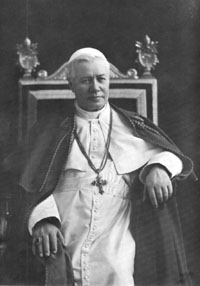 POPE PIUS X
... Pope of the Blessed Sacrament, born 2 June 1835 at Riese, diocese of Treviso, Venice, Austria (now Italy) as Giuseppe Melchiorre Sarto, elected 4 August 1903; installed 9 August 1903
Profile
Son of Giambattista Sarto, a village cobbler, and Margherita Sanson. Lived an impoverished childhood as one of eight children. Baptized on 3 June 1835. Confirmed on 1 September 1848. Felt a calling to the priesthood from his youth. Studied at the seminary of Padua, and was known as an exceptional student. Ordained by Blessed Giovanni Antonio Farina on 18 September 1858. Chaplain at Tombolo from 1858 to 1867. Archpriest of Salzano from 1867 to 1875. Canon of the Treviso cathedral chapter in 1875. Rector of the Treviso seminary and its spiritual director for nine years. Primicerius of the cathedral in 1879. Chancellor of the diocese of Treviso. Vicar capitular from December 1879 to June 1880. Bishop of Mantua, Italy on 10 November 1884. Assistant at the Pontifical Throne on 19 June 1891. Created cardinal-priest of Saint Bernardo alle Terme on 12 June 1893. Patriarch of Venice on 15 June 1893. Chosen 257th pope, taking the name Pius X.
Pope Pius X issued decrees on early (age 7 instead of 12 or 14 as previously) and frequent Communion, destroyed the last vestiges of Jansenism by advocating frequent and even daily Communion, reformed the liturgy, promoted clear and simple homilies, and brought Gregorian chant back to services. He also revised the Breviary, and teaching of the Catechism. He tirelessly fought Modernism, which he denounced as "the summation of all heresies", reorganized the Roman curia, the administrative elements of the Church. He worked against the modern antagonism of the state against the Church and initiated the codification of canon law. He also promoted Bible reading by all the faithful and supported foreign missions. His will read: "I was born poor; I lived poor; I wish to die poor."
Profile
Son of Giambattista Sarto, a village cobbler, and Margherita Sanson. Lived an impoverished childhood as one of eight children. Baptized on 3 June 1835. Confirmed on 1 September 1848. Felt a calling to the priesthood from his youth. Studied at the seminary of Padua, and was known as an exceptional student. Ordained by Blessed Giovanni Antonio Farina on 18 September 1858. Chaplain at Tombolo from 1858 to 1867. Archpriest of Salzano from 1867 to 1875. Canon of the Treviso cathedral chapter in 1875. Rector of the Treviso seminary and its spiritual director for nine years. Primicerius of the cathedral in 1879. Chancellor of the diocese of Treviso. Vicar capitular from December 1879 to June 1880. Bishop of Mantua, Italy on 10 November 1884. Assistant at the Pontifical Throne on 19 June 1891. Created cardinal-priest of Saint Bernardo alle Terme on 12 June 1893. Patriarch of Venice on 15 June 1893. Chosen 257th pope, taking the name Pius X.
Pope Pius X issued decrees on early (age 7 instead of 12 or 14 as previously) and frequent Communion, destroyed the last vestiges of Jansenism by advocating frequent and even daily Communion, reformed the liturgy, promoted clear and simple homilies, and brought Gregorian chant back to services. He also revised the Breviary, and teaching of the Catechism. He tirelessly fought Modernism, which he denounced as "the summation of all heresies", reorganized the Roman curia, the administrative elements of the Church. He worked against the modern antagonism of the state against the Church and initiated the codification of canon law. He also promoted Bible reading by all the faithful and supported foreign missions. His will read: "I was born poor; I lived poor; I wish to die poor."
Text adopted from Catholic Forum
For all those who would like to read more about St Pius X, please go to the link below to enjoy Prof. Plinio Oliveira's beautiful essay: Pope PiusX Read whole post......
Sunday, September 02, 2007
I have found beautiful post on the Blessed Virgin Mary, Mediatrix of all graces, please follow the link to Vultus Christi blog to read it, it is very inspiring and spiritually proficient reading: The Wisest Investment of all
Read whole post......
Saturday, September 01, 2007
September - the Month of the Holy Cross
 Help of Christians, pray for us
This invocation is related and close to - 'Cause of our joy'- and reminds us that Our Lady is great help to Christians, living and dead. Devotion to Blessed Virgin developed from the beginning of Christianity in times of first martyrs. We can see her pictures with child Jesus painted on the walls of Roman catacombs. She was always 'Auxiliatrix Christianorum', and inspired foundation of many Religious Orders beginning with St Benedict, St Dominic, St Francis of Assisi and St Ignatius of Loyola. She was helping us in times of schisms, military conflicts with Turks, rescuing what could be saved through religious Congregations consecrated to her name or just through deep devotion to Rosary - she interceded always for us. In gratitude the Church dedicated to her the whole month of May, and we also venerate her Immaculate heart in August, in October we commemorate her as the Queen of Holy Rosary, whereas December is the month of Immaculate Conception. She is our unfailing Mediatrix with her divine Son. She is refuge for faithful souls in times of indifference, dubious morality and hatred of God. She is also very compassionate to souls in Purgatory and intercedes before God for their release. We should always remember Our Lady and never neglect devotion to her who is the Health of the sick, Refuge of sinners, Comforter of the afflicted, and Help of Christians.
Subscribe to:
Posts (Atom)







 Posts
Posts



