Monday, June 12, 2006

June 12 - Blessed Yolande (Jolenta) of Poland 1235-1298, franciscan tertiary

Yolande was the daughter of Bela IV, king of Hungary. Her mother, Mary, was the daughter of the Greek emperor of Constantinople. In the year 1240, when Yolande was scarcely five years old, she arrived at the court of Poland. Her elder sister, Blessed Kinga (Cunigunda), who was married to the duke of Poland, had asked to supervise the child's education. Under such a mistress, Yolande grew not only in age, but also in virtue and grace before God and men.

When she arrived at young womanhood, Yolande was married to Boleslaus, the duke of Greater Poland. But the young duchess was not enamored of the glory and pleasure of this world. It was a greater pleasure for her to do good in her elevated position. Like a true sovereign, she came to the assistance of the poor and sick, the widows and the orphans. She and her husband built hospitals, convents, and churches, and she was so great an inspiration to him in everything that was good and pleasing to God, that he received the surname of the Pious.

But Boleslaus was soon to receive the reward of his piety in heaven. After his death and after two of her daughters were married, Yolande and her third daughter left all the glamor and riches of the world and withdrew to the convent of the Poor Clares at Sandec, where, devoted to prayer and mortification, she led a life entirely hidden in Christ. Disturbances resulting from war compelled her after a time to move to the convent at Gniezno, which she herself, assisted by her last consort, had founded.

In spite of the reluctance to which her humility prompted her, she was advanced to the position of abbess. So successfully did she guide her sisters by word and by example in the practice of all the religious virtues that the convent flourished like a new garden of God. Even beyond the walls of the cloister she did very much good, so that the fame of the holy abbess spread far and wide.

But, notwithstanding all her fame, she remained entirely devoted to the interior life, as her vocation required. Her favorite devotion was meditation on the sufferings of Christ, during which the Divine Savior once manifested Himself to her under the appearance of the Crucified. He announced to her that He would soon lead her to glory. Attacked by a serious illness, she asked to receive the last sacraments. Then she admonished her spiritual daughters to persevere in fidelity to the holy rule, and departed blessedly in the Lord in 1298.

After her death Yolande appeared in wondrous glory, together with St. Stanislaus the bishop, to the sick abbess and restored her health. Many other miracles occurred at her grave down to our own time. Pope Leo XII, in 1827, approved the veneration given to her.

ON DESPISING THE WORLD
1. Consider how happy Yolande was already here on earth, when she left the world and all that it held out to her, to serve God as a Poor Clare. Could the enjoyment of all the pleasures and all the goods of this world ever have brought her such happiness? King Solomon tasted worldly pleasure in its fullness, but it did not make him happy. He says: "And, therefore, I was weary of my life, when I saw that all things under the sun are evil, and all vanity and vexation of spirit" (Eccl 2:17). Did not this duchess make a better choice? Still, what Thomas a Kempis says is true: "For it is not granted to all to forsake all things, to renounce the world, and to assume the monastic life." May you always heed the warning of the Apostle: "And they who use this world as if their hearts become attached to it. -- Is your heart attached to this world?
2. Consider how vain and deceitful the goods of this world are. The honors of the world, on which we expend so much energy, cannot make us better, and sometimes they vanish suddenly without any fault of ours. Its riches cause us so much more anxiety the greater they are. Its pleasures are short, and often missed with much bitterness, as the maxim says: "Many a flower grows smooth and fair, But bitter the root that it doth bear." Have you not experienced this yourself? But, as Thomas a Kempis says: "The world is censured as deceitful and vain; and yet it is with reluctance abandoned, because the concupiscence of the flesh too much prevails. Some things draw us to love the world; others to despise it." -- Examine yourself. What is it that holds you to the world, that keeps you from loving God with your whole heart and serving Him?
3. Consider that our heart should set its goal on something higher if it wishes to despise the world. The heart of man wants to cling to something, yet man was not made for this world and its perishable goods. As Christians we have a higher, a nobler goal, where genuine, imperishable goods await us. That is why the prince of the Apostles says: "Blessed be God, who has regenerated us unto an inheritance incorruptible and undefiled, and that cannot fade, reserved in heaven for you" (1 Pet 1:4) -- Direct the desires of your heart to that inheritance. Then it will soon despise the seeming good things of the world.

PRAYER OF THE CHURCH
Almighty and eternal God, who didst mercifully withdraw Blessed Yolande from honor and riches, and didst graciously inspire her to choose instead the humble cross of Thy Son and the mortification of the flesh, grant, through her intercession and mercies, that we may despise temporal things and with upright hearts seek those that are eternal. Through the same Christ our Lord. Amen.

after www.paxetbonum.net/saints/june.html#12   Read whole post......

Sunday, June 11, 2006

Holy Trinity Sunday

Feast of the Most Holy Trinity
fragments from "Devout Instructions" by Fr. Goffine (1896 Benziger Brothers, Printers of the of the Holy Apostolic See)

Every Sunday is dedicated to the worship of the Triune God, and is called accordingly the Lord's day; but the first Sunday after Pentecost is appointed by the Church a special feast of the Most Holy Trinity, because this mystery, as the fundamental doctrine of the Christian religion, began at once to be preached by the apostles, as soon as they had been enlightened and strengthened by the descend of the Holy Ghost. What thoughts and affections should occupy our minds on this feast?
Although the mystery of the Trinity is incomprehensible to us, we must consider:
1. That God would cease to be God, if our limited understanding were capable of penetrating the substance of His nature.
2. The mystery of the Blessed Trinity, though incomprehensible to our intellect, is yet not without fruit in our hearts.
The records of revelation show us God the Father as our Creator, God the Son as our Redeemer, God the Holy Ghost as our Sanctifier; and should not this move us to a child-like gratitude towards the blessed Trinity? In praise of the Most Holy Trinity, the Church sings at the Introit of the Mass, "Blessed be the Holy Trinity and undivided Unity; we will give glory to Him, because He hath shown his mercy to us. O Lord, our Lord, how wonderful is Thy name in all the earth." Glory be to the Father, etc.
PRAYER
O almighty and eternal God, Who hast created Thy servant to acknowledge the glory of the eternal Trinity, in the confession of the true faith, and to adore the unity in the power of Thy majesty, we beseech Thee, that by firmness in the same faith, we may be ever protected from all adversities. Through Jesus Christ, etc.
EPISTLE Rom.xi. 33-36
Oh, the depth of the riches of the wisdom and of the knowledge of God! How incomprehensible are His judgments, and how unsearchable His ways! For who hath known the mind of the Lord? Or who hath been His counselor? Or who hath first given to Him, and recompense shall be made Him? For of Him, and by Him, and in Him, are all things: to Him be glory forever. Amen.
Explanation
The ground of St. Paul's admiration in this epistle is the unfathomable wisdom and love of God, by which He permitted the Jews and heathen to fall into unbelief, that He might have mercy on all, and make all perceive that they were justified, not through their merits, but only through His grace. But the Church make use of this words to express her reverent admiration for the greatness of the mystery of the all Holy Trinity. Though we can neither measure nor comprehend this mystery, yet no man of sound reason will hesitate to believe it, if he considers that it is most plainly revealed by God; that as God, the Infinite, cannot be comprehended by the spirit of man, so also He can reveal more than we can understand; and that, finally, there are many things in man himself, and in nature, which we acknowledge as true, but cannot comprehend. Besides, does not our holy religion assure us, that one day we shall behold face to face the Infinite Whose image is now reflected dimly in the mirror of nature? Let us add hope, therefore, to our faith, and if true and sincere love be based upon these two, our understanding and heart will have abundant consolation in regard to this great mystery.
GOSPEL Matt. xxviii. 18-20
At that time Jesus said to His disciples: all power is given to Me in heaven and in earth; going therefore teach ye all nations: baptizing them in the name of the Father, and of the Son, and of the Holy Ghost: teaching them to observe all things whatsoever I have commanded you: and behold I am with you all days, even to the consummation of the world.
What command does our Saviour give in this gospel? He commands his apostles to teach all nations, and to baptize them.
Is Baptism a sacrament?
Yes, for by it we receive the grace of God, through an outward sign instituted by Christ.
What is the outward sign?
Pouring water on the head of the person to be baptized and pronouncing at the same time the words: "I baptize you in the name of the Father and of the Son and of the Holy Ghost."
What is the effect of the grace of Baptism?
Through water and the Holy Ghost, the baptized person is cleansed from original sin, and from all actual sins, if he has committed such; is spiritually new-born, and made a child of God and a joint-heir with Christ (John iii.6; Rom. vii. 17).
What is the use of sponsors?
1. In the name of the child, they express the desire to be baptized, and make the profession of faith, together with the promise to live according to the doctrine of Christ.
2. In case the parents should die, or neglect their duty, the god-parents may provide for the instruction of the children.
3. They are witnesses that such a person has been baptized.

THE MOST HOLY TRINITY
Who is God?
God is infinite being, of all possible perfections, the most sublime and excellent of all goods, existing from all eternity, and containing within Himself the principle of His own being and substance; from Whom all other things have received their existence and life, "for of Him, and by Him, and in Him are all things" (Rom. xi. 36).
What is the blessed Trinity?
It is this one God, Who is one in nature and threefold in person, - the Father, Son and Holy Ghost.
Is each of these persons God?
Yes, for each possesses the divine nature and substance
Is any of these three persons older, more powerful, or greater than another?
No; they are all three, from eternity, equal in power, sublimity, and majesty, and must therefore be equally adored.
From Whom is the Father?
From Himself, before all eternity.
From Whom is God the Son?
The Son is begotten of the Father before all ages.
From Whom is God the Holy Ghost?
He proceeds from the Father and the Son. Read whole post......

Saturday, June 10, 2006

Saturday after Pentecost - Ember Day

From "Devout Instructions" by Fr. Goffine

EPISTLE (Romans v. 1-5)Brethren: Being justified therefore by faith, let us have peace with God, through our Lord Jesus Christ: By whom also we have access through faith into this grace, wherein we stand, and glory in the hope of the glory of the sons of God. And not only so; but we glory also in tribulations, knowing that tribulation worketh patience; And patience trial; and trial hope; And hope confoundeth not: because the charity of God is poured forth in our hearts, by the Holy Ghost, who is given to us.

GOSPEL (Luke iv.38-44And Jesus rising up out of the synagogue, went into Simon's house. And Simon's wife's mother was taken with a great fever, and they besought him for her. And standing over her, he commanded the fever, and it left her. And immediately rising, she ministered to them. And when the sun was down, all they that had any sick with divers diseases, brought them to him. But he laying his hands on every one of them, healed them. And devils went out from many, crying out and saying: Thou art the Son of God. And rebuking them he suffered them not to speak, for they knew that he was Christ. And when it was day, going out he went into a desert place, and the multitudes sought him, and came unto him: and they stayed him that he should not depart from them. To whom he said: To other cities also I must preach the kingdom of God: for therefore am I sent. And he was preaching in the synagogues of Galilee.

"Gift of the Holy Spirit" fragments form "Divine Intimacy" by Fr Gabriel Of St. Mary Magdalen OCD
......It is very consoling thought that, due to the profound unity of our supernatural organism, grace, the virtues, and the gifts increase simultaneously with and in proportion to the growth of charity. If we want the gifts to be fully developed in our soul, we must practice charity constantly, for with every advance in divine love, there will be a corresponding new development of the gifts. They are the sails of the souls, but these sails can be let down, weighted by our egoisim, our self-love and attachment to ourselves and to creatures. Charity, on the contrary, frees them from every impediment and turns them toward the gentle breeze of the Holy Spirit. The more open and full the sails are, the better they will be able to receive the least impulse of the divine Paraclete.
Read whole post......

Friday, June 09, 2006

BLESSED ANNA MARIA TAIGI - Wife and mother, Trinitarian Tertiary (1769-1837)

Spiritual Bouquet: He who is faithful in the little things is faithful also in much. St. Luke 16:10

Anna Maria Gianetti was born in Siena, Italy. She joined her father in Rome when a reversal of fortune obliged him to go and settle there. The little girl went to school only two years, and she scarcely learned how to read. Her parents poured all their bitterness upon their daughter, but the angelic little child redoubled in meekness towards them.

Anna Maria soon began working to help her parents. She grew up a pious, hard-working, coquettish lass who enjoyed dressing herself up. Domenico Taigi, an honest but rough man, quick to anger, who was working as a day laborer in the Chigi Palace, offered to marry her, and Anna Maria accepted his proposal.

In the early days of their household she kept her worldly habits, loving to go to the puppet theater and wear jewelry. After three years of a life divided between love of God and love of the world, Anna Maria went to confession to Father Angelo of the Order of Servites. She was totally converted, and with her husband’s consent she was received into the Third Order of the Trinitarians. Domenico asked for only one thing: keep the house peaceful and in good order!

But now Anna Maria’s parents came to join the young household. From the moment of their arrival, yelling scenes became a daily occurrence. Anna Maria did her best to quiet them down, but her quarrelsome mother was always looking for a fight with her son-in-law, who flared up very easily. Attenuating the blows as best she could, Anna Maria hastened to serve her quick-tempered husband, who was perfectly capable of dashing the contents of the dinner table onto the floor when a dish did not please him. After her mother’s death, her father lived at his daughter’s expense and heaped dispute upon dispute. When he contracted leprosy, Blessed Anna Maria cared for him tenderly and helped him die a Christian death.

Their home would have become a veritable hell for their seven children, but the Blessed remained so supernaturally sweet that Domenico later declared that the house was a real paradise, and that cleanliness and order reigned everywhere in his poor dwelling. Anna Maria would get up very early to go to church, and she received Communion daily. When a family member was sick, however, to avoid giving an occasion for complaint, she deprived herself of Mass and Communion. To make up for this involuntary privation, she spent her free moments in recollection on such days.

Blessed Anna Maria Taigi always kept her children busy. After supper, the family recited the Rosary and read a brief Life of the Saint of the day, and then the children went to bed after receiving a blessing. On Sunday they visited the sick in the hospital. Her maternal tenderness did not keep her from firmly applying punishments when they were deserved, such as the rod and fasting. Her children profited well from such a balanced formation, and soon they were an honor to their virtuous mother and an example to their companions.

Her delicacy towards the humble was exquisite. She fed her servant girl better than herself; when one of them awkwardly broke some dishes, she said sweetly, “Well, I suppose the people who make the china have to make a living too.”

When she was received as a member of the Third Order of the Holy Trinity, the Blessed offered herself as a victim of atonement for the sins of the world. In return for this generous offering, God granted her the permanent vision of a luminous globe or sun, in which she could read the needs of souls, the condition of sinners, and the dangers of the Church.

This extraordinary phenomenon lasted forty-seven years. Surprised by ravishments and ecstasies amid her domestic occupations, Anna Maria strove vainly to avoid them. Thanks to her, many sick people warned of their approaching end met with a holy death. The fate of the dead was revealed to her, and her compassion towards them inspired her to multiply her penances to win an earlier release for these poor souls, who came to thank her for their deliverance.

Although Blessed Anna Maria Taigi fervently wanted to remain unknown to everyone, a whole host of visitors — the poor, princes, priests, bishops, even the pope — flocked to her to ask for advice from her inspired wisdom. Simple and humble, she would reply very simply, trying to avoid praise, always refusing little gifts.

This woman who spread light and serenity all around her was deprived of spiritual consolation for five years and had a the very strong sentiment that she had been relegated to hell. The anxiety and darkness in her soul had been on the increase for seven months, and Anna Maria Taigi underwent a veritable agony, but she continued directing her house as though nothing was amiss.

Despite the fact that her fingers had become very painful, she did a great deal of sewing to earn the family’s daily bread. The wife of the Governor of Savoy, who had obtained many graces through the prayers of the handmaid of God, wanted to give her a large sum of money, but the Blessed categorically refused.

On Monday in Holy Week, Anna Maria learned in ecstasy that she was going to die on Good Friday. After blessing her loved ones and thanking them, she gave up her soul with a cry of joy and deliverance. It seems that God wanted to show in the person of this admirable Blessed the possibility of joining eminent virtue and exceptional supernatural gifts to fidelity in the most humble and material duties of the common life. Pope Benedict XV beatified Anna Maria Taigi on May 30, 1920.

Source: Marteau de Langle de Cary, 1959, Vol. II, pp. 338-342. Brothers of Christian School Edition, p. 201 — O.D.M. article. Read whole post......

Friday after Pentecost - Ember Day

From "Devout Instructions" by Fr Goffine

EPISTLE (Joel ii. 23-27) Thus saith the Lord God: O children of Sion, rejoice, and be joyful in the Lord your God: because he hath given you a teacher of justice, and he will make the early and the latter rain to come down to you as in the beginning. And the floors shall be filled with wheat, and the presses shall overflow with wine and oil. And I will restore to you the ears which the locust, and the bruchus, and the mildew, and the palmerworm have eaten; my great host which I sent upon you. And you shall eat in plenty, and shall be filled: and you shall praise the name of the Lord your God, who hath done wonders with you, and my people shall not be confounded for ever. And you shall know that I am in the midst of Israel: and I am the Lord your God, and there is none besides: and my people shall not be confounded for ever.

GOSPEL (Luke v. 17-26) At that time: It came to pass on a certain day, as he sat teaching, that there were also Pharisees and doctors of the law sitting by, that were come out of every town of Galilee, and Judea and Jerusalem: and the power of the Lord was to heal them. And behold, men brought in a bed a man, who had the palsy: and they sought means to bring him in, and to lay him before him. And when they could not find by what way they might bring him in, because of the multitude, they went up upon the roof, and let him down through the tiles with his bed into the midst before Jesus. Whose faith when he saw, he said: Man, thy sins are forgiven thee. And the scribes and Pharisees began to think, saying: Who is this who speaketh blasphemies? Who can forgive sins, but God alone? And when Jesus knew their thoughts, answering, he said to them: What is it you think in your hearts? Which is easier to say, Thy sins are forgiven thee; or to say, Arise and walk? But that you may know that the Son of man hath power on earth to forgive sins, (He saith to the sick of the palsy,) I say to thee, Arise, take up thy bed, and go into thy house. And immediately rising up before them, he took up the bed on which he lay; and he went away to his own house, glorifying God. And all were astonished; and they glorified God. And they were filled with fear, saying: We have seen wonderful things today.

"The Way of the Cross" fragments from "Divine Intimacy" by Fr Gabriel of St. Mary Magdalen OCD
....By couragously practicing self-denial, we begin the way of conformity to Jesus Crucified; but here, too, our initiatives are disproportionate to the end to be attained; the acts of mortification and self-denial which we make are wholly insufficient to strip us of the old man and clothe us with Christ, with Cgrist Crucified. That is why the Holy Spirit, after setting us on the road of the Cross by His inspirations - which tend to make us accept, for the love of God, all that is hard and painful to nature - takes it upon Himself to complete our purification....
Read whole post......

Thursday, June 08, 2006

"Conformity with Christ through the action of the Holy Spirit"fragments from 'Divine Intimacy' by Fr Gabriel of St. Mary Magdalen OCD

PRESENCE OF GOD - O Holy Spirit, make me conformable to Jesus, make me an "alter Christus, another Christ.

MEDITATION
2. The norm of life for Jesus was His Father's will, and we have seen how the Holy Spirit guided Him continually in the accomplishment of that will. In the same way, the Holy Spirit guide us along the way traced out by the will of God. Practically speaking, "sanctity consists in conformity to the divine will" (Benedict XV), in a conformity so complete that ,as St. John of the Cross teaches: "there may be naught in the soul that is contrary to the will of God, but that, in all and trough all, its movement may be that of the will of God alone" (AS I, 11,2). It is not easy to reach this point, and we shall never be able to do so without the help of the Holy Spirit. Furthermore, we must not forget that conformity to the divine will finds its expression in a "continual, exact fulfillment of the duties of one's state in life" (Benedict XV). Now, to be always faithful to duty, in all things and everywhere, is no small matter. It requires continual sacrifice, generosity, and constancy. Let us look at Jesus on the Cross, and we shall understand what the perfect accomplishment of our duty and God's will can exact. This is the way we must follow, constantly renewing our efforts and realizing, at the same time, that however much good will we may have, we are so weak, so inconstant, so deeply attached to ourselves, and so limited in our strength, that we will not always succeed in keeping ourselves to the perfect fulfillment of our duties; we often , and do not even know how to rise. Let us humble ourselves then, and make use of these falls to realize better our impotence and frailty: humility, yes; discouragement, never! Instead of weeping over ourselves, let us turn our eyes toward Holy Spirit, call upon Him to come to our aid, and begin again humbly and confidently. When the Holy Spirit sees us renewing our efforts, He will come to meet us, take us by the hand, and in an instant will lead us to a degree of perfection which we have not been able to reach even after years of effort. We can be sure of this, for Jesus merited it for us, and sends us His Spirit "in a most copious outpouring."

COLLOQUY
...O consuming Fire, Spirit of Love! Come down into me and reproduce in me, as it were, an incarnation of the Word; that I may be to Him an added humanity, wherein He may renew all His mystery!" (E.T.III). Read whole post......

Wednesday, June 07, 2006

Wednesday after Pentecost - Ember Day

From "Devout Instructions" by Fr Goffine

EPISTLE (Acts v.12-16) In those days: By the hands of the apostles were many signs and wonders wrought among the people. And they were all with one accord in Solomon's porch. But of the rest no man durst join himself unto them; but the people magnified them. And the multitude of men and women who believed in the Lord, was more increased: Insomuch that they brought forth the sick into the streets, and laid them on beds and couches, that when Peter came, his shadow at the least, might overshadow any of them, and they might be delivered from their infirmities. And there came also together to Jerusalem a multitude out of the neighboring cities, bringing sick persons, and such as were troubled with unclean spirits; who were all healed

GOSPEL (John vi.44-52) At that time Jesus said to the multitude of the Jews: No man can come to me, except the Father, who hath sent me, draw him; and I will raise him up in the last day. It is written in the prophets: And they shall all be taught of God. Every one that hath heard of the Father, and hath learned, cometh to me. "Draw him"... Not by compulsion, nor by laying the free will under any necessity, but by the strong and sweet motions of his heavenly grace.
Not that any man hath seen the Father; but he who is of God, he hath seen the Father. Amen, amen I say unto you: He that believeth in me, hath everlasting life. I am the bread of life. Your fathers did eat manna in the desert, and are dead. This is the bread which cometh down from heaven; that if any man eat of it, he may not die. I am the living bread which came down from heaven. If any man eat of this bread, he shall live for ever; and the bread that I will give, is my flesh, for the life of the world.

"Our Cooperation" fragments from "Divine Intimacy" by Fr Gabriel of St. Mary Magdalen OCD

...Our Teacher of sanctity is none other than the Holy Spirit;...He teaches us what we must do in order to love God with all our strength; He teaches us all that we do not know, whether about God, or about the spiritual life; and to perfect His teaching, he guides us in the accomplishment of it. Actually, by directly influencing our wills, he strengthens them, attracts them, impels them forcefully to God, orientating them perfectly toward Him. In this way the Holy Spirit "helpeth our infirmity" (Rom 8,26), which being constitutional - inherent in our human nature - causes us to be continually in need of Him...
Read whole post......
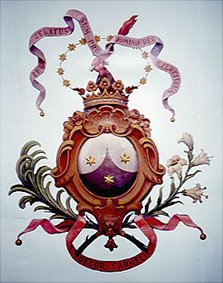
Bl Anne of St Bartholomew OCD

When the great St. Teresa of Avila, renewer of the Discalced Carmelite nuns, went about on her foundations and Inspections, she often took as her special companion the Carmelite lay sister, Anne of St. Bartholomew. Anne was the daughter of a peasant couple from near Avila. Teresa cane to admire her competence, and more than once suggested that she apply to become a choir sister, rather than remain a lay nun engaged in more menial work; but Anne preferred to retain the humbler status.
As the foundress was dying. Sister Anne did her every possible service. On the day of death, knowing how much Teresa loved neatness, Anne carefully changed her linen, headdress and sleeves. The saint was unable to speak, but smiled her thanks. When the last moments came, it was Sister Anne who held the dying mystic in her arms.
Six years later, some French Catholic leaders, anxious to introduce the Teresian nuns into their country, asked St. Teresa's successor, Anne-of-Jesus, to send some Spanish nuns to Paris to help with the foundation. Anne-of-Jesus included our Sister Anne in the group of religious selected for the mission.
When they arrived, the other five nuns were greeted by the Princess de Longueville and other women of the court; but Blessed Anne slipped away Into the kitchen to prepare dinner. Now her superiors made up for lost time by advancing her, willy-nilly, to the rank of choir sister.  When, in the midst of difficulties with the foundation, the other Spanish nuns went off to the Netherlands, Anne remained in France and was appointed prioress, first at Pontoise and then at Tours. Doubting her own competence to rule. Blessed Anne, in her prayers to our Lord, called herself a "weak straw". Jesus answered, reassuring her, "It is with straws I light my fire."
From France Carmelite foundations spread into the Netherlands (Belgium & Holland). Blessed Anne was sent to the one at Mons, remaining there a year. In 1612 she established a monastery at Antwerp.
Daughters of some of the noblest families of the Low Countries flocked to join this new monastic community. Anne herself was a drawing card. Her reputation for holiness, prophecy and miracle working had gone before her. Indeed, she came to be considered the protector of Antwerp. When the city was under siege by the Protestant Prince of Orange, Anne prayed all night and Antwerp was spared capture.
At the death of Blessed Anne in 1626, all Antwerp grieved; and as her body lay in state,
20 thousand mourners made a point of touching it with their rosaries or other Items for the sake of having a "relic" of this holy Spanish nun. Pope Benedict XV declared Anne "blessed" In 1917.
There is an American angle to this story. Among the Carmels set up in the Netherlands, a couple welcomed English Catholic ladies. In the British penal times, Catholics were forbidden to have convents in England.  Some of the English women who took the veil here were from colonial Maryland. In 1790, at the
request of Maryland Catholics and with the permission of Bishop John Carroll of Baltimore, four Carmelite nuns from Belgium, headed by the former Marylander Mother Bernardina Matthews, established the first American Carmel at Port Tobacco, Maryland. One of the "granddaughter" foundations out of this source was the Carmelite monastery at Rochester. Hence, all the "Port Tobacco" Carmels in the United States
celebrated their bicentennial In 1990.
--Father Robert F. McNamara

after www.stthomasirondequoit.com/SaintsAlive Read whole post......

Tuesday, June 06, 2006

Whit Tuesday

From "Devout Instructions" by Fr. Goffine

The Introit of the Mass is again a song of joy: "Receive the joy of your glory, alleluia; giving thanks to God, alleluia; Who hath called you to a heavenly kingdom. Attend, O My people, to My law, incline your ears to the words of My mouth." Glory be to the Father, etc.

PRAYER
May the power of the Holy Ghost be with us, O Lord, we beseech Thee, which may mercifully purify our hearts and defend them from all adversities. Through Our Lord Jesus Christ, Who liveth and reigneth in the unity of the same.

LESSON (Acts v. 12-16) Now when the apostles, who were in Jerusalem, had heard that Samaria had received the word of God, they sent unto them Peter and John. Who, when they were come, prayed for them, that they might receive the Holy Ghost. For he was not as yet come upon any of them; but they were only baptized in the name of the Lord Jesus. Then they laid their hands upon them, and they received the Holy Ghost.

EXPLANATION. The Samaritans had been converted and baptized by Philip the Deacon. Peter and John administered to them, by the imposition of hands and prayer, the Sacrament of Confirmation.
Is Confirmation a sacrament?
Yes, for Jesus Christ has promised the Holy Ghost not only to the apostles, but also to all the faithful, to confirm them fully in faith and charity.
What is the outward sigh of this sacrament?
The imposition of the bishop's hands, the anointing with the chrism, and the words of the bishop.
What grace is conveyed through this sacrament?
Through holy Confirmation, God confirms and completes in the Christians the grace of Baptism, and strengthens him for the combat with his spiritual enemies. Confirmation, like Baptism, cannot be received more than once, because the grace received in these sacraments is always efficacious if we only cooperate with it; and because in these sacraments we receive also indelible character, which forever distinguishes the souls of those who have been baptised and confirmed from those who have not.

GOSPEL (John X. 1-10.) At that time Jesus said to the Pharisees: Amen, amen I say to you: He that entereth not by the door into the sheepfold, but climbeth up another way, the same is a thief and a robber. But he that entereth in by the door is the shepherd of the sheep. To him the porter openeth; and the sheep hear his voice: and he calleth his own sheep by name, and leadeth them out. And when he hath let out his own sheep, he goeth before them: and the sheep follow him, because they know his voice. But a stranger they follow not, but fly from him, because they know not the voice of strangers. This proverb Jesus spoke to them. But they understood not what he spoke to them. Jesus therefore said to them again: Amen, amen I say to you, I am the door of the sheep. All others, as many as have come, are thieves and robbers: and the sheep heard them not. I am the door. By me, if any man enter in, he shall be saved: and he shall go in, and go out, and shall find pastures. The thief cometh not, but for to steal, and to kill, and to destroy. I am come that they may have life, and may have it more abundantly. I am the good shepherd. The good shepherd giveth his life for his sheep. But the hireling, and he that is not the shepherd, whose own the sheep are not, seeth the wolf coming, and leaveth the sheep, and flieth: and the wolf catcheth, and scattereth the sheep: And the hireling flieth, because he is a hireling: and he hath no care for the sheep. I am the good shepherd; and I know mine, and mine know me. As the Father knoweth me, and I know the Father: and I lay down my life for my sheep. And other sheep I have, that are not of this fold: them also I must bring, and they shall hear my voice, and there shall be one fold and one shepherd.

How is this parable to be understood?
The sheepfold is the Church, or congregation of the faithful; the door for the flock is Baptism; for the pastors, lawful vocation and mission from God, through their spiritual superiors; the chief pastor is Christ; the sheep are the faithful; the invisible door-keeper is the Holy Ghost, inasmuch as He prepares hearts for Jesus; the visible door-keeper is the bishop or his representatives. The thieves and robbbers are the Pharisees and heretics of all ages, who led astray the sheep of Christ, and destroy their spiritual life by false doctrines. If we would not become the prey of thieves and murderers, we must follow the doctrines of the teachers and pastors whom Christ has appointed for his Church. Read whole post......

Monday, June 05, 2006

Whit Monday

From "Devout Instructions" by Fr. Goffine

Filled with joy over the gracious descent of the Holy Ghost, the Church sings, at the Introit of the Mass,"He fed them with the fat of wheat, alleluia, and filled them with honey out of the rock, alleluia, alleluia. Rejoice to God, our helper, sing aloud to the God of Jacob" (Ps. Ixxx). Glory be to the Father, etc.

PRAYER
O God, who didst give the Holy Ghost to Thine apostles: grant to Thy people the fruit of their pious petition; that to whom Thou host given faith, Thou mayest also impart peace. Through Christ our Lord, etc..

EPISTLE (Acts X. 34., 42-48.) In those days, Peter opening his mouth, said: Men brethren, the Lord commanded us to preach to the people, and to testify that it is He Who was appointed by God to be judge of the living and of the dead. To Him all the prophets give testimony, that by His name all receive remission of sins, who believe in Him. While Peter was yet speaking these words, the Holy Ghost fell on all them that heard the word. And the faithful of the circumcision, who came with Peter, were astonished, for that the grace of the Holy Ghost was poured out upon the gentiles also. For they heard them speaking with tongues, and magnifying God. Then Peter answered: Can any man forbid water, that these should not be baptized, who have received the Holy Ghost as well as we? And he commanded them to be baptized in the name of the Lord Jesus Christ.

GOSPEL (John III. 16-21.) At that time, Jesus said to Nicodemus: God so loved the world, as to give his only-begotten Son; that whosoever believeth in him may not perish, but may have life everlasting.

For God sent not his Son into the world to judge the world, but that the world may be saved by him. He that believeth in him is not judged: but he that doth not believe is already judged; because he believeth not in the name of the only-begotten Son of God. And this is the judgment: because the light is come into the world, and men loved darkness rather than the light, for their works were evil. For every one that doth evil hateth the light, and cometh not to the light, that his works may not be reproved. But he that doth truth cometh to the light, that his works may be made manifest, because they are done in God.

By what has God most shown the greatness of His love?
By giving up His only-begotten Son to the most painful and ignominious death, that we, the guilty, might be delivered from eternal death, and have life everlasting.
If, then, so many are lost, is it the fault of God?
No: as the physician gives up only the incurable, so God condemns only those who believe not in Christ as their Saviour and God; who love darkness, that is, the principles and works which correspond to their corrupt inclinations; who despise Jesus, the light of the world, and His doctrines; who neglect the divine service, the public instructions, and the reception of the holy sacraments; who take this licentious life for wisdom and enlightenment; who refuse to be taught, and have pronounced their own condemnation, even before the final judgment.
Why should we love God?
Because He has loved us from all eternity: He loved us when as yet we were not. If we love him who does us some good, who helps us in need, or exposes himself to danger for our sake, how much more should we love Him Who has given us all that we have: the angels to be our guards, the sun, moon, and stars to be our light; the earth to be our dwelling-place; the elements, plants, and animals to supply our necessary wants, and to serve us and protect us from countless dangers; Who continually preserves us and protects us from countless dangers; Who has subjected Himself for our sake, not merely to the danger of His life, but to the most painful and humiliating death; Who forgives all our sins, heals all our infirmities, redeems our life from destruction, and crowns us with compassion and mercy. Read whole post......

Sunday, June 04, 2006

Whit Sunday

THE DESCENT OF THE HOLY SPIRIT
fragments from "Divine Intimacy" by Fr. Gabriel of St. Mary Magdalen OCD

PRESENCE OF GOD - Come, O Holy Spirit, fill the heart and enkindle in it fire fo Your Love.

MEDITATION
1. Pentecost is the plenitude of God's gift to men. On Christmas Day, God gives us His only begotten Son, Christ Jesus, the Mediator, the Bridge connecting humanity and divinity. During Holy Week, Jesus, by His Passion, gives Himself entirely for us on the Cross. He bathes us, purifying and sanctifying us in His Blood. At Easter, Christ rises, and His Resurrection, as well as His Ascension, is the pledge of our own glorification. He goes before us to His Father's house to prepare a place for us, for in Him and with Him, we have become children of God, destined for eternal beatitude. But the gift of God to men does not end there; having ascended into heaven, Jesus, in union with the Father, sends us His Spirit, the Holy Spirit. The Father and the Holy Spirit loved us to the point of giving us the Word in the Incarnation; the Father and the Word so loved us as to give us the Holy Spirit. Thus the three Persons of the Trinity give Themselves to man, stooping to this poor nothing to redeem him from sin, to sanctifying him, and to bring him into Their own intimacy. Such is the excessive charity with which God has loved us; and the divine gift to our souls reaches its culminating point in the gift of the Holy Spirit, which is the Gift par excellence: Altissimi Donum Dei, Gift of the Most High God. The Holy Spirit, the bond and pledge of the mutual love of the Father and the Son, He who accepts, seals, and crowns their reciprocal gift, is given to our souls through the infinite merits of Jesus, so that He will be able to complete the work of our sanctification. By His descent upon the Apostles under the form of tongues of fire, the Holy Spirit shows us how He, the Spirit of love, is given to us in order to transform us by His charity, and having transformed us, to lead us back to God.
2. The gift of the Holy Spirit is not a temporary gift, but a permanent one; in fact, for soul who lives in charity, he is the sweet Guest who dwells within it. "If anyone love Me," says Jesus in the words of today's Gospel (Jn14, 23-31)....We will come to him and will make Our abode with him." However, this indwelling of the Trinity - and hence of the Holy Spirit - in the soul which is in the state of grace, is a gift which can and should increase; it is a continual giving. The first donation was made when we were baptized; it was renewed later, confirmed, in a special way, by the Sacrament of Confirmation, the Sacrament that is, so to speak, the Pentecost of every Christian soul. Progressive renewals of this gift were made with every increase in charity.......
Veni Creator Spiritus - mentes tuorum visita,
Imple superna gratia - quae tu creasti pectora.


Come, Holy Ghost, Creator blest,
And in our hearts take up Thy rest
Come with Thy grace and heavenly aid,
To fill he hearts which Thou hast made.

COLLOQUY
......."Come, O Life-giving Spirit, to this poor world and renew the face of the earth; preside over new organisations and give us Your peace, that peace which world cannot give. Help Your Church, give her holy priests and fervent apostles. Fill with holy inspirations the souls of the good; give calm compunction to sinful souls, consoling refreshment to the suffering, strength and help to those who are tempted, and light to those in darkness and in the shadow of death" (Sr. Carmela of the Holy Spirit, OCD). Read whole post......

Saturday, June 03, 2006

Vigil of Pentecost

"SWEET GUEST OF THE SOUL"
fragments from "Divine Intimacy" by Fr Gabriel of St. Mary Magdalen OCD

PRESENCE OF GOD - O Holy Spirit, You who deign to dwell in me, help me to open my soul completely to Your action.

MEDITATION
1. The Encyclical Mystici Corporis states that "The Holy Spirit is the soul of the Church." Because soul means "principle of life", this statement equivalently says that the divine Paraclete is the One who gives life to the Church. As the soul is the principle of life in the body, so the Holy Spirit is the principle of life in the Church, the Mystical Body of Christ. (cf.Divinum Illud).
We have seen that the Holy Spirit was in Christ's soul to direct Him in the accomplishment of His redemptive mission. Jesus could have carried out this mission alone, but He wished the Church to participate in it. Since the Church continues Christ's work, she needs the same impetus which guided His soul; she needs the Holy Spirit. Jesus merited His Spirit for us on the Cross; by His death, He atoned for all sin, the chief obstacle to the action of the Holy Spirit, and when he had ascended into heaven, He sent Him to the Apostles, who represented the whole Church. Now, seated in glory at the right hand of the Father, He intercedes continually for us, He is always sending the Holy Spirit to the Church, as He promised. The Holy Spirit operates in the Church now, just as He once did in the blessed soul of Christ. He gives her impulse, moves her, and drives her to accomplish God's will, thus enabling her to fulful His mission, the continuation down through the ages of the redemptive work of Christ. With reason, then, did the early Fathers call the Holy Spirit the Soul of the Church; the Church herself invokes Him in the Credo:"Domineum et vifivicantem!" Lord and life-giver. As the soul vivifies the body, the Holy Spirit vivifies the Church. He is the impulse of love who kindles in her zeal for the glory of God and the salvation of souls; He gives light and strength to her shepherds, fervor and energy to her apostles, courage and invincible faith to her martyrs.
2.....The Encyclical Mystici Corporis asserts us that the Holy Spirit is "communicated to the Church abundandly, so that she herself and each one of her members may become, day by day, more like a Redeemer.".....if the Holy Spirit is an impulse of love that comes into us to sanctify us and bring us to God, why do we not all become saints? The mystery of human responsibility enters here. The Holy Spirit, with the Father and the Son, has created us free beings and He wishes us so; therefore, in coming to us, He respects our liberty and does no violence to it. Although he is eager to enter our souls and to possess it, He will not act thus unless we give Him free access. It is an example of the great principle on which St.Teresa of Jesus liked to insist:"God does not force anyone, He takes what we give Him; but He does not give Himsefl wholly to us, until we give ourselves wholly to Him" (Way,28). If we do not become saints, it is not because the Holy Spirit does not will it - he was sent to us and comes to us for this very purpose - but it is because we do not give full liberty to His action. This is the point in which we fail: we do not use our liberty to wholly yield our soul to His powerful, loving invasion. If our will would open the doors wide, the Holy Spirit would take us under His direction, and with His help, we wouls become saints.

Colloquy
....O Holy Spirit, Soul of my Soul, I adore You, Enlighten me, guide me, fortify me, console me. Tell me what I should do, give me Yours orders. I promise to be submissive to all that You ask of me and to accept everything that You permit to happen to me" (Cardinal Mercier). Read whole post......

Friday, June 02, 2006

The Spirit of Christ - from "Divine Intimacy" by Fr Gabriel of St Mary Magdalen OCD

PRESENCE OF GOD - O Holy Spirit, You who had complete dominion over the holy soul of Jesus, deign to direct my poor soul

MEDITATION
1. In Sacred Scripture, the Holy Spirit is called "the Spirit of Christ" (Rom 8,9), an expression that is pregnant with meaning. Christ is the Incarnate Word, the Son of God. From Him, as from the Father, the Holy Spirit proceeds; therefore the Holy Spirit is properly termed the Spirit of Christ, because the Person of Christ is none than that of the Word. When we speak of Christ, however, we do not speak of Him as God only, but also, and especially, as Man, that is, as the Incarnate Word. In this sense too, it can be said that the Holy Spirit is the divine Paraclete, with the Father and the Son, dwells there, but He delights to abide there. The higher the degree of grace He finds in a soul, the greater is His delight, for wherever grace is more aboundant, there is a more intense and luminous reflection of God's nature and goodness. This is why the Holy Spirit took such great complacency in the soul of the Blessed Virgin, who, although she was full of grace, continually grew from plenitude to plenitude. Yet the grace possessed by Mary was but a pale reflection of the grace which filled the soul of Jesus, grace which theologians call "infinite".
If then, Jesus possessed grace in an infinite manner, it can be said that the Holy Spirit took complacency in the soul of Christ in an infinite manner and dwelt there as in His temple of predilection. This idea is expressed in the Encyclical Mystici Corporis, when it says that the divine Paraclete "finds His delight in dwelling in the soul of the Redeemer as in His favourite temple." And if we can say that the Holy Spirit is ours because he dwells in our souls sanctified by grace, with infinitely greater reason can we say that He is "Christ's", whose sacred soul possesses grace in an immeasurable degree.....

COLLOQUY
....O Holy Spirit, You who worked with such plenitude in the most holy soul of Jesus, deign to operate also in my poor soul and take it entirely under Your direction, so that every act, interior as well as exterior, may be according to Your inspirations, Your choice, Your good pleasure.
Read whole post......

Thursday, June 01, 2006

The Holy Spirit - from "Divine Intimacy" by Fr Gabriel of St Mary Magdalen OCD

PRESENCE OF GOD - O Holy Spirit, teach me to know You, to want You, and to prepare myself to second Your action in my soul.

MEDITATION
1. The approach of Pentecost reminds us to turn our mind and heart to the Holy Spirit; with His help, we want to know Him better so as to love Him more ardently, invoke Him more frequently, and dispose ourselves in the best manner possible for the furtherance of His action in our soul. The catechism teaches us that there are three Persons, equal and distinct, in God: the Father, the Son, and the Holy Spirit; with His help, we want to know Him better so as to love Him more ardently, invoke Him more fervently, and dispose ourselves in the best manner possible for the furtherance of His action in our soul.
The catechism teaches us that there are three Persons, equal and distinct, in God: the Father, the Son, and the Holy Spirit. Ab aeterno the Father, knowing Himself, generates his Word, the perfect, substantial Idea in whom the Father is expressed and to whom He communicates all His goodness, lovableness, divine nature and essence. The Father and the Word, mutually beholding Their infinite goodness and beauty, love each other from all eternity, and the expression of this unitive love is a third Person, the Holy Spirit. As the Word is generated by the Father by way of knowledge, so the Holy Spirit proceeds from the Father and the Son by way of love. The Holy Spirit is, therefore, the terminus, and the effusion of the reciprocal love of the Father and the Son, an effusion so substantial and perfect that it is a Person, the third Person of the Most Holy Trinity, to whom the Father and the Son, by the sublime fruitfulness of their love, communicate their very own nature and essence, without losing any of it Themselves. Because the Holy Spirit is the effusion of divine love, He is called "Spirit", according to the Latin sense of the word which means air, respiration, the vital breath. In us, respiration is a sign of life; in God, the Holy Spirit is the expression, the effusion of the life and love of the Father and the Son, but a substantial personal effusion, which is a Person. It is in this sense that the third Person of the Blessed trinity is called the "Spirit of the Father and the Son," and also "the Spirit of love of God," that is, the "breath" of love of the Father and the Son, the "breath" of divine love. It was in this sense that the Father of the Church called the Holy Spirit "osculum Patris et Filii," the kiss of the father and the Son, a "sweet, but secret kiss," according to the tender expression of St. Bernard. Let us invoke the Holy Spirit, the Spirit of love, so that He may come to enkindle in our hearts the flame of charity.

2. According to our human concept, a person is a being who is complete and distinct from other beings, free and capable of willing; and an affectionate being, capable of loving. All this is verified in the Holy Spirit in the most perfect manner: he, the breath of love of the Father and the Son, is a Person, and a divine Person. He is complete being. He is God, and wholly God, not a part of God; although absolutely equal to the other two divine persons, He is distinct from them; He is subsistent in Himself, knowing and loving. Because the Holy Spirit is a divine Person, we can have relations with Him just as we do with the Father and the Son. The Church invites us to do so proposing to us many beautiful invocations to the Holy Spirit, especially in the hymn Veni Creator Spiritus, in which she mentions all the titles by which the divine Paraclete can be addressed with confidence. The hymn begins by calling the Holy Spirit "Creator Spirit", reminding us that he, together with the Father and the Son, is one only God, our Creator. Then, she invokes Him as our Sanctifier, that is, as the One who diffuses grace to our souls: Imple superna gratia, que tu creasti pectora, fill with heavenly grace the souls which you have created........Thus the work of sanctification, which is the work of love, is especially attributed to the Holy Spirit, who is the breath of divine love...... Under this special aspect, then, the Church urges us to invoke the Holy Spirit. Altissimi donum Dei, fons vivus, ignis, caritas et spiritalis unctio, gift of the Most High God, gift given to our souls to lead them to sanctity; living fount of grace, fire, divine love, spiritual sweetness. And again: Septiforms munere, digitus paternae dexterae, dispenser of the seven gifts by which he makes our spiritual life perfect, finger of the right hand of the Father which indicates to us the road to sanctity. With what joy, love and desire we should invoke the Holy Spirit, the Sanctifier!

COLLOQUY
........"Holy Spirit, I see You coming down into the soul like the sun which, finding no obstacle, no impediment, illumines everything; I see You descending like a fiery thunderbolt which, in falling, goes up to the lowest place it finds and there it reposes, never stopping on the way nor resting on the mountainous or high places but rather in the center of the earth. Thus You, O Holy Spirit, when You come down from heaven with the fiery dart of Your divine love, You do not repose in proud hearts or in arrogant spirits, but You make Your abode in souls that are humble and contemptible in their own eyes" (St. Mary Magdalen dei Pazzi).
Read whole post......

Wednesday, May 31, 2006

Queenship of the Blessed Virgin Mary


I have come to cast fire upon the earth, and what will I but that it be kindled? Luke 12:49

From the earliest centuries of the Catholic Church, Christians have addressed suppliant prayers and hymns of praise to the Blessed Virgin Mary, and the hope they have placed in the Mother of the Saviour has never been disappointed. They have looked upon Her as Queen of Angels, Queen of Patriarchs, Queen of Prophets, Queen of Apostles, Queen of Martyrs, Queen of Virgins. Because of Her eminence, She is indeed entitled to the highest honors that can be bestowed upon any creature. Saint Gregory Nazianzen called Her Mother of the King of the entire universe, and the Virgin Mother who brought forth the King of the entire world.
His Holiness Pope Pius XII, in his Encyclical Letter of October 11, 1954, “Ad Coeli Reginam - On the Royal Dignity of the Blessed Virgin Mary and the Institution of Her Feast, ordaining its celebration throughout the world every year on May 31st, reminds us of what Pope Pius IX had said of Mary: “Constituted by the Lord as Queen of Heaven and earth, and exalted above all the choirs of Angels and the ranks of the Saints in heaven, standing at the right hand of Her only-begotten Son, Our Lord Jesus Christ, She petitions most powerfully with Her maternal prayers, and obtains what She seeks.” Pope Pius XII adds another ordinance: “We ask that on the feast day be renewed the consecration of the human race to the Immaculate Heart of the Blessed Virgin Mary. Upon this is founded a great hope that there may arise an era of happiness which will rejoice in the triumph of religion and Christian peace. Therefore let all approach, with greater confidence than ever before, to the throne of mercy and grace of our Queen and Mother, to beg help in difficulty, light in darkness and solace in trouble and sorrow.”
In asking this, the Holy Father was responding to the request of the Virgin Herself at Fatima in 1917, that the world and each soul individually be consecrated to Her Immaculate Heart. She promised that it will be then that “a time of peace will be given to the world.” Do not Mary’s rights as Queen require respect? And will we deny to Her maternal Heart the love it merits, for twenty centuries of uninterrupted intercession on behalf of Her children?
1. Hear my prayer, O Lord; give ear to my supplication in Thy truth: hearken unto me for Thy justice' sake
2. And enter not into judgement with Thy servant: for in Thy sight shall no man living be justified.
(Ps 142)


Consecration to Immaculate Heart of Mary
This is the formula whose making and living has opened the heavens for so many favoured souls:

"O Eternal and Incarnate Wisdom! O sweetest and most adorable Jesus! True God and true man, only Son of the Eternal Father, and of Mary, always virgin! I adore Thee profoundly in the bosom and splendours of Thy Father during eternity; and I adore Thee also in the virginal bosom of Mary, Thy most worthy Mother, in the time of Thine Incarnation.
"I give Thee thanks for that Thou hast annihilated Thyself, taking the form of a slave in order to rescue me from the cruel slavery of the devil. I praise and glorify Thee for that Thou hast been pleased to submit Thyself to Mary, Thy holy Mother, in all things, in order to make me Thy faithful slave through her. But, alas! Ungrateful and faithless as I have been, I have not kept the promises which I made so solemnly to Thee in my Baptism; I have not fulfilled my obligations; I do not deserve to be called Thy child, not yet thy slave; and as there is nothing in me which does not merit Thine anger and Thy repulse, I dare not come by myself before Thy most holy and august Majesty. It is on this account that I have recourse to the intercession of Thy most holy Mother, whom Thou hast given me for a mediatrix with Thee. It is through her that I hope to obtain of Thee contrition, the pardon of my sins, and the acquisition and preservation of wisdom.
"Hail, then, O Immaculate Mary, living tabernacle of the Divinty, where the Eternal Wisdom willed to be hidden and to be adored by angels and by men! Hail, O sure Refuge of Sinners, whose mercy fails no one. Hear the desires which I have of the Divine Wisdom; and for that end receive the vows and offerings which in my lowliness I present to thee.
"I, N., a faithless sinner, renew and ratify today in thy hands the vows of my Baptism; I renounce forever Satan, his pomps and works; and I give myself entirely to Jesus Christ, the Incarnate Wisdom, to carry my cross after Him all the days of my life, and to be more faithful to Him that I have ever been before.
"In the presence of all the heavenly court I choose thee this day for my Mother and Mistress. I deliver and consecrate to thee, as thy slave, my body and soul, my goods, both interior and exterior, and even the value of all my good actions, past, present and future; leaving to thee the entire and full right of disposing of me, and all that belongs to me, without exception, according to thy good pleasure, for the greater glory of God, in time and in eternity.
"Receive, o benignant Virgin, this little offering of my slavery, in honour of, and in union with, that subjection which the Eternal Wisdom deigned to have to thy maternity, in homage to the power which both of you have over this poor sinner, and in thanksgiving for the privilages with which the Holy Trinity has favoured thee. I declare that I wish henceforth, as thy true slave, to seek thy honour and to obey thee in all things.
"O admirable Mother, present me to thy dear Son as His eternal slave, so that as He has redeemed me by thee, by thee He may receive me! O Mother of mercy, grant me the grace to obtain the true Wisdom of God ; and for that end receive me among those whom thou lovest and teachest, whom thou leadest, nourishest and protectest as thy children and thy slaves.
"O faithful Virgin, make me in all things so perfect a disciple, imitator and slave of the Incarnate Wisdom, Jesus Christ thy Son, that I may attain, by thine intercession and by thine example, to the fullness of His age on earth and of His glory in Heaven. AMEN."

Credits: text of consecration after "Consecration to the Immaculate Heart of Mary According to the Spirit of St. Louis de Montfort's True devotion to Mary"- by Fr Nicholas A. Norman
Meditation after 'Heavenly Friends: a Saint for each Day' by Rosalie Marie Levy (Saint Paul Editions: Boston, 1958). 


Read whole post......

Tuesday, May 30, 2006

MARY OUR MEDIATRIX


The Lord will make her regent over all his kingdom and give her a crown, that she shall be mother to his son and reign.
(1 Mach 6, 14-15)*


A golden crown upon her head, signed with the emblem of Holiness, of glory and of honour of the might of her deeds. (Ecclus. 45, 14)
*


fragments form "Divine Intimacy" by Fr Gabriel of St. Mary Magdalen OCD

PRESENCE OF GOD - O Mary, since Jesus willed to come to us through you, grant that I may go to Him through you.

MEDITATION
1. The Church teaches us to invoke Mary as Mediatrix of all graces. This title summarizes what the Blesses Virgin is for us, in our relations with her beloved Son: the Mediatrix of grace, of mercy, the treasurer of all the graces which Jesus merited for us. "By the communion of sorrows and of will between Christ and Mary," says St. Pius X, "she merited to become the dispenser of all the benefits which Jesus acquired for us by shedding His Blood" (Encyclical:Ad Diem Illium. Mary, who was associated in the closest and most intimate way with the life, the work, and the Passion of her Son, cooperated with Him in our redemption to such an extent that the grace, which Jesus alone could merit for us condignly, was merited also by Mary, although in a secondary way and by congruity only. Thus Mary obtained real power over all the supernatural treasures acquired by her Son; and since she obtained them together with Him, she also distributes them to us with Him. Leo XIII says, "It may be affirmed that, according to God's will, nothing comes to us without going through Mary's hands. Just as no one can approach the Almighty Father except through the Son, so no one can approach the Almighty Father except through the Son, so no one can approach Christ except through His Mother" (Encyclical: Octobri Mense). After Jesus, who is the only Mediator, Mary is the Mediatrix: as Jesus continually intercedes with the Father in heaven on our behalf, so Mary intercedes with Jesus for us; she obtains and dispenses to us all the graces we need. The Introit of the Mass for the Feast of Mary Mediatrix of All Graces very fittingly applies to Mary the words spoken by St. Paul about Jesus: "Let us approach the throne of grace with confidence, to obtain mercy and pardon." Next to Jesus, Mary is really the "throne of grace", and she can obtain everything for us from her Son. She is the omnipotent supplex, the all-powerful intercessor: all-powerful in her prayer as Mother.

2. Mary is the Mediatrix between her Son and us for a twofold reason: she gives Jesus to us and she brings us to Him. The Gospel tells us this several times, showing us the typically maternal attitude of Mary as she brought Jesus to mankind. Our Lady offered the Infant Jesus to the adoration of the shepherds and the Wise Man; she took Him to the Temple and presented Him to Simeon; by her intercession at Cana, she obtained the first miracle from her Son. On Calvary, Mary received into her arms the martyred, lifeless Body of her beloved Son, whom she offered to mankind as the price of its redemption. In the Cenacle, she begged the plenitude of the Holy Spirit for the Apostles and, from that day to the day of her Assumption. She sustained the infant Church by her prayers and maternal encouragement. To find Mary is to find Jesus to the world and to souls, and with Jesus, to give His grace and blessings. As St. Bernard says, Mary is truly the channel which carries the living water of grace to mankind; furthermore, she brings Jesus, the very source of grace.
As Mediatrix, Mary also leads men to Jesus by teaching them the way to her Son and by showing them how to please Him. We are always poor little children incapable of making presentable gifts to God, but Mary our Mother, with maternal delicacy, arranges and embellishes our gifts, our acts, our prayers and sacrifices, and offers them with her own hands to her divine Son. She, like a true mother, gives particular attention to our hearts, which she desires to make pleasing to Jesus: Mary wants to form in each one of us a heart which is pure, full of love and goodness, a heart which can beat in unison with the heart of her Son. Let us then, place our hearts in Mary's hands, that she may fill them "with grace and truth, life and virtue" (RM).

COLLOQUY
....O Lady Our Mediatrix and our advocate, reconcile us with your Son, recommend us to your Son, present us to your Son! You are blessed by the grace you have found, by the privileges you have found, by the mercy you have brought to the world. Obtain for us that Jesus, who through you deigned to share our infirmity and our wretchedness may grant us also through you a share in His glory and in His beatitude" (St. Bernard).

*Holy Scripture quotations after St. Joseph 2006 Calendar Read whole post......

Monday, May 29, 2006

St Mary Magdalene de Pazzi, Virgin, Carmelite (1566-1607)

Spiritual Bouquet:
Blessed are those servants whom the master, on his return, shall find watching. St. Luke 12:37


Saint Mary Magdalene of Pazzi was the only daughter of the illustrious Camille de Pazzi, related to the Medicis of Florence. She was born in the year 1566, and was baptized with the name of Catherine. As a child she loved to go into solitary places to enter into prayer with God, who revealed Himself to her from her tender years without the aid of teachers, as her Creator, Redeemer and Sanctifier. She made a crown of thorns one day, and wore it for an entire night, enduring great pain. She received her First Communion at ten years of age; at twelve years, she made a vow of virginity and took great pleasure in teaching Christian doctrine to poor children.
Her father, not knowing of her vow, wished to give her in marriage, but she persuaded him to allow her to become a religious, and chose the Carmelites, because there the nuns received Communion frequently. She entered in the year of the death of Saint Teresa of Avila, 1582, at the age of sixteen. It had been more difficult to obtain her mother’s consent; while she was a novice, her mother sent a portrait artist to the convent, with instructions that her daughter be portrayed in lay clothing. The Sisters complied with her request, and the portrait can still be seen in the Convent. She became professed at eighteen years of age in the Carmelite monastery of Santa Maria degli Angeli in Florence, May 17, 1584, Feast of the Holy Trinity. She changed her name of Catherine to that of Mary Magdalene on becoming a nun, and took as her motto, “Either suffer or die.”

Her life thereafter was one of penance for sins not her own, and of love for Our Lord, who tried her in ways fearful and strange. She was obedient, observant of the Rule, humble and mortified, and had great reverence for the religious life. One day, when she seemed to be at the last hour of her life, she rose from her sickbed and hastened everywhere throughout the convent, saying during her ecstasy, “O Love! O Love! No one knows You, no one knows You, no one loves You!” For five years she was tormented by demons with fearful temptations of pride, sensuality, gluttony, despair, blasphemy; they became so violent that she said, “I do not know whether I am a reasonable creature or one without reason; I see nothing in myself but a little good will never to offend the divine Majesty.”

God raised her to elevated states of prayer and gave her rare gifts, enabling her to read the thoughts of her novices, and filling her with wisdom to direct them. She was twice chosen mistress of novices, and then made Superior. On her deathbed she asked her Sisters to love only Our Lord Jesus Christ, to place all hope in Him, and be perpetually ardent with desire to suffer for love of Him. God took her to Himself on May 15, 1607. Her body remains incorrupt.

Reflection.
Saint Mary Magdalene of Pazzi was so filled with the love of God that her Sisters saw it in her love for them, and called her “Mother of Charity,” and “the Charity of the Monastery.”


credit: www.magnificat.ca
Read whole post......
Saturday, May 27, 2006

Saturday - Day of Our Lady

"MARY'S FAITH' from "Divine Intimacy" by Fr. Gabriel of St. Mary Magdalene OCD

PRESENCE OF GOD - O my Mother, show me how to have firm faith in God and how to entrust myself entirely to Him.

MEDITATION
1. Using St. Elisabeth's words, the Church says in praise of Mary: "Blessed art thou that hast believed, because those things shall be accomplished that were spoken to thee by the Lord" (Lk1,45). Great things indeed were to be accomplished in Mary; and she had the great merit of believing in them. On the word of God as announced by the Angel, she believed that she would become a mother without losing her virginity; she, who was so humble, believed that she would be truly the Mother of God, and that the fruit of her womb would really be the Son of the Most High. She adhered with entire faith to all that had been revealed to her, accepting, without the least hesitation, a plan that would upset the whole natural order of things; a virgin mother; a creature, Mother of the Creator. She believed when the Angel spoke to her; she continued to believe even when the Angel left her alone and she found herself in the condition of an ordinary woman who knows that she is about to become a mother. "The Virgin", St Bernard says, "so little in her own eyes, was magnanimous in her faith in God's promise! She, who considered herself nothing but a poor handmaid, never had the least doubt concerning her vocation to this incomprehensible mystery, to this marvelous change, to this inscrutable sacrament; she firmly believed that she would become the true Mother of the God-Man.
The Blessed Virgin teaches us to believe in our vocation to sanctity, to divine intimacy. We did believe in it when God revealed it to us in the brightness of interior light, and the words of His minister confirmed it; but we should also believe in it when we find ourselves alone, in darkness, amid difficulties that tend to disturb and discourage us. God is faithful, and he does not do things by halves: He will finish His work in us, provided we have complete confidence in Him.

2. It would be very far from the truth to think that the divine mysteries were so revealed to Mary, and the divinity of Jesus was so evident to her that she had no need of faith. Excepting the Annunciations and events surrounding the birth of Jesus, we do not find any extraordinary manifestations of the supernatural in her life. Mary lived by pure faith, trusting in God's word even as we must. The divine mysteries which took place in her and around her remained habitually hidden under the veil of faith, assuming an outward appearance common to the various circumstances of ordinary daily life. Hence, they were often concealed under obscure, disconcerting aspects such as, the extreme poverty in which Jesus was born, the necessity of fleeing into exile in order to save Him, the King of heaven, from the wrath of an earthly king, the toil undergone to procure for Him the strict necessities, and the lack of even these, perhaps. Yet Mary never doubted that this weak, helpless Child, who needed her maternal care and protection just like any other child, was the Son of God. She always believed, even when she did not understand. Witness for example, the unexpected disappearance of the twelve-year-old Boy who had remained in the Temple without His parents' knowledge. St. Luke relates that when Jesus explained His action, giving as a reason that He was carrying out the mission entrusted to Him by His heavenly Father, Mary and Joseph "did not understand His words" (cf. 2,50). Although Mary knew that Jesus was the Messiah, she did not know how was to accomplish His mission; at this time, therefore, she did not see the connection between the divine will and his remaining behind the Temple. Nevertheless, she believed that Jesus was her God, and that was enough for her; she was certain, absolutely certain of Him. Sometimes in our spiritual life, we come to a halt because we insist on understanding and searching into God's plans for our soul. A faithful soul, on the other hand, does not linger to inquire about God's actions; even though not fully understanding them, it believes, following blindly, if necessary, the manifestations of the divine will. This is pleasing to God who does not ask us to understand, but only to believe with all our strength.

COLLOQUY
....O Mary, help me to have complete faith, so that I can give myself wholly to God, adhere to all His plans, accept with my eyes closed every disposition of divine Providence. Make me believe so that I shall be able to face storms with courage, abandon myself entirely to God's action, and advance with confidence along the road to sanctity. If you are with me, O Mary, I shall have no fear. The strength of your faith will be the support and refuge of mine, so weak and languid. Read whole post......
SAINT BEDE the VENERABLE Father of the Church (673-735)

Spiritual Bouquet: Only one thing is necessary. Mary has chosen the best part, and it will not be taken away from her. St. Luke 10:4

Saint Bede, the illustrious ornament of the Anglo-Saxon Church and its first English historian, was consecrated to God in 680 at the age of seven, and entrusted to the care of Saint Benedict Biscop at Weremouth. He became a monk in the sister-house of Jarrow, which he would never leave, and there he trained no fewer than six hundred scholars, whom his piety, learning, and sweet disposition had gathered around him.

He was ordained a priest in 702. To the toils of teaching and the exact observance of his Rule he added long hours of private prayer, with the study of every branch of science and literature then known. He was familiar with Latin, Greek, and Hebrew. In a treatise which he compiled for his scholars, still extant, he assembled all that the world had then conserved of history, chronology, physics, music, philosophy, poetry, arithmetic, and medicine. In his Ecclesiastical History he has left us beautiful lives of Anglo-Saxon Saints and holy Fathers, while his commentaries on the Sacred Scriptures are still in use by the Church.

It was to the study of the Divine Word that he devoted the whole energy of his soul, and at times his compunction was so overpowering that his voice would break with weeping, while the tears of his scholars mingled with his own. Once he was accused of heresy by certain jealous ones, but this scholar who had always made a great effort not to depart from tradition, wrote a letter which vindicated him and stopped the bad reports. He had little aid from others, and during his later years suffered from constant illness; yet he worked and prayed up to his last hour. It has been said of him that it is easier to admire him in thought than to do him justice in expression.

The Saint was employed in translating the Gospel of Saint John from the Greek, even to the hour of his death, which took place on the eve of the Ascension in the year 735. “He spent that day joyfully,” writes one of his scholars. In the middle of the afternoon he said: “It is time that I return to the One who gave me being, creating me out of nothing... The moment of my liberty is approaching; I desire to be freed from the bonds of the body and to join Jesus Christ. Yes, my soul longs to see Jesus Christ its king, in the splendor of His glory.” In the evening a scribe attending him said, “Dear master, there is yet one chapter unwritten; would you be disturbed if we asked you additional questions?” He answered, “No; take your pen, and write quickly,” which the disciple did. He prayed then until his last breath.

Reflection. The Imitation of Christ says: “The more a man is at peace within himself and interiorly simple, the more and deeper things does he understand without labor; for he receives the light of understanding from on high.”
after www.magnificat.ca

St Bede writings on Matthew the Appostle
"Jesus saw a man called Matthew sitting at the tax office, and he said to him: Follow me."

Jesus saw Matthew, not merely in the usual sense, but more significantly with his merciful understanding of men.He saw the tax collector and, because he saw him through the eyes of mercy and chose him, he said to him: Follow me. This following meant imitating the pattern of his life - not just walking after him. St. John tells us: Whoever says he abides in Christ ought to walk in the same way in which he walked.

"And he rose and followed him."

There is no reason for surprise that the tax collector abandoned earthly wealth as soon as the Lord commanded him. Nor should one be amazed that neglecting his wealth, he joined a band of men whose leader had, on Matthew's assessment, no riches at all. Our Lord summoned Matthew by speaking to him in words. By an invisible, interior impulse flooding his mind with the light of grace, he instructed him to walk in his footsteps. In this way Matthew could understand that Christ, who was summoning him away from earthly possessions, had incorruptible treasures of heaven in his gift.

"As he sat at table in the house, behold many tax collectors and sinners came and sat down with Jesus and his disciples."

This conversion of one tax collector gave many men, those from his own profession and other sinners, an example of repentance and pardon. Notice also the happy and true anticipation of his future status as apostle and teacher of the nations. No sooner was he converted than Matthew drew after him a whole crowd of sinners along the same road to salvation. He took up his appointed duties while still taking his first steps in the faith, and from that hour he fulfilled his obligation and thus grew in merit. To see a deeper understanding of the great celebration Matthew held at his house, we must realise that he not only gave a banquet for the Lord at his earthly residence, but far more pleasing was the banquet set in his own heart which he provided through faith and love. Our Savior attests to this: Behold I stand at the door and knock; if anyone hears my voice and opens the door, I will come in to him and eat with him, and he with me.

On hearing Christ's voice, we open the door to receive him, as it were, when we freely assent to his promptings and when we give ourselves over to doing what must be done. Christ, since he dwells in the hearts of his chosen ones through the grace of his love, enters so that he might eat with us and we with him. He ever refreshes us by the light of his presence insofar as we progress in our devotion to and longing for the things of heaven. He himself is delighted by such a pleasing banquet. - Bede the Venerable (Hom. 21: CCL 122, 149-15) Read whole post......

Friday, May 26, 2006

SAINT PHILIP NERI Founder (1515-1595)

Spiritual Bouquet: Martha, Martha, you are anxious and troubled about many things. St. Luke 10:41

Saint Philip, one of the glories of Florence, was born of an illustrious Christian family in that city of Tuscany, in 1515. His parents lived in the fear of God and the observance of His commandments, and raised their son to be obedient and respectful. Already when he was five years old, he was called good little Philip. He lost his mother while still very young, and it seemed he should have died himself when he was about eight or nine years old. He fell, along with a horse, onto a pavement from a certain height. Though the horse landed on top of him, he was entirely uninjured. He attributed his preservation to a special intervention of God, destined to permit him to dedicate his life to the service of God.
He fled from a prospective inheritance to Rome, where he desired to study, and there undertook to tutor the two sons of a nobleman who offered him refuge. He led so edifying a life that word of it reached Florence, and his sister commented that she had never doubted he would become a great Saint. He studied philosophy and theology, and after a short time seemed to need to study no longer, so clear were the truths of God in his mind. He always kept the Summa Theologica of Saint Thomas Aquinas near him for consultation; this and the Holy Bible were his only books.
Saint Philip seemed surrounded by a celestial splendor, the effect of his angelic purity, which he never lost in spite of the many dangers that surrounded him; he came victorious from every combat, through prayer, tears and confidence in God. He often visited the hospitals to serve the sick and assist the poor. At night he would go to the cemetery of Saint Callixtus, where he prayed near the tombs of the martyrs.
He attracted a number of companions who desired to perform these devotions with him. He loved young boys most of all; he wanted to warn them against the world’s seductions and conserve their virtue in all its freshness. He would wait for them and talk to them after their classes; and many whom his examples impressed consecrated themselves to God. Assisted by his excellent confessor, he founded a Confraternity of the Most Holy Trinity for the relief of the poor, convalescents, and pilgrims who had no place of refuge. He gave lodging to many in the great jubilee year of 1550, even receiving several complete families in the houses he had obtained.

At the age of 36 he was not yet a priest, and his confessor commanded him under obedience to receive Holy Orders, which he did in the same year of 1551. He joined a society of priests and heard many confessions. Saint Ignatius of Loyola called him Philip the Bell, saying he was like a parish church bell, calling everyone to church, but remaining in his tower — this because he determined so many souls to enter into religion, without doing so himself. He himself was about to follow Saint Francis Xavier’s renowned examples, by going to India with twenty young companions, but was advised by an interior voice to consult a saintly priest. He was then told that the will of God was that he live in the city of Rome as in a desert.
The famous Society of Saint Philip, called The Oratory, began when a group of good priests joined him in giving instructions and conferences and presiding prayers; for them he drew up some rules which were soon approved. He became renowned all over Italy for the instances of bilocation which were duly verified during his lifetime. Many holy servants of God were formed in the Oratory, a society of studious priests, made ready by ten years of preparation in the common life for a service founded on sacerdotal perfection. Saint Philip died peacefully in 1595 on the Feast of Corpus Christi at the age of 80, having been ill for only one day. He bears the noble titles of Patron of Works of Youth, and Apostle of Rome.

Reflection. Philip wished his spiritual children to serve God, like the first Christians, in gladness of heart. He said such was the true filial spirit, expanding the soul, giving it liberty and perfection in action, power over temptations, and aid towards its final perseverance.

Source: Les Petits Bollandistes: Vies des Saints, by Msgr. Paul Guérin (Bloud et Barral: Paris, 1882), Vol. 5. Read whole post......