Showing posts with label Carmelite Saints. Show all posts

Wednesday, October 15, 2025

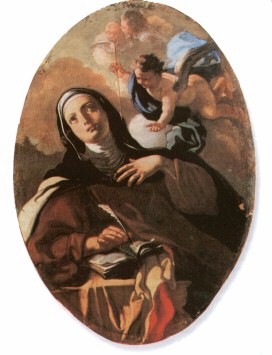
St Teresa of Avila feast day


It seems to me the Holy Spirit must be a mediator between the soul and God, the One who moves it with such ardent desires, for He enkindles it is a supreme fire, which is so near.

O Lord, how great are these mercies You show to the soul here! May You be blessed and praised forever... O my God and my creator! Is it possible that there is no one who loves You? Oh, alas, and how often it is I who do not love You!....
And the Lord is not content with all this - something marvelous, worthy of careful attention - for He understands that the soul is totally His, without any other interests. This means that things must not move it because of what they are, but that it be moved because of Who its God is and out of love for Him, since He never ceases to commune with it in so many ways and manners, as One Who is Wisdom itself....
Well now, what more could we desire than this favour just mentioned? Oh, God help me, how little we desire to reach Your grandeurs, Lord! How miserable we would remain if Your giving were in conformity with our asking! (Meditations on the Song of Songs 5:5-6)
Read whole post......

Tuesday, July 15, 2025

Feast of Our Lady of Mt Carmel, 16th July

OUR LADY OF MOUNT CARMEL, PRAY FOR US


Prayers and meditations of Carmelite Saints in honour of Our Lady.


St Therese of the Child Jesus.

Short biography

O Immaculate Virgin, O tenderest Mother!....you rejoiced that Jesus gave us His life and the infinite treasures of His divinity. How can we not love you and bless you, O Mary, for such great generosity. You love us as Jesus loves us, an for our sake you are willing to live far from Him. To love means to give all, to give one's self, and you wanted to prove that by remaining our support. The Saviour knew well the secrets of your Mother's heart, the immensity of your tenderness....Jesus left us to you, O Refuge of Sinners, when he left the cross to wait for us in heaven.
O Mary, I see you on Calvary's height, standing near the cross like a priest at the altar, offering the sweet Emmanuel, you dear Jesus, to appease the Father's justice. O desolate Mother, a prophet said of you: "There is no sorrow like to your sorrow." O Queen of martyrs, standing there bereft, you pour out all your heart's blood for us.

St Elizabeth of the Trinity
short biography

O faithful Virgin, when you uttered your 'fiat', the greatest of all mysteries was accomplished in you. In what peace and recollection did you live and act! Teach me to sanctify my most trivial actions and to spend myself for others when charity requires it, yet all the while to remain like you the constant adorer of God within me.

***

O Virgin most faithful, you remain night and day in profound silence, in ineffable peace, in a divine prayer that never ceases, your soul ever inundated with heavenly light. Your heart is like a crystal that reflects the divine One, the Guest who dwells in you, the Beauty that knows no setting. O Mary, you draw heaven down to you: see the Father commits His Son to you that you may be His mother, and the Spirit of love overshadows you. The Blessed Three come to you, and all heaven is opened and abases itself before you, O Virgin Mary.
Mother of the Word, show me your mystery after the Incarnation of the Lord; how you lived buried in adoration....Keep me ever in a divine embrace. Let me carry upon me the stamp of this God of love.

***

O Mary, you are the one created being who knew the gift of God, and lost no particle of it; a creature so pure and luminous that you seemed to be the light itself. "Mirror of justice": your life was so simple, so lost in God, that there is but little to say of it; "faithful virgin": who kept all these things...in your heart." You were so lowly, so hidden in God in the seclusion of the temple that you drew upon yourself the complacent regard of the Holy Trinity. "For he has regarded the low estate of his handmaid, for behold, henceforth all generations will call me blessed."
The Father, bending down to you, a creature so lovely, so unaware of your own beauty, chose you for the Mother in time of him whose Father is in eternity. Then the Spirit of love, who presides over all the works of God, overshadowed you, and, O Virgin, you uttered your 'Fiat': Behold the handmaid of the Lord; be it done to me according to your word," and the greatest of all mysteries was accomplished. By the descent of the Word into your womb, you became God's own for ever and ever.
Read whole post......

Monday, March 10, 2025

Lent with Carmelite Saints

Updated as often as possible during these days of Lent to read, reflect and maybe to try to amend some imperfections. May God help us!

Passion Sunday
Passiontide is consecrated to the remembrance and loving contemplation of the sorrows of Jesus. The veiled crucifix and statues, the absence of the Gloria Patri in the responsories of the Divine Office, the suppression of the psalm Judica me at the beginning of Mass are all signs of mourning by which the Church commemorates Our Lord's Passion. Through meditating on Our Lord's Passion we bear His suffering in our hearts and by uniting our own suffering to His (2 Cor 4:10) we shall be able to share in its fruits "If you hear the voice of the Lord, harden not your hearts." At the same time let us open our hearts to a lively hope; for our salvation is in the Passion of Jesus. St Paul says in the epistle to Hebrews (9:11-15) that 'by His Blood, entered once into the holies [that is, heaven] having obtained eternal redemption". The passion of Jesus has redeemed us; it has re-opened again our Father's house to us; it is then the motive for our hope.

The Value of Suffering
The Passion of Jesus teaches us in a concrete way that in the Christian life we must be able to accept suffering for the love of God. This is a hard and repugnant task for our nature, which naturally prefers comfort and happiness. Suffering in itself is an evil and cannot be agreeable; but Jesus willed to embrace it in all its plenitude for our sake, he offers it to us and invites us to esteem and love it - as the only means to accomplish the sublime good of our redemption and the sanctification of our souls. God willed to exempt our first parents from suffering by preternatural gifts, but through sin, these gifts were lost forever, and suffering inevitably entered our life. the gamut of sufferings which has harassed humanity is therefore direct outcome of the disorder caused by sin, not only by original sin, but also by actual sins. Yet Church chants: O happy fault! Why? The answer lies in infinite love of God which transform everything and draws from the double evil of sin and suffering the great good of the redemption of the human race. When Jesus took upon Himself the sins of mankind, He also assumed their consequences, that is, suffering and death; and this suffering, embraced by Him during his whole life, and especially in His Passion, became the instrument of our redemption. Let St Therese speak on the value of suffering:
"O Lord, You do not like to make us suffer, but You know it is the only way to prepare us to know You as You know Yourself, tp prepare us to become like You. You know well that if You sent me but a shadow of earthly happiness, I should cling cling to it with all the intense ardour of my heart, and so You refuse me even this shadow... because you wish that my heart be wholly Yours.
Life passes quickly that it is obviously better to have a most splendid crown and a little suffering, than an ordinary crown and no suffering. When I think that, for a sorrow borne with joy, i shall be able to love You more for all eternity, I understand clearly that if You gave me the entire universe, with all its treasures, it would be nothing in comparison to the slightest suffering. Each new suffering, each oang of the heart, is a gentle wind to bear to You, o Jesus, the perfume of the soul that loves You; then you smile lovingly, and immediately make ready a new grief, and fill the cup to the brim, thinking the more the soul grows in love, the more it must grow in suffering too.
What a favour, my Jesus, and how You must love me to send me suffering! Eternity itself will not be long enough to bless You for it. Why this predilection? it is a secret which You will reveal to me in our heavenly home on the day when You will wipe away all our tears.
I am happy not to be free from suffering here; suffering united with love is the only thing that seems desirable to me in this vale of tears (St Therese of Child Jesus "Letters", Story of the Soul)

Patience 
Patience is the virtue which makes us accept for love of God, generously and peacefully, everything that is displeasing to our nature, without allowing ourselves to be depressed by the sadness which easily comes over us when we meet with disagreeable things.
Patience is a special aspect of the virtue of fortitude which prevents our deviating from the right road when we encounter obstacles. it is an illusion to believe in a life without difficulties. many difficulties are surmounted and overcome by an act of courage; others, on the contrary, cannot be mastered. We must learn to bear with them, and this is the role of patience - an arduous task, because it is easier to face obstacle directly, than to support the inevitable oppositions and sufferings of life, which, in time, tend to discourage and sadden us. By fixing our glance on Jesus, the divinely patient One, we can learn to practice patience most effectively. When we see Him who came into the world to save us, living from the first moment of His earthly existence in want, privation, and poverty, and later in the midst of misunderstanding and persecution; when we see Him become the object of the hatred of His own fellow citizen, calumniated, doomed to death, betrayed by a friend, and tried and condemned as malefactor, our souls are stirred: we realized that we cannot be his disciples unless we follow the same road. If Jesus, the Innocent One par excellence, bore so much for love of us, can we, sinnners who are deserving to suffer, not endure something for love of Him? Whatever the total suffering in our lives, it will always be very small, and even nothing, compared with the infinite sufferings of jesus; for in His Passion Christ not only endured the suffering of one life or several human lives, but that of all mankind.

It is very consoling for me to remember that You, the God of might, knew our weaknesses, that You shuddered at the sight of the bitter cup which earlier You had so ardently desired to drink.
In spite of this trial which robs me of all sense of enjoyment, i can still say: 'You have given me, O Lord, a delight in Your doings.' For is there any greater joy than to suffer for Your love, O my God? the more intense and the more hidden the suffering, the more do You value it. And even if, by an impossibility, You should not be aware of my affliction, I should still be happy to bear it, in the hope that by my tears I might prevent or atone for one sin against faith" (St Therese - "Letters" "The Story of the Soul")

Hidden life
St Teresa Margaret of the Heart of Jesus was the Saint who perfected the way of 'hidden life'. She wanted to reserve for God alone the gift of her whole being, and she tried to hide from the eyes of others the riches of her interior life, her heroic virtues. She once said: "Work for the sole end of pleasing God, never looking for any human praise". St Therese prays: "Yes, all must be kept for You with jealous care, because it is so sweet to work for You alone! Then the heart is filled with gladness!...Yes I want to be forgotten, not only by creatures, but even by myself...and to have no other desire than Your glory, my Jesus - that is all! My own I abandon to You". It sounds hard, but not so if we realize it was Jesus Himself has thought us how to practice the hidden life, insisting that we do our good works in secret, only to please God, and without ostentation. He tells us also to guard the secret of our interior life and our relations with Him: "When thou shalt pray, enter into thy chamber and shut the door"; to conceal our self-denials: "When thou fastest, anoint thy head and wash thy face"; not to display our good works: "When thou dost give alms, let not thy left hand know what the right hand doth," for those who do their good works before man, to be seen by them, "have received their reward" and will receive no further one from their heavenly Father (Matt 6: 1-18). When "we observe in ourselves a desire for something brilliant", said St Therese, "Let us humbly take our place with the imperfect and know that we are weak souls who must be sustained every instant by God" (Ven Gabriel of St Mary Magdalene)

Humility and confidence
In the Psalm 129 also known as 'De Profundis' or prayer of a sinner trusting in the mercies of God we read: 'Out of the depths I have cried to thee, O Lord: Lord, hear my voice. Let thy ears be attentive to the voice of my supplication. If thou, O Lord, wilt mark iniquities: Lord, who shall stand it. For with thee there is merciful forgiveness: and by reason of thy law, I have waited for thee, O Lord. My soul hath relied on his word: My soul hath hoped in the Lord. From the morning watch even until night, let Israel hope in the Lord. Because with the Lord there is mercy: and with him plentiful redemption. And he shall redeem Israel from all his iniquities. (D-R B). When the Apostles asked Jesus who would be the greatest in the kingdom of heaven He answered this way: 'Amen I say to you, unless you be converted and become as little children, you shall not enter into the kingdom of heaven. Whosoever therefore shall humble himself as this little child, he is the greatest in the kingdom of heaven' (Matt 18:3-4). St Therese therefore says in Novissima Verba: 'to remain little, is to acknowledge one's nothingness and to expect everything from the good God, as the child expects everything from its father...even among the poor, a child, while he is very little, is given everything that is necessary, but when he has grown, his father no longer wants to support him, and says 'Go to work now!...You can rely on yourself.' It is that I might never hear those words that I never wanted to grow up, because I felt incapable of earning my own living: eternal life."In spiritual terms when a soul forgets its nothingness, and relies on its own strength, knowledge, initiative, or virtues, God leaves it to itself, and the failures which follow, the falls, the fruitlessness of its works - all reveal its insufficiency. God does not introduce a soul to a higher spiritual life, nor admits it to deeper intimacy with Himself, as long as it is not completely despoiled of all confidence in itself. St Teresa of Jesus, speaking of difficulties in overcoming the last obstacles to her total conversion says: 'I must have failed to put my whole confidence in His Majesty and to have a complete distrust of myself' (Life, 8). St Therese is convinced that 'what pleases Jesus is to see me love my littleness and poverty, the blind hope that I have in His mercy. This is my only treasure' and 'I admit, O Lord, that I am very weak; I have salutary proof of it every day. But You deign to teach me the knowledge which makes me glory in my infirmities. This is a very great grace, and only in it do I find peace and contentment of heart, for now I understand Your ways: You give as God, but You want humility of heart'. (Letters) (credits: based on  'Divine Intimacy' meditations)

Humility in our falls
It often happens when we try to practice some virtue or execute a good resolution that we fail and feel discouragement - our inner pride is wounded and deceived. This is because we depend upon our own strength. We act by ourselves. In our busy lives we easily forget that all our strength depends on the grace of God. We often forget about Him in times of prosperity, nor do we have recourse to Him when we fail Him. We rely on ourselves and this is not what God wants us to do: 'Woe to him that is alone, for when he falleth, he hath none to lift him up (Eccl 4:10). In our struggle for better, holy life we are in great need of God's help and considering any failure we should remember that God is our merciful and loving Father. He alone can raise us up. St Teresa of Jesus teaches us that our self-knowledge cannot be separated form the knowledge of God when she says: 'The soul must sometimes emerge from self-knowledge and soar aloft in meditation upon the greatness and the majesty of its God. Doing this will help it to realize its own baseness better than thinking of its own nature, and it will be freer form the reptiles which enter the first room, that is, the rooms of self-knowledge' (Int C 1:2). In her 'Way of Perfection' the Saints says: 'True humility, however deep it may be, neither disquiets, nor troubles, nor disturbs the soul; it is accompanied by peace, joy and tranquility....It enlarges it, and makes it fit ti serve God better', whereas 'false humility only disturbs and upsets the mind and troubles the soul, so grievious is it. I think the devil is anxious for us to believe that we are humble and, if he can, he will lead us to distrust God' (Way, 39). Therefore, when we fall into the same imperfections after so many good resolutions; when after many efforts we still so not succeed in correcting certain faults or in overcoming certain difficulties, St Teresa encourages us to have recourse to the infallible remedy of humility that is: 'the ointment for our wounds' (Int C 3:2). After St Therese of Child Jesus we may say: 'Yes, O my God, I am happy to feel little and weak in Your presence, and my heart remains in peace...I am glad to feel so imperfect and to need Your mercy so much! When we calmly accept the humiliation of being imperfect, Your grace, O Lord, returns at once' (Letters, Novissima Verba). (Based on 'Divine Intimacy' Lenten meditations)

To be hidden with Christ in God
Our Lord's interior life was the life of intimacy with the Holy Trinity. His sacred soul was personally united to the Word, unceasingly enjoying the Beatific Vision. It sees the Word, the subject of His activity, it sees the Father, the cause of its Being and it sees the Holy Spirit, who dwells in it as 'His chosen temple' and who, by covering it with the flame of His love, draws it toward God in perfect accomplishment of His will. Exteriorly, Jesus lives among men, deals with them as one of them, but His real life, His existence as the Son of God, is lived hidden from all human sight, with the Trinity and in the Trinity. The imitation of Jesus' hidden life has for its ultimate end the participation in His interior life; that is, to be hidden 'with Christ in God' - in order to enter with Him  the sanctuary of the Most Holy Trinity. St Teresa Margaret expressed this in her ardent desire to 'emulate by faith insofar as it is possible for a creature, the hidden, interior life and activity of the intellect and will of the sacred humanity of Jesus Christ, hypostatically united to the Word' (Spirituality of St Teresa Margaret of the Heart of Jesus). The practice of the hidden life, which St Teresa Margaret perfected, has two aspects. First consists in dying to glory and worldly honours, whereas the second, consists in concentrating entirely on God in a life of relation with Him. The more the soul is able to hide from creatures, the more it is capable to live 'with Christ in God' - as St Paul beautifully expressed, saying: "You are dead [to the world] and your life is hidden with Christ in God"(Col 3:3). The more we are detached from worldly honours, fame, earthly glory and esteem the more we become close to God. Our Lord is the best example: "When the people, therefore, had seen the sign which Jesus had worked, they said, "This is indeed the Prophet who is to come into the world." So when Jesus perceived that they would come to take him by force and make Him a king, he fled again to the mountain, himself alone (John 6:14-15).
"My God, I desire to enclose myself forever within Your most loving Heart, as in a desert, so that in You, with You, and for You I may live a hidden life of love and sacrifice" " O Jesus,...since You inspire  me to become as much as possible like, all my efforts will tend toward that end. I shall imitate You especially in those virtues which are most pleasing to Your most lovable Heart - humility and purity of intention, interior as well exterior - always working with a spirit of simplicity" (Spirituality of St Teresa Margaret)


Read whole post......

Saturday, December 14, 2024

St John of the Cross solemnity


Today is the Feast of St John of the Cross, a man of exalted sanctity, called the "prince of mystic theology", who was the chief co-labourer of St Teresa, in the establishment of the Reform, in Spain.

He was an ardent lover of the Cross, and on one occasion, when Our Lord asked him what he desired as a reward for his labours and great austerity, he answered: "Lord, to suffer and to be despised for Thy Sake."In the Office of his feast, the Carmelites sing of Saint John of the Cross:

"Saint of the eagle eye,
Gazing enrapt on high,
Mid dread abysses of Divinity;
Martyr by heart's intent,
Virgin yet penitent;
Prophet and guide in realms of mystery!
Clearly dost thou reveal
Secrets the clouds conceal,
For thou hast steeped thy soul in rays above,
Pondering the mountain height,
Darkness of faith's long night,
And the reviving flame of mystic love."

St John of the Cross' writings rank high in literature, and the more outstanding of his work are: "Spiritual Canticle, "The Ascent of Mount Carmel", "The Living Flame of Love", "The Dark Night of the Soul", "Precautions". Saint John of the Cross knew well how to "keep festival with unleavened Bread of Sincerity and Truth" even in the midst of excruciating trials, imitating therein the meek Lamb of God in His bitter Passion. This valiant disciple of the Cross affords encouragement with this consoling truth: "When God is really loved, He bears most readily the cry of the soul that loves Him".

Father John de Yepez, youngest son of Gonzales de Yepez, was born in 1542, at Fontibera, a small town between Avila and Salamanca in Old Castile. From his earliest childhood he had a particular inclination to piety, and several times experienced the protection of Divine Providence, and the watchful care of the Blessed Virgin, for whom he ever had a marked devotion. At the age of twenty-two he entered the Carmelite Monastery of Medina del Campo, and there practiced great austerities. He studied Theology at Salamanca, and was ordained Priest at the age of twenty-four. When he met St Teresa at Medina del Campo, she immediately recognized the treasures of grace his heart possessed, and unfolded to him her plans with her usual candour and simplicity. he understood her, and promised to join the good work if he might do so promptly, for his soul was longing for a more rigid life, and he had determined to go and join Carthusians. St Teresa lost no time, and having obtained the permission of the Provincial, and of the Diocesan Bishop, she founded at once the first Monastery of the Friars, in a poor little house, which had been given her for the purpose, at Durvelo. Thus was sown the tiny mustard seed, whence was to spring the mighty tree, upon whose ever spreading branches innumerable souls would rest in contemplation throughout future ages. While Father Antonio was tall and portly, Father John of the Cross was very small of stature, and the Saint, whose sense of humour was irresistible, used to say, that God had given her a friar and a half to begin her Reform. The latter was the first professed, and the saint cut and made his habit with his own hands. The house at Durvelo was poor and very small. It belonged to a nobleman of Avila, Don Raphael, and was kept for the use of his bailiff, who received his corn rents there. Their penances and austerities were such that the saint had to urge them to use moderation, fearing they would kill themselves and thus destroy the good work they had began, but they made light of all their sufferings and God so blessed their labours, that the Order spread with a rapidity truly miraculous.

Dom Prosper Gueranger OSB, writes beautifully about the Saint in 'The Liturgical Year':
Let us go with the Church to Mount Carmel, and offer our grateful homage to John of the Cross, who following in the footsteps of Teresa of Jesus, opened a safe way to souls seeking God. The growing disinclination of the people for social prayer was threatening the irreparable destruction of piety, when in the sixteenth century the divine goodness raised up saints whose teaching and holiness responded to the needs of the new times. Doctrine does not change: the asceticism and mysticism of that age transmitted to the succeeding centuries the echo of those that had gone before. But their explanations were given in a more didactic way and analyzed more narrowly; their methods aimed at obiating the risk of illusion to which souls were exposed by their isolated devotion. It is but just to recognize that under the ever-fruitful action of the Holy Ghost the psychology of supernatural states became more extended and more precise.

The early Christians, praying with the Church, living daily and hourly the life of her liturgy, kept her stamp upon them in their personal relations with God. Thus it came about that, under the persevering and transforming influence of the Church, and participating in the graces of light and union, and in all the blessing of that one beloved so pleasing to the Spouse, they assimilated her sanctity to themselves, without any further trouble but to follow their mother with docility and suffer themselves to be carried securely in her arms. Thus they applied to themselves the words of our Lord: 'Unless you become as little children, you shall not enter into the kingdom of heaven'. We need not be surprised that there was not then, as now, the frequent and assiduous assistance of a particular director for each soul. Special guides are not necessary to the members of a caravan or of an army; it is isolated travellers that that stand in need of them; and even with these special guides, they can never have the same security as those who follow the caravan or the army.
This was understood, in the course of the last few centuries, by the men of God who, taking their inspiration from the many different aptitudes of souls, became the leaders of schools, one, it is true, in aim, but differing in the methods they adopted for counteracting the dangers of individualism. In this campaign of restoration and salvation, where the worst enemy of all was illusion under a thousand forms, with its subtle roots and its endless wiles, John of the Cross was the living image of the Word of God, 'more piercing than any two-edged sword, reaching unto the divisions of the soul and the spirit, of the joints also and the marrow'; for he read, with unfailing glance, the very thoughts and intentions of hearts. Let us listen to his words. Though he belongs to modern times, he is evidently a son of the ancients.:
'The soul' he says, 'is to attain to a certain sense, to a certain divine knowledge, most generous and full of sweetness, of all human and divine things which do not fall within the commonsense and natural perceptions of the soul; it views them with different eyes now, for the light and grace of the Holy Ghost differ from those of sense, the divine from the human. (Dark night of the soul, book 2, ch 9) The dark night through which the soul passes on its way to the divine light of the perfect union of the love of God - so far as it is in this life possible - requires for its explanation greater experience and light of knowledge than I posses. For so great are the trials, and so profound the darkness, spiritual as well as corporal, which souls must endure if they will attain to perfection, that no human knowledge can comprehend them, nor experience describe them. (The Ascend of Mount Carmel - Prologue)

The journey of the soul to the divine union is called night for three reasons. The first is derived from the point from which the soul sets out, the privation of the desire of all pleasure in all the things of the world, by every desire and sense of man. The second, from the road by which it travels - that is, faith; for faith is obscure, like night, to the intellect. The third, from the goal to which it tends, God, incomprehensible and infinite, who in this life is as night to the soul. We must pass through these three nights to attain to the divine union with God.
They are foreshadowed in holy Scripture by the three nights which were to elapse, according to the command of the angel, between the betrothal and the marriage of the younger Tobias. (Tob 6;16) On the first night he was to burn the liver of the fish in the fire, which is the heart whose affections are set on the things of this world and which if it will enter on the road that leadeth unto God, must be burned up, and purified of all created things in the fire of this love. This purgation drives away the evil spirit, who has dominion over our soul because of our attachments to those  pleasures which flow from temporal and corporal things.

'The second night, said the angel, thou shalt be admitted into the society of the holy patriarchs, the fathers of the faith. The soul having passed the first night, which is the privation of all sensible things, enters immediately into the second night, alone in pure faith, and, and by it alone directed; for faith is not subject to sense.
The third night, said the angel, thou shalt obtain a blessing - that is, God, who in the second night of faith communicates Himself so secretly and so intimately to the soul. This is another night, inasmuch as this communication is more obscure that the others. When this night is over, which is the accomplishments of the communication of God in spirit, ordinarily effected when the soul is the Wisdom of God, immediately ensues. ('The Ascent of Mt Carmel' Book I, Ch 2)


Read whole post......
Saturday, October 14, 2023

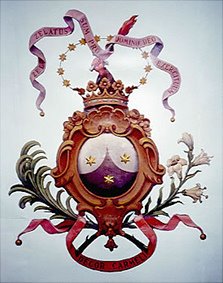
Feast of St Teresa of Jesus

St. Teresa of Jesus
After Roman Breviary Lessons

The virgin Teresa was the daughter of a father and mother, equally honourable on account of their birth and of their godliness, and was born at Avila in Spain. She was brought up from the dawn of her life in the fear of God, and when still only seven years old she gave startling forecast of the holy earnestness of her later years. The reading of the acts of the holy martyrs so inflamed and excited her imagination, that she ran away from her father's house, with the design of going to Morocco and the hope there to lay down her life for the glory of Christ Jesus and the salvation of souls. She was met by an uncle and brought back to her mother, and was fain to slake her thirst for martyrdom by giving to the poor all the alms she could, and by other godly exercises, though still ever bewailing with tears that the highest prize had been snatched from her. Upon the death of her mother she besought the blessed Virgin to be a mother to her in her stead. This she gained ; thenceforth she lived always as a daughter under the shelter of the Mother of God. In the twentieth year of her age she withdrew herself among the nuns of St. Mary of Mount Carmel. There she dwelt for two-and-twenty years, tormented by grievous sicknesses and divers temptations, and so bravely served her time in the hardest ranks of Christ's army, starved even of that comforting knowledge of God's reconciled love, wherein his holy children are so commonly used even upon earth to rejoice.Strengthened in the graces of an angel, the wideness of her love embraced in its tender care the salvation of other souls as well as her own. To this end, under the blessing of God, and the approbation of Pius IV, she set, first before women and then before men, the observance of the stern Rule of the Old Carmelites. The blessing of the Almighty and merciful Lord did indeed rest most evidently upon this design. This penniless virgin, helped by no man, and in the teeth of many that were great in this world, was enabled to build two-and-thirty houses. The darkness of unbelievers and misbelievers drew from her unceasing tears, and she willingly gave up her own body to God to be tortured, to soften the fury of his indignation against them. His own love so blazed in her heart that she attained to see an Angel run her through with a fiery spear, and Christ himself take her by the hand, and to hear him say : Henceforth thou shalt love mine honour as a wife indeed. At his inspiration she took the extremely difficult vow to do always that which should seem to her to be most perfect. She wrote much, full of heavenly wisdom, whereby the minds of the faithful are enkindled to long for the Fatherland above.Earnest as were the ensamples of graces which she had shewn, and grievous as was the state of her body, afflicted by disease, she still burnt with the desire of tormenting it. She tortured it with sackcloth, chains of spikes, handfuls of nettles, and heavy scourging. She rolled herself sometimes among thorns, and was used to cry to God : Lord! to suffer, or to die! As long as she remained exiled from the heavenly Fountain of eternal life, her life was to her a lingering death. She was eminent for the gift of prophecy, and God did indeed so pour forth his bounties upon her, that she often cried to him in entreaty not to bless her so as to make her forget her sins. It was worn out rather by the fever of her love than by the wasting of disease that she sank upon her deathbed at Alva. She foretold the day of her own death, received the Sacraments of the Church, and exhorted her disciples to peace, love, and strictness in observing the Rule, and then her soul, like a pure dove, winged its flight to rest with God, on the 15th day of October in the year 1582, New Style, being then 67 years of age. At her death she had a vision of Christ Jesus surrounded by Angels. A dead tree hard by the cell instantly broke into foliage. Her body is untouched by corruption even unto this day, and lieth in a sort of perfumed oil, regarded with godly reverence. She was famous for miracles both before and after her death, and was numbered by Gregory XV, among the Saints.


The photos represent the view of town of Avila and the family house of St. Teresa
Read whole post......

Sunday, October 01, 2023

Feast of St Therese

Beautiful reflections from St Therese on her beloved Church - text after the "Story of the Soul".


I understand that the Church had a Heart and that this Heart was burning with love. I understand it was Love alone that made this Church's member act, that if Love ever became extinct, apostles would not preach the Gospel and martyrs would not shed their blood. I understand that LOVE COMPRISED ALL VOCATIONS, THAT LOVE WAS EVERYTHING, THAT IT EMBRACED ALL TIMES AND PLACES....IN A WORD, THAT IT WAS ETERNAL!
Then in the excess of my delirious joy, I cried out: O Jesus, my Love...my vocation, at last I have found it...My VOCATION IS LOVE!
Yes, I have found my place in the Church and it is You, O my God who have given me this place; in the heart of the Church, my Mother, I shall love. Thus I shall be everything, and thus my dream will be realized.
What speak of a delirious joy? No, this expression is not exact, for it was rather the calm and serene peace of the navigator perceiving the beacon which must lead him to the port...O luminous Beacon of Love, I know how to reach You, I have found the secret of possessing Your flame.
I am only a child, powerless and weak, and yet it is my weakness that gives me the boldness of offering myself as VICTIM of Your love, O Jesus!
O Jesus, I know it, love is repaid by love alone, and so I searched and I found the way to solace my heart by giving You Love for Love...I presented myself before the angels and saints and I said to them: "I am the smallest of creatures; I know my misery and my feebleness, but I know also how much noble and generous hearts love to do good. I beg you to ADOPT ME AS YOUR CHILD. To You alone will be the glory which You will make me merit, but deign to answer my prayer. It is bold, I know; however, I dare to ask You to obtain for me YOUR TWOFOLD SPIRIT. 
Jesus, I cannot fathom the depths of my request; I would be afraid to find myself overwhelmed under the weight of my bold desires...Well, I am the Child of the Church and the Church is a Queen since she is Your Spouse, O divine King of kings...What this child asks for is Love. She knows only one thing: to love You, O Jesus. Astounding works are forbidden to her; she cannot preach the Gospel, shed her blood; but what does it matter since her brethren work in her stead and she, a little child, stays very close to the throne of the King and Queen. She loves in her brothers' place while they do the fighting. But how will she prove her love since love is proved by works? Well, the little child will strew flowers, she will perfume the royal throne with their sweet scents, and she will sing in her silvery tones the canticle of Love.
Yes, my Beloved, this is how my life will be consumed. I have no other means of proving my love for You other than that of strewing flowers, that is, not allowing one little sacrifice to escape, not one look, one word, profiting by all the smallest things and doing them through love; and in this way I shall strew flowers before Your throne. I shall not come upon one without unpetalling it for You. While I am strewing my flowers, I shall sing, for could one cry while doing such a joyous action? I shall sing even when I must gather my flowers in the midst of thorns, and my song will be all the more melofious in proportion to the length and the sharpness of the thorns. 
O Jesus, of what use will my flowers be to You? Ah! I know very well that this fragrant shower, these fragile, worthless petals, these songs of love from the littlest  of hearts will charm You. Yes, these nothings will please You. They will bring a smile to the Church Triumphant. She will gather up my flowers, unpetalled through love and have them pass through Your divine hands, O Jesus. And this Church in heaven, desirous of playing with her little child, will cast these flowers, which are now infinitely valuable because of Your divine touch, upon the Church Suffering in order to extinguish its flames and upon the Church Militant in order to gain the victory for it!
O my Jesus!  I love You! I love the Church, my Mother! I recall that "the smallest act of PURE LOVE is of more value to her than all other works together." But is PURE LOVE in my heart? Are my measureless desires only but a dream, a folly?Ah! If this be so, Jesus, then enlighten  me, for You know I am seeking only the truth, If my desires are rash, then make them disappear, for these desires are the greatest martyrdom to me. however, I feel, O Jesus, that after having aspired to the most lofty heights of Love, if one day I am not to attain them, I feel that I shall have taste on the bosom of the joy of the Fatherland, unless You take away the memory of these earthly hopes through a miracle. Allow me to taste the sweet bitterness of my martyrdom.


Read whole post......

Saturday, June 10, 2023

Most Holy Sacrament of the Altar, St Thomas Aquinas and Carmelite Saints, Corpus Christi Solemnity


Food sustains life. Without food, no living being can remain alive and active. Grace gives to man a divine life. Baptism gives man birth in the divine life. Confirmation gives man maturity in the divine life. But this life cannot continue to grow without food, spiritual food. Like every other life, the divine life of grace must be nourished. it must be fed. The food of the life of grace is the Sacrament of the Holy Eucharist . In this Sacrament, the life of grace feeds on the very Body and Blood of Christ Himself. If, in the natural order, bread were the only substance that men could eat, then all men would eat bread always. For a man needs food to live. In the supernatural order of grace, the Eucharist is the necessary food of the supernatural life of grace.

St Teresa of Jesus of the Andes: "Dear Jesus, may Your will be done and not mine. Tomorrow I will go to Communion. I obtained permission. Oh, what happiness: tomorrow I will have Heaven in my heart! Oh, I love, Jesus, I adore You! I thank You and my Mother for this favour. I am all Yours....only You....no other creature."

The Eucharist is not necessary in the same way that Baptism is necessary. Baptism is necessary as the beginning of the supernatural life of grace. But the Eucharist is necessary as the consummation of the life of grace. Baptism is necessary because it make a man like Christ, and so fits him for the reception of Christ in his soul. In the Eucharist, man is united to Christ Himself. In the Eucharist, the very Body and Blood of Christ become the spiritual food of man's soul, increasing grace in the soul and so increasing man's likeness to Christ.
The Eucharist is called by many names in Christian tradition. It is called "the Sacrifice", because it is a remembrance of Christ's Passion. it is called "Communion" because it is the cause of unity or union between Christ and the members of His Church. It is called "Viaticum", because it gives man the way to win the vision of God. To put it in another way, in the Eucharist we have a renewal of Christ's Passion, which saved men by meriting grace for men; in the Eucharist we have Christ Himself, Who gives grace to men; and in the Eucharist we have Christ Himself, Who enables the soul of men to pass through death to eternal life.

Bl Teresa of Jesus of the Andes: "Tomorrow I will go to Communion. How I long for this, my Jesus. I am so bad. I need You to be good. Come, Love, come quickly and I will give You my heart, my soul and all I possess. My Mother, prepare my heart to receive my Jesus." (after "God, the Joy of my Life: Blessed Teresa of the Andes")


Dieric Bouts "The Last Supper"

Christ Himself instituted this great Sacrament at the Last Supper. He knew that He was shortly to leave this earth. He knew that He would not remain in this world much longer in His bodily presence. But He did not wish to leave His faithful disciples entirely. He wished to remain with His followers in some way. And so He gave us His presence in the Sacrament of the Eucharist to take the place of His historical bodily presence. Besides, He wished to leave men a remembrance of His Passion. Faith in His Passion is necessary for salvation. But in the course of time men might forget His Passion and death on the Cross. In the Eucharist he has given men a perpetual remembrance of His Passion and death on the Cross. He instituted this Sacrament at the Last Supper, because He knew that the last words and actions of men who are about to leave this world are more likely to be remembered with love and devotion than any other words and actions. The Eucharist was, as it were, His last will and testament to the human race. Shortly before His Death, Resurrection and Ascension into Heaven, he left men His Body and Blood as the food of their souls. It was the most precios gift He had to leave us, because the Eucharist is Christ Himself, the Author and Dispenser of God's grace.

Saint Teresa Benedicta of the Cross, fragment of the poem "I shall Stay with You":
..."This is the heart of Trinity divine,
The center also of all human hearts.
Source of our life from God.

It draws us close with its mysterious might,
It keeps us safe within the Father's lap
And flood us with the Holy Spirit.

This heart beats in a tiny tabernacle
Where it remains in hidden mystery.
Within that orbit, silent, white.

That is Your royal throne, O Lord, on earth,
Which You have built for us, plainly to see.
It pleases You when I draw near....

In the mind of Christ, the Eucharist is to be the food of souls. "I am the living bread which came down from heaven. If any man eat this bread, he shall live forever: and the bread that I will give is my flesh, for the life of the world...Except you eat the flesh of the Son of man and drink his blood, you shall not have life in you. He that eateth my flesh and drinketh my blood hath everlasting life: and I will raise him up in the last day. For my flesh is meat indeed: and my blood is drink indeed. He that eateth my flesh and drinketh my blood abideth in me: and I in him. (John 6: 51-55). Becasue the Eucharist is the food of souls, Christ chose bread and wine for the matter of this Sacrament. Bread is the staple food of all mankind, and wheaten bread is the bread most commonly used among men. For this reason, Christ chose bread to be the sacramental sign of His Body. But man not only needs solid food, he also needs liquid refreshment. Wine is a liquid nourishment universal to mankind. Wine made from grapes
is the only true wine. Hence Christ chose wine to be the sacramental sign of His Blood. When He instituted this Sacrament at Last Supper, Christ, according to the custom of His country, mixed a little bit of water with the wine. In the Mass, a little bit of water is mixed with the wine which is to be changed into Christ's Blood. This water represents the Christian people, the members of the Church. This represents the union of the faithful with Christ. Christ wanted to give men His own Body and Blood, as the food of their souls. Hence, as the sacramental sign of His Body and Blood, He chose elements that would be recognized as food by men.

...Your eyes look deeply into mine with love,
And to my whispered words You bend Your ear.
You fill my heart with deepest peace.

And yet Your love cannot be satisfied
By this exchange, for there remains a gap,
Your heart still asks for more.

each morn You come to me at early Mass
Your flesh and blood become my food and drink;
And wonders are accomplished.

Your body permeates mine mysteriously,
I feel Your soul becoming one with mine:
I am no longer what I used to be.

You come and go, but still the seed remains
Which You have sown for future splendour,
Hid in the body made from dust.

A heavenly radiance lingers in the soul,
And deeply shines a light within the eye,
A vibrant music in the voice...


In the Eucharist, at words of consecration uttered by Christ at the Last Supper, or now by the priest at Mass, bread and wine are changed into the Body and Blood of Christ. Bread and wine are no longer present. Instead the Body and Blood of Christ are present sacramentally. We can never hope to understand in this life how this change takes place. This is a mystery beyond comprehension. But we can so state the mystery that it is no longer absurd or ridiculous or contradictory. Let us examine the mystery more closely. Before the Consecration of the Mass, bread and wine are present on the altar. When the priest says, speaking in the name of Christ, "This is My Body," and "This is the chalice of my Blood of the New and Eternal Testament, the Mystery of Faith, which shall be shed for you and for many unto the forgiveness of sins," the bread and wine cease to be present. How does this take place? Christ, in His Body and Blood, is present in heaven. He does not leave heaven and come to the altar to displace the bread and wine. Rather, the bread and the wine are changed into His Body and Blood. The bread and the wine cannot remain. If this happened, then the words of Christ, pronounced in the Mass by His priest, would not be true. Instead of saying, "This is My Body," the priest should say "This is bread and the Body of Christ." At the moment of Consecration, then, the bread must become the Body of Christ and the wine must become his Blood. The change must be instantaneous, for Christ did not say, "This bread is about to become My Body;" He said, "This is My Body." Naturally, the whole of the bread must be changed into the Body of Christ, and the whole of the wine must be changed into His Blood. If this did not happen, then once again the words of Christ would not be true. He should have said something like this: "This is partly bread and partly My Body." But He did not say anything like this. He said simply, "This" - all this that you see - "is my Body".

Bl Elizabeth of the Trinity:
Oh, how good it is in silence
To listen to Him over and over,
To enjoy the peace of His presence,
And then to surrender wholly to His love.

O Lamb, so pure and so meek,
You and All, my only One;
How well You know that Your fiancee,
Your little one, hungers greatly for You.

She hungers to feed upon her Master,
Above all to be consumed by Him,
To surrounder fully to Him her whole being
So she may be totally taken.

Oh, that I may be possessed by You;
One who lives by You alone,
Yours, Your living host,
Consumed by You on the Cross.

This is a very special kind of change, in fact the only change of its kind we know. We are accustomed to many chages in the world of matter. Water and wheaten flour can be mixed together and baked. In the baking they are changed into bread. In the course of time, through the process of nature wine can change into vinegar. But there are three things of which we are sure in all changes of this kind. First, the new substance - bread or wine in the examples given - did not previously exist. It came into being with the change. Secondly, something of the first substance - of the wheat or of the wine -went into the making of the last substance, the bread or the vinegar. And thirdly, the sensible qualities of the first and the last substances were not the same. Wheat looks differently and tastes differently from bread. Wine tastes differently from vinegar. Now in the Eucharist, the substance of the Body and Blood of Christ are in existence before the substance of the wine are changed into them. Secondly, and consequently, nothing of the bread and nothing of the wine are used in making the Body or the Blood of Christ. Thirdly, although the sensible qualities of the Body and Blood of Christ are different from the sensible qualities of bread and wine, nevertheless, the sensible qualities of bread and wine still exist in the Eucharist. The consecrated Host still looks like bread, feels like bread, and tasted like bread. The wine that has been consecrated still looks like wine, tastes like wine. On the other hand, neither the Host nor the Previous looks like the Body and the Blood of Christ. We can only say that the whole substance of the bread has been changed into the substance of the Body of Christ, and the whole substance of the wine has been changed into the Blood of Christ, but that the appearance of bread and wine still remain. What was bread has been changed, though the appearance of bread remain. What was wine has been changed, though the appearance of wine remain. Theologians call a change of this kind 'Transubstantiation'. The word means that one whole substance changed into another whole substance, even though the appearances - philosophers would say "accidents" - of the first substance still remain. In the Eucharist neither the bread nor the wine is annihilated. They are changed into the Body and Blood of Christ.

St Therese of the Child Jesus: "Living Bread"
Living Bread, Bread of Heaven, Divine Eucharist,
O touching Mystery produced by Love,
Come dwell within my heart, Jesus, my white Host...

Deign to unite me unto Thee, O Holy and Sacred Vine,
That my feeble branch may yield its fruits to Thee;
And I will offer Thee a gilded cluster....
This cluster of love of which the grapes are souls.

"My Heaven Is Hidden"
My Heaven is hidden in the little Host
Where Jesus, my Spouse, hides Himself through love.

Thou, the great God Whom the universe adores,
In me Thou liv'st, a prisoner night and day,
Thou liv'st, for me, hidden in a Host.
For Thee I wish to hide myself, O Jesus,
Lovers need solitude,
A heart-to-heart which lasts night and day.

I am Thy cherished spouse,
Come, my beloved, live in me.
O come, thy beauty has ravished me,
Deign to transform me into Thee.


Read whole post......

Monday, November 14, 2022

All Saints of Carmelite Order

On this day the Order celebrates the memory of all its saints, those known and those unknown. Let us pray Lord, may the patronage of the Blessed Virgin Mary, our Mother, and the prayers of all the saints of Carmel help us to walk steadfastly in their footsteps, and by our prayers and good works to further the cause of your Church. We ask this through Christ our Lord. Amen
Read whole post......

Thursday, September 01, 2022

Carmelite Saints - St Teresa Margaret of the Sacred Heart (1747-1769)

In honour of Our Lady of Mount Carmel I will present the series of post about spirituality of great Carmelite Saint, St Teresa Margaret Redi who took as her motto: “Always receive with equal contentment from God’s hand either consolations or sufferings, peace or distress, health or illness. Ask nothing, refuse nothing, but always be ready to do and to suffer anything that comes from His Providence.”
Her spiritual life enriched by extraordinary graces was in fact very much hidden, for she did her best to appear ordinary to others in her attempt to follow the example of hidden life of the 'ordinary' Holy Family in Nazareth. St. Teresa Margaret's love of God was so remarkable that she literally died out of this love. The opening post today presents her short biography.

Text and pictures after www.stteresamargaret.org

Her Early Life

St. Teresa Margaret was born Anna Maria Redi on July 15, 1747 to a large, loving Catholic family in Arezzo, Italy. She was baptized the following day, the Feast of Our Lady of Mount Carmel by V.R. Canon John Baptist, the brother of her father. Her Godfather was Cardinal Henry Enriquez. She was a beautiful child with clear blue eyes, golden hair and delicate features which might have caused one anticipate for her a future as the lady of a manor and a life of leisure.

Her father Ignatius and her mother Camille were of the lower Tuscan nobility but were not overly wealthy. Anna Maria was the second of thirteen children. Her mother bore twelve children in fourteen years. The last two were twins who lived only a few weeks. Three other children also died in infancy. After a gap of six years the last child, Teresa was born. This child was given the name in religion of Anna Maria who had died six years before little Teresa’s birth.

Camille did not have a strong constitution and the strain of childbirth left her a semi-invalid. As the oldest girl, Anna Maria was entrusted with the supervision of the older of her little siblings while her mother was busy in the nursery. Her father said of Anna Maria that she had a fiery temperament and she was not above getting physical to maintain control over her little charges.

Her father testified that he could clearly see that from the age of five, Anna Maria had given her heart completely to God and she used all her facilities to know and to love Him. In later years she told her confessor simply that “from infancy I have never longed for anything other than to become a saint.”

“Who is God?” she asked her mother, her aunt, her father… The answers she received from the adults around her never fully satisfied her. People told her about God, what God is, not who God is. When her mother told her one day that God is love, Anna Maria lit up with joy. This answer at last gave her some satisfaction. But then she wondered, “What can I do to please Him?” From this moment her inexhaustible quest to love God as He loved her had begun. It is touching to note that when this childhood zeal was brought up to her, she replied in innocence “But everyone does that”.

Anna Maria’s parents were serious and pious. The family circle was warm and loving. Family prayer and daily Mass were an integral part of their lives. It appears that Camilla would have liked more social life in the villa but Ignatius would have seen that as a waste of resources and time.

The Redi villa was an ideal home for a child with a religious disposition and it is probably not an accident that all but one of the eight surviving children entered religious life or the priesthood. The large comfortable house had inspiring murals of the crusades on the walls of the entrance hall. The bedrooms contained religious art. A striking fresco of the Assumption was on the ceiling of Camilla’s room. Anna Maria’s bedroom had its own altar where she spent hours in prayer, after bribing the young ones with holy cards if they would leave her in peace. Sometimes they would creep back to observe her absorbed in prayer. Her brother Cecchino recorded that he thought she looked like a little Madonna.

The villa contained beautiful gardens and orchards. Anna Maria could be found in the corner of the gardens looking toward heaven and “thinking”. Close to the house was a chapel. It was decorated simply with frescos from episodes in the life St. Francis of Assisi. Anna Maria took St. Francis as her patron and was inspired by him with a love of poverty.

Although it was a peaceful and prosperous home, the children were not permitted to be idle. They were expected to spend their leisure time constructively. Anna Maria learned sewing and knitting and she was sometimes found knitting a simple object while completely absorbed in prayer.

At the age of seven Anna Maria made her first Confession. At that time first Confession preceded first Communion by several years. She was very attracted to the sacrament and prepared for it carefully and received it often. A conversation which took place while returning from Church and recorded by her father gives an idea of her attitude towards the sacrament.

“I have been thinking about the text that was preached on Sunday, the unforgiving servant. We come to the great King of Heaven with empty hands, in debt to Him for everything: life itself, and grace, and all the gifts He lavishes on us. Yet all we can say is, ‘Have patience with me, and I will pay thee all I owe,’ while all the time we could never pay anything towards the remission of our own debts, if God did not put into our hands the means to do so. And then, how often do we go away and refuse pardon for some slight fault in our neighbors, withholding our love, remaining aloof, or even nursing a grievance against them, and building up grudges that cool charity.”

After this conversation, Ignatius, who already appreciated the piety of this child, felt certain that God was calling Anna Maria in a special way. From that point on he began to provide her with true spiritual direction appropriate to her understanding. It was Ignatius who introduced Anna Maria to the devotion to the Sacred Heart, a devotion which became one of the central focuses of her spiritual life. The love of this father and daughter grew deeper as their profound spiritual confidences expanded the already deep familial affection. As an adult, Sr. Teresa Margaret would say “So great was the good my father has done to my soul that I can truly claim that he has been my father twice over”. It is a tender irony that in aiding the rapid spiritual growth of this most beloved daughter Ignatius was preparing the path that would take her away from him forever.

St. Apollonia’s Boarding School
At the age of nine, Anna Maria was sent to the boarding school of the Benedictine nuns of St. Apollonia’s in Florence. While other families of their status thought educating their daughters was a waste of money, the Redi family was determined to do so. His decision to provide the best of educations for Anna Maria and her three sisters as well as for his four sons forced Ignatius to tighten the family budget. One of their sacrifices was to give up the family coach. This was not only a sacrifice in convenience but also in status. A coach was mark of a family’s situation but Ignatius was not moved by such considerations. Young Anna Maria was deeply impressed by this sacrifice and urged her older brother to be very diligent in his studies in response to this generosity.

St. Apollonia’s boarding school, being Benedictine, was simple, austere and unadorned. It was quite a change from the lush sun-drenched Redi villa. But Anna Maria had wanted to attend St. Apollonia’s because she heard that one could better serve God there.

The daily life of the school was likewise simple and austere following in many ways that of the nuns themselves. Each pupil had her own room, the day was regulated by the sound of a bell, and meals were taken in silence or with the reading aloud from a good book. The course of studies was more in the line of a finishing school rather than one of rigorous academics. Even so, Anna Maria had some difficulty with her studies, especially Latin and mathematics and it was only with regard to her studies that she was ever found lacking. She was scolded for being lazy although she did apply herself to the work. Otherwise the nuns considered her modest, cheerful and obedient and it was clear that Anna Maria was very happy at the school.

She passed her years at school appearing little different from her classmates. Yet Anna Maria was already working on a method of perfection which was to last all her life and take her to the heights of sanctity.

Aside from the noise of her younger brothers and sisters, it was easy enough at home to slip away unnoticed and spend hours in prayer and meditation to which she was called at a very early age. At home she could spend time with her holy cards or alone and in thought in the corner of the garden. She could pursue her program of holiness without arousing the curiosity of those around her. The environment at school was quite different. It would be difficult to continue her practices without calling attention to herself yet she was determined to continue her spiritual progress while not appearing to be different from any other student.

At the age of ten, Anna Maria was developing a well-balanced program for her spiritual life. She saw the necessity of exterior conformity to all the directions of her teachers and the practices of her classmates all the while striving quietly for sanctity. Her method was to hide herself. She would shun anything which would appear singular or attract attention. She would appear no different than any other student, or better yet, she would pass unnoticed while her interior life flourished.

There were two reasons Anna Maria wanted to keep her interior life hidden. First, she understood from an early age that “the merits of a good action can diminish when exposed to the eyes of others who, by their praise or approval, give us satisfaction or at least flatter our self-love and pride too much; and that therefore it is necessary to be content to have God alone.” The second reason was in order to imitate the hidden life of the Holy Family. This singular family appeared to the folk of the little village of Nazareth to be no different from any other. This was Anna Maria’s goal.

But she needed help in carrying out her program especially after making her First Communion. The nuns allowed her to make her First Communion on the Feast of the Assumption, one month after her tenth birthday and a year earlier than usual. Though she tried to hide her piety, the nuns had noticed her devout and recollected attitude in prayer. They noticed her joy in the presence of the Tabernacle and the deep sighs which escaped while she gazed upon it. Sometimes tears betrayed her emotions as the older children went to receive the Blessed Sacrament. And so the good sisters moved up the date for her First Communion.

From that day she continually experienced movements of love which impelled her to try to live a more holy life. Yet she feared others would notice if she intensified her devotional exercises and this went against her determination to remain hidden. She did not want to turn to the regular confessor of the school for advice for the same reasons. Any extended time in the confessional would arouse curiosity. In her need, she turned to the one she called twice her father, and so started an extraordinary correspondence with Ignatius Redi. He remained her spiritual director for the next five years until, as the result of a retreat, she came under the direction of Dom Peter Pellegrini. It is a great loss for us that Ignatius, obedient to her wishes, burned each of Anna Maria’s letters after reading it.

Dom Pellegrini had great confidence in Anna Maria’s piety, disposition for the religious life and love of God. He immediately endeavored to help her “to soar in the way of God”. He gave her good reading material and helped her to make rapid progress in mental prayer and the virtues.

It is a mark of Anna Maria’s intelligence that she succeeded in her almost contradictory goals, extraordinary growth in holiness while appearing to be just like all the rest. The proof of her success can be found on the one hand, in the permission her confessor gave her to receive Communion as often as the nuns, and on the other, by the general opinion of her held by her classmates and most teachers that she was a good, but more or less ordinary, girl.

At the age of sixteen as her time at St. Apollonia was coming to an end, Anna Maria was finding it difficult to make a decision regarding her future. She felt drawn to the religious life and loved the Benedictine nuns at St. Apollonia yet there was something missing. A very strange and singular incident put Anna Maria on the path to Carmel.

One day a distant acquaintance of Anna Maria, Cecilia Albergotti, who was about to enter Carmel, paid a farewell visit to St. Apollonia. She told Anna Maria she wished to speak to her but the time passed and there was no opportunity to do so. However, as she was leaving Cecilia took Anna Maria’s hand and looked at her intently, saying nothing. Anna Maria walked back to her room with a strange feeling inside. Suddenly she heard the words “I am Teresa of Jesus, and I want you among my daughters.” Confused and a bit frightened, she went to the chapel and knelt before the Blessed Sacrament. She heard the words again.

Now convinced of the authenticity of the locution, she determined at that moment to enter Carmel and started immediately making plans to leave the school. She was only home for a few months when preparations were made for her application to the Carmel in Florence. She entered on September 1, 1764 a few weeks after her seventeenth birthday taking the name Teresa Margaret of the Heart of Jesus.


Entrance into Carmel
The community she entered contained thirteen professed nuns and two novices. The religious observance in the convent was excellent and Teresa Margaret always had high regard for the nuns there whom she called angels or great saints. She always, to her last day, felt unworthy to be among them.

From her first days in Carmel it was obvious to her superiors that she was an unusually mature and capable young woman. Because of her spiritual maturity she was treated severely by the novice mistress, Mother Teresa Maria, for the purposes of aiding her growth. Although Teresa Margaret exercised complete control over her actions and attitudes, her fair complexion which blushed bright red often gave away the interior battle she waged to maintain this control.

The period of postulancy was usually three months but it was extended one month because she developed an abscess on her knee. The ailment required surgery to scrape the infection away from the bone. This was done without anesthesia and the nuns marveled at her courage. Teresa Margaret however chided herself when a small whimper escaped her during the cutting. She feared that this ailment might cause the nuns not to accept her into the novitiate but there was no cause to worry. The nuns had found her spiritually mature, obedient, with a sweet and gentle nature. They considered her a gift and a true daughter of St. Teresa. She was accepted by a unanimous vote.

It was the custom at the time for the candidate to make a brief return to the world to consider once more the life she was leaving behind. Teresa Margaret visited again with members of her family and spent precious time with her father. There was no doubt now that their next parting would be forever. If anything could have kept Teresa Margaret from retuning to the Carmel, it would have been the pain she was causing her father. When Ignatius brought her back to the convent those around her were alarmed at her pallor. That evening she confided in her superior, Mother Anna Maria “I do not think that it is possible for me ever to suffer greater pain than that which I experienced in leaving my father.” She wept copious tears that night to the point of alarming Mother Anna Maria and causing her to wonder how Teresa Margaret had kept her composure through the day.

The next day Teresa Margaret was composed and radiant. Her father however was overcome and moved to a back corner of the church unable to watch the clothing ceremony. Later in the afternoon he was able to visit with her in the parlor. He could see her flooded with the peace the world cannot give and a joy no earthly pleasure can produce. He left her with an emptiness his other children could never fill yet he was at peace and thankful to God for the gift of this sacrifice.

The duties of the novices were general housekeeping and various small tasks needed by the community. But even as a novice, Teresa Margaret started the work that would take most of her time and energy for the rest of her years in Carmel; that of caring for the sick. Of the thirteen professed nuns, nine were elderly and often ill. Teresa Margaret started by assisting the aged novice mistress prepare for bed each night. She then took on the care of an ailing novice. More and more she spent any free time assisting the infirmarian in caring for one or the other of the seriously ill nuns. Some times she would move into the room of a sick sister to provide care during the night. Aside from the required periods of prayer Teresa Margaret gave her self to physical labor. Her work went far beyond what was required or expected.

A year after her clothing Teresa Margaret was scheduled to be professed. The abscess on her knee reappeared. She wondered if this might be a sign that she was mistaken, that she did not have a vocation after all. She brought her doubts before God with simplicity and humility desiring only the will of God whatever it might be. The abscess disappeared. When the time came for her profession, with honest feelings of unworthiness she asked to be professed as a simple lay Sister. This was not allowed but she kept this humble attitude all through her life in Carmel and often helped the lay sisters at their tasks. No duty was too lowly for her.

Theresa Margaret lived only four years after her Profession. For two years she served as assistant sacristan but never gave up her work among the sick. She was finally named assistant infirmarian though she had been doing the job all along.

She loved this job and the constant charity it demanded for she stated “love of neighbor consists in service.” Although “assistant” she soon was in fact exercising full responsibility for the infirmary. She was young and strong and seemed to thrive on the hard work. During her years of service, in spite of her continued determination to keep hidden her gifts and graces, remarkable incidences occurred: the miraculous healing which occurred after Teresa Margaret, filled with compassion, kissed a sister weeping in pain; her ability to converse with a deaf nun with whom no one else could communicate; various cures which, though not miraculous were at the least unusual; and her uncanny ability to know when a patient needed her no matter where in the monastery she might be.


Her Interior Life
Teresa Margaret had a rich, active interior life. The first tenant, as has been mentioned, was to remain hidden, to keep her gifts and graces hidden from all but her Lord while appearing quite ordinary to the world.

In her desire to prove her love to God, she practiced severe penances; sleeping on the floor, using a hairshirt, leaving windows open in the winter and closed in the summer, taking the discipline, etc. There was nothing masochistic in these practices. She wanted to discipline her body and unite herself to the suffering Christ. For her suffering was a way of repaying love for love. As she grew she modified these practices and took as her motto “Always receive with equal contentment from God’s hand either consolations or sufferings, peace or distress, health or illness. Ask nothing, refuse nothing, but always be ready to do and to suffer anything that comes from His Providence.”

Her daily spiritual exercises were simple. She determined to present a smiling and serene exterior no matter how severe her interior and exterior trials. She practiced the art of never doing her own will for she believed that “she who does not know how to conform her will to that of others will never be perfect.” She would never offer an excuse for a fault or defend herself when falsely accused. She wrote that “everything can be reduced to interior movements, where the constant exercise of abnegation is essential.” She believed that God would be found when God alone is sought. To that end the made the following resolution: “I propose to have no other purpose in all my activities, either interior or exterior, than the motive of love alone, by constantly asking myself: ‘Now what am I doing in this action? Do I love God?’ If I should notice any obstacle to pure love, I shall take myself in hand and recall that I must seek to return my love for His love.” As for love of neighbor, she determined to “sympathize with their troubles, excuse their faults, always speak well of them, and never willing fail in charity in thought, word or deed”.

All these little practices seem to be no more than what any good Christian should be doing. How simple and unheroic they are. Yet to spend even one day in the minute by minute application of them would be more than most of us could hope to accomplish.

One Sunday in choir, Teresa Margaret was given a particular grace to understand the meaning of the love of God. While the community was reciting Terce, the words “Deus caritus est”, (God is Love) were read and it seemed to her she heard them for the first time. She was flooded with an elevated understanding of these words that seemed to be a new revelation. Despite the fact that she tried carefully to hide this sudden grace, all around her were aware something out of the ordinary had happened. These words occasioned a mystical experience which transformed her knowledge of God.

For the next few days the words “God Is Love” were constantly on her lips as she went about her duties. She appeared so out of herself that the Carmelite Provincial was brought in to examine her to see if she were suffering from “melancholy”. After examining her he responded: “I would indeed very happily see every sister in this community afflicted with such ‘melancholy’ as that of Sister Teresa Margaret!” It was only later that the community came to attribute her “faraway look” to her habitual awareness of the presence of God and His continual operations in her.


Night of the Spirit
This grace was however to start a great spiritual trial for Teresa Margaret. She had always found it impossible to return to God “love for love” as she desired. Now that she had a mystical experience of the love of God the abyss between God’s love for her and her ability to return that love sufficiently became a source of increasing torment to her.

In a series of letters to her spiritual director Fr. Ildephonse she wrote: “I am telling you in strict confidence, sure of your discretion that I find myself in pain because I am not doing anything to correspond to the demands of love. I feel that I am continually being reproached by my Sovereign Good and yet, I am very sensitive to the slightest movement contrary to the love and knowledge of Him. I do not see, I do not feel, I do not understand anything interiorly or exteriorly which could impel me to love … no one can imagine how terrible it is to live without any love when one is actually burning with the desire for it.”

“This is a torture to me, let alone the fact that it requires such an effort to apply myself to the things of God,” she confessed later. “I fear that God is very displeased with my Communions; it seems that I have no desire to ask His help because of the great coldness which I experience ... It is the same with prayer and, of course, in all the other spiritual exercises. I am continually making good resolutions but I never succeed in attaining some way of successfully overcoming these obstacles which stand in my way and prevent me from throwing myself at His feet.”

“The tempest has become extremely violent and I feel myself being so knocked about that I scarcely know what to do if this continues. Everywhere there is darkness and danger. My soul is so dark that the very things which used to afford me some spiritual consolation are only a source of torture to me ... I must do violence to myself in order to perform each interior and exterior spiritual exercise ... Finding myself in this state of supreme weariness I commit many failings at each step ... My mind is in such turmoil that it is open to temptations of every sort, especially to those of despair ... I have a great fear of offending God grievously ... I see that I do wrong and at the same time try to follow the inspiration to do good and then I feel remorse for my infidelity; and to top it all, I am not succeeding in conquering myself because my repugnance is so great ...”

“The cruelest torturer of her soul,” wrote Fr. Ildephonse, “was her love which, in the very same measure that it increased – hid itself from the eyes of her spirit. She loved, yet believed she did not; in the measure love grew in her soul, in the same measure augmented the desire of loving and the pain of thinking that she did not love.” He was convinced that she was at the stage of Spiritual Marriage. When he later heard of her sudden and unexpected death he remarked “she could not have lived very much longer so great was the strength of the love of God in her.”


Her Death
It is suspected that Teresa Margaret had a premonition of her death. After obtaining permission from Fr. Ildephonse, she made a pack with Sr. Adelaide, an elderly nun she was caring for. The pact was that when she died, Sr. Adelaide would ask God “to permit Sister Teresa Margaret to join her quickly in order that she may love Him without hindrance for all eternity and be fully united with the fount of divine charity.” Shortly after the death of Sr. Adelaide, Teresa Margaret was indeed with God. It is believed that the cause of Teresa Margaret’s death was a strangulated hernia. If so, it is more than likely that it was in lifting the heavy, inert body of Sister Adelaide that she strained herself causing the hernia. If so, it was a delightful seal to their pact.

In mid-February, 1770, Teresa Margaret wrote her last letter to her father, in which she begged that he begin a novena to the Sacred Heart at once for a most pressing intention of hers.

On March 4th she asked Father Ildefonse to allow her to make a general confession, as though it were to be the last of her life, and to receive Communion the following morning in the same dispositions. Whether or not she had any presentiment that this was indeed to be her Viaticum one cannot know; but in fact it was. She was only twenty-two years old and in excellent health, yet it appears she was making preparations for her death.

On the evening of March 6th Teresa Margaret arrived late to dinner from her work in the infirmary. She ate the light Lenten meal alone. As she was returning to her room, she collapsed from violent abdominal spasms. She was put to bed and the doctor was called. He diagnosed a bout of colic, painful but not serious. Teresa Margaret did not sleep at all during the night, and she tried to lie still so as not to disturb those in the adjoining cells. The following morning she seemed to have taken a slight turn for the better

But when the doctor returned he recognized that her internal organs were paralyzed and ordered a surgeon for a bleeding. Her foot was cut and a bit of congealed blood oozed out. The doctor was alarmed and recommended that she should receive the Last Sacraments right away. The infirmarian however, felt that this was not necessary, and was reluctant to send for a priest because of the patient’s continued vomiting. In addition, Sister Teresa Margaret’s pain appeared to have lessened. The priest was not called.

Teresa Margaret offered no comment, nor did she ask for the Last Sacraments. She seemed to have had a premonition of this when making her last Communion “as Viaticum”. She held her crucifix in her hands, from time to time pressing her lips to the five wounds, and invoking the names of Jesus and Mary, otherwise she continued to pray and suffer, as always, in silence.

By 3 p.m. her strength was almost exhausted, and her face had assumed an alarmingly livid hue. Finally a priest was called. He had time only to anoint her before she took her flight to God. She remained silent and uncomplaining to the end, with her crucifix pressed to her lips and her head slightly turned towards the Blessed Sacrament. The community was stunned. Less than twenty-four hours earlier she had been full of life and smiling serenely as she went about her usual duties.


Glory Revealed
Teresa Margaret had attempted all her life to remain hidden. In many ways she succeeded. But upon her death, the veil over her exalted sanctity was lifted by God Himself. The condition of Teresa Margaret’s body was such that the nuns feared it would decay before proper funeral rites could be accomplished. Her face was discolored, her extremities were black, the body already bloated and stiff. When her body was prepared and laid out in the choir later in the day, it was almost unrecognizable to the sisters who had lived with her for the last five years.
Her funeral was held the following day and plans were made for her immediate burial. When she was taken into the vault however, everyone noticed that a change had taken place in the body. The blue-black discoloration of her face was much less noticeable. The community decided to postpone the burial. A few hours later a second examination showed that the entire body had regained its natural color. The nuns were consoled to see the lovely face of Teresa Margaret looking just as they had known her.

They begged the Provincial’s permission to leave her unburied until the next day, a request which he, dumbfounded at this astonishing reversal of natural processes, readily granted. The final burial of the body was arranged for the evening of the 9th of March, fifty-two hours after her death. By that time her skin tint was as natural as when alive and in full health, and the limbs, which had been so rigid that dressing her in the habit had been a difficult task, were flexible and could now be moved with ease.

This was all so unprecedented that the coffin was permitted to remain open. The nuns, the Provincial, several priests and doctors all saw and testified to the fact that the body was as lifelike as if she were sleeping, and there was not the least visible evidence of corruption or decay. Her face regained its healthy appearance; there was color in her cheeks. Mother Victoria, who had received the profession of this young nun, suggested that a portrait should be painted before the eventual burial. This was unanimously agreed to, and Anna Piattoli, a portrait painter of Florence, was taken down to the crypt to capture forever the features that now in death looked totally life-like.

The Carmel burial vault was a scene of much coming and going during these days, and had assumed anything but a mournful atmosphere. By the time the painting was completed, a strange fragrance was detected about the crypt. The flowers that still remained near the bier had withered. But the fragrance persisted, and grew in strength, pervading the whole chamber. And then, miles away in Arezzo her mother Camilla also became aware of an elusive perfume which noticeably clung to certain parts of the house.

During the next two weeks several doctors and ecclesial authorities came to the crypt to examine the body. As the days continued to pass the body regained more and more the characteristics of a living being. The Archbishop of Florence came on March 21 to make his own examination. The body was now totally subtle. Her bright blue eyes could be seen under lids slightly opened. Finally a little moisture collected on her upper lip. It was wiped off with a piece of cloth and rendered a “heavenly fragrance”. The Archbishop declared: “Extraordinary! Indeed, it is a miracle to see a body completely flexible after death, the eyes those of a living person, the complexion that of one in the best of health. Why, even the soles of her feet appear so lifelike that she might have been walking about a few minutes ago. She appears to be asleep. There is no odor of decay, but on the contrary a most delightful fragrance. Indeed, it is the odor of sanctity.”

Teresa Margaret was finally buried eighteen days after her death. The report of miracles attributed to her intercession began immediately. Thirty-five years later, on June 21, 1805, the Feast of the Sacred Heart, the incorrupt body of St. Teresa Margaret was transferred to the nuns’ choir in the Carmel of Florence where it remains to this day.

Read whole post......