Announcement of the Jubilee Year of Mercy HERE
More on the Jubilee Year HERE
Read whole post......
Friday, December 16, 2016
Sunday, November 06, 2016
Mariology in writings of St John of the Cross

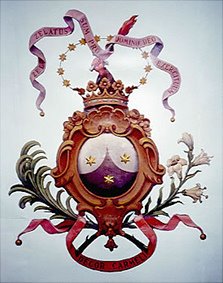
'Ordo Beatissimae Virginis Mariae de Monte Carmelo' - painting by Gregorio Fortis, Madrid. At the bottom of this painting it is written: "Order of the Blessed Virgin Mary of Mount Carmel. The Lady of Carmel saves us from eternal wailing and under her mantel souls find protection."
In the essay entitled 'MARY AND THE HOLY SPIRIT IN THE WRITINGS OF JOHN OF THE CROSS' by Emmanuel J. Sullivan, O.C.D. (click on the post's title to read the whole text under Carmelite Studies 6) we find the list of references to Mary in the writings of St John of the Cross. The first is the Ascent of Mount Carmel, and is considered the most fundamental and significant of John's Marian texts: "God alone moves these souls [who have reached habitual union with God] toward those works that are in harmony with his will and ordinance, and they cannot be moved toward others. Thus the works and prayer of these souls always produce their effect. Such were the prayer and the works of our Lady, the most glorious Virgin Raised from the very beginning to this high estate, she never had the form of any creature impressed in her soul, nor was she moved by any, for she was always moved by the Holy Spirit." (Ascend of Mt Carmel 3:2, 10). John affirms that in the state of union: all the operations of the memory and the other faculties are divine. God now possesses these faculties as their complete lord because of their transformation in him. And consequently it is He who divinely moves and commands them according to His divine spirit and will. [In this state] the operations of the soul united with God are of the divine Spirit and are divine. For John, souls in this state "perform only fitting and reasonable works and none that are not so. For God's Spirit makes them know what must be known and ignore what must be ignored, remember what ought to be remembered with or without forms and forget what ought to be forgotten, and makes them love what they ought to love, and keeps them from loving what is not in God." Precisely because "God alone moves these souls" to do the works in harmony with his will and ordinance, they cannot be moved toward other works. "Thus the works and the prayers of these souls always produce their effect" (A, 3:2, 10).
In the Spiritual Canticle, on two occasions, John brings the example of Mary to our attention. In the commentary on stanza 2, he tells us that: "The discreet lover does not care to ask for what she lacks or desires, but only indicates this need, so that the Beloved may do what he pleases. When the Blessed Virgin spoke to her Beloved Son at the wedding feast at Cana in Galilee, she did not ask directly for the wine, but merely remarked: They have no wine [Jn 2:3]. (Spiritual Canticle 2:8). John then lists three reasons why it is better to merely show our need to the Lord, rather than tell him how to fulfill those needs: First, the Lord known what is suitable for us better than we do; second, the Beloved has more compassion when he beholds the need and the resignation of a soul that loves him; third, the soul is better safeguarded against self-love and possessiveness by indicating its lack, rather than by asking for what in its opinion is wanting (ibid.). Here Mary is presented to us as the perfect model of the prayer of petition. In stanza 20, John is treating of the preparation of the soul for spiritual marriage. Part of that preparation consists in the subduing of the passions, which John lists as joy, sorrow, hope, and fear. When the preparation is complete, sensible sorrow is no longer felt, though the effects of such sorrow are experienced on a higher level. John tells us: "Sometimes, however, and at certain periods, God allows [the soul] to feel things and suffer from them so she might gain more merit and grow in the fervor of love, or for other reasons, as he did with the Virgin Mother, St. Paul, and others" (C, 20; 21, 10).
While the experience of sensible sorrow would otherwise have been incompatible with our Lady's state of intimate union with God, John tells us that God allowed her to experience such sorrow, precisely that she might grow in love; and, we could add, that she might increase in her compassion for all of us. Thus Mary is presented to us as the Mother of Sorrows and as one who knows by experience what it means to endure intense sorrow.
Finally, in stanza 3 of the Living Flame of Love, John once again refers to Mary's intimate union with the Holy Spirit. He is describing the state of transforming union with God, and likens the graces God bestows on a soul in this state to an "overshadowing." For John: when a person is covered by a shadow, it is a sign that someone else is nearby to protect and favor. As a result the Angel Gabriel called the conception of the Son of God, that favor granted to the Virgin Mary, an overshadowing of the Holy Spirit: The Holy Spirit will come upon you and the power of the most High will overshadow you. (F, 3, 12). John goes on to tell us that when the Holy Spirit casts his shadow on a soul, he is so close that he not only touches but is united with it, and the soul understands and experiences the power, wisdom and glory of God (see F, 3, 15). Thus we gain further insight into what Mary's life must have been like, she being more closely united to the Holy Spirit than all other creatures.
In addition to the four Marian references in his major works, there is also a very significant reference to Mary in John's "Prayer of a Soul Taken with Love." John always manifested a deep awareness that he belonged totally to Mary, and in this very beautiful little prayer, he gives expression to his equally deep conviction that Mary belongs totally and completely to each one of us. In this prayer, John speaks for all of us as he says to our heavenly Father: "You will not take from me, my God, what you once gave me, in your only Son, Jesus Christ, in whom you gave me all I desire. Mine are the heavens and mine is the earth. Mine are the nations, the just are mine, and mine the sinners. The angels are mine, and the Mother of God, and all things are mine; and God Himself is mine and for me, because Christ is mine and all for me. (Sayings of Light and Love, 26-27)
I find this reference to Mary, in a certain sense, even more significant than all the others. Here John isn't just recounting wonderful things about Mary, but is telling us she is ours, with us and for us, always and everywhere. He is telling us that we must realize and appreciate that Mary belongs totally and completely to each one of us. Our guide on the road to union with God is no distant stranger, but our very own Blessed Mother.


Thursday, September 08, 2016
Feast of the Nativity of Our Lady - click to read

Our Lady's birthday! What a beautiful feast on which to become the bride of Christ, baby Mary a day old presenting His little flower to little Jesus! On that day everything was little except the graces i received, and the peace and joy I felt when evening came and I gazed up at the starry heavens, where I would soon be united to my divine Bridegroom in everlasting happiness.
From the time I awake in the morning I was filled with peace, and it was in the peace of God which surpasses all understanding (Phil 4:7) that I pronounced my holy vows. At the close of this beautiful day I laid my wreath, as is the custom, at Our Lady's feet without any feeling of sadness, for I felt that time would not lessen my happiness.
O Jesus, I only ask Thee to give me peace!...Peace, and above all a love that knows no bounds. (St Therese, Story of the Soul)
On the feast of the nativity of our Lady, I feel special joy. When this day comes I think it's good to renew my vows. And once while I was about to do so, the Blessed Virgin, Our Lady, appeared to me through an illuminative vision; and it seems to me I renewed them in her hands and that they were pleasing to her. This vision remained with me for some days, as though she were next to me at my left. (St Teresa of Avila, Spiritual Testimonies)
On the feast of the nativity of our Lady, I feel special joy. When this day comes I think it's good to renew my vows. And once while I was about to do so, the Blessed Virgin, Our Lady, appeared to me through an illuminative vision; and it seems to me I renewed them in her hands and that they were pleasing to her. This vision remained with me for some days, as though she were next to me at my left. (St Teresa of Avila, Spiritual Testimonies)
Sunday, April 03, 2016
Divine Mercy Sunday and Feast of St Teresa of the Andes

Let us listen today to St Teresa as she extols the blessings of the friendship that Christ offers to all (excerpts from the letter 150 written to her father):

Divine Mercy photo after catholicinjapan.wordpress.com
St Teresa picture after lacasadelossuegnos.blogspot.com
Read whole post......
Saturday, March 05, 2016
The first of the Romances poem is based on St John’s Gospel (John 1:1) - ‘In pronciptio erat Verbum or In the beginning was the Word’, regarding the Blessed Trinity. Very beautiful poem for the Lenten meditation.

Read whole post......

1. In the beginning the Word was;
He lived in God
And possessed in him
His infinite happiness.
That same Word was God,
Who is the Beginning;
He was in the beginning.
He was himself the Beginning
And therefore had no beginning.
The Word is called Son;
He was born of the Beginning
Who had always conceived him,
Giving of his substance always,
Yet always possessing it.
And thus the glory of the Son
was the Father’s glory,
and the Father possessed all his glory in the Son.
As the lover in the beloved
Each lived in the other,
And the Love that unites them
Is one with them,
their equal, excellent as
the One and the Other:
Three Persons, and one Beloved
Among all three.
One love in them all
Makes of them one Lover,
And the Lover is the Beloved
In whom each one lives.
For the being that the three possess
Each of them possesses,
And each of them loves
Him who bears this being,
Which alone unites them,
Binding them deeply,
One beyond words.
Thus it is boundless Love that unites them,
For the three have one love
Which is their essence;
And the more love is one
The more it is love.
2. On the communication among the Three Persons.
In that immense love proceeding from the two, the Father spoke words of great affection to the Son. Words od such profound delight that no one understood them; they were meant for the Son, and he alone rejoiced in them. What he heard was this: "My Son, only your company contents me, and when something pleases me I love that thing in you; whoever resembles you most satisfies me most, and whoever is like you in nothing will find nothing in me. I am please with you alone, O life of my life! You are the light of my light, you are my wisdom, the image of my substance in whom I am well pleased. My Son, I will give myself to him who loves you and I will love him with the same love I have for you, because he has loved you whom I love so."
2. On the communication among the Three Persons.
In that immense love proceeding from the two, the Father spoke words of great affection to the Son. Words od such profound delight that no one understood them; they were meant for the Son, and he alone rejoiced in them. What he heard was this: "My Son, only your company contents me, and when something pleases me I love that thing in you; whoever resembles you most satisfies me most, and whoever is like you in nothing will find nothing in me. I am please with you alone, O life of my life! You are the light of my light, you are my wisdom, the image of my substance in whom I am well pleased. My Son, I will give myself to him who loves you and I will love him with the same love I have for you, because he has loved you whom I love so."
Sunday, February 21, 2016
Why we should pray always
You will seek the Lord your God, and if you seek him with all your heart and with all your soul, you shall find him. In your distress, all that I have said will overtake you, but at the end of days you will return to the Lord your God and listen to his voice. For the Lord your God is a merciful God and will not desert or destroy you or forget the covenant he made on oath with your fathers. (Deuteronomy 4; 29-31)

In the fragment from her ‘Life’ (ch 11/10,11), St Teresa encourages and explains to us why we should never abandon prayer, even if we are all the time experiencing nothing but aridity. Very good read for Lent.
Beginners in prayer, we may say, are those who drew up the water out of the well: this, as I have said, is a laborious proceeding, for it will fatigue them to keep their senses recollected, which is a great labour because they have accustomed to a life of distraction. Beginners must accustom themselves to pay no heed to what they see or hear, and they must practise doing this during hours of prayer; they must be alone and in their solitude think over their past life – all of us, indeed, whether beginners or proficient, must do this frequently. There are differencies, however, in the degree to which it must be done, as I shall show later. At first it causes distress, for beginners are not always sure that they have repented of their sins (though clearly they have, since they have so sincerely resolved to serve God). Then they have to endeavour to meditate upon the life of Christ and this fatigue their minds. Thus far we can make progress by ourselves - of course with the help of God, for without that, as is well known, we cannot think a single good thought. This is what is meant by beginning to draw up water from the well, and God grant there may be water in it! But that, at least, does not depend on us: our task is to draw it up and to so what we can to water the flowers. And God is so good that when, for reasons known to His Majesty, perhaps to our great advantage, He is pleased that the well should be dry, we. Like good gardeners, do all that in us lies, and He keeps the flowers alive without water and makes the virtues grow. By water here I mean tears – or, if there be none of these, tenderness and an interior feeling of devotion.
What then, will he do here who finds that for many days he experiences nothing but aridity, dislike, distaste and so little desire to go and draw water that he would give it up entirely if he did not remember that he is pleasing and serving the Lord of the garden; if he were not anxious that all his service should not be lost, to say nothing of the gain which he hopes for from the great labour of lowering the bucket so often into the well and drawing it up without water? It will often happen that, even for that purpose, he is unable to move his arms – unable, that is, to think a single good thought, for working with the understanding is of course the same as drawing water out of the well. What, then, as I say, will the gardener of so great an Emperor; and, as he knows that is pleasing Him by so working (and his purpose must be to please, not himself, but HIM), let him render Him a great praise for having placed such confidence in him, when He has seen that without receiving any recompense, he is taking such great care of that which He had entrusted to him; let him help Him to bear the Cross and consider how He lived with it all His life long; let him not wish to have his kingdom on earth or ever cease from prayer; and so let him resolve, even if this aridity should persist his WHOLE LIFE long, never to let Christ fall beneath the Cross. The time will come when he shall receive his whole reward at once. Let him have no fear that his labour will be lost. He is serving a good Master, Whose eyes are upon him. Let him pay no heed to evil thoughts, remembering how the devil put such thoughts into the mind of Saint Jerome in the desert.
Sunday, January 10, 2016
Baptism of Our Lord

Pierro della Frencesca, Baptism of Christ
John bore witness: I saw the Spirit descend as a dove from heaven, and it remained on him.(Stanbrook Abbey Hymnal)
Read whole post......
Sunday, November 01, 2015
All Saints Day

I am He who made all the saints; I gave them grace; I have brought them to glory. I know the first and the last; I embrace them all with an inestimable love. I am to be praise in all my Saints; I am to be blessed above all things, and to be honoured in every one of them, whom I have thus gloriously magnified and eternally chosen, without any foregoing merits of their own. The Imitation of Christ, 3, 58.
Today is the vigil of All Saints. All Souls Day is the
anniversary of my receiving the habit. Ask God to make me a genuine
Carmelite nun, for better late than never. Your unworthy servant and loyal
subject. Blessed be God, for I will always be so, come what may. Teresa of
Jesus. Collected Letters, vol 1.
Friday, October 16, 2015
THE TERESIAN JUBILEE YEAR WITH INDULGENCES GRANTED BY POPE FRANCIS TO ALL DIOCESES IN SPAIN, COMMENCING OCTOBER 25TH 2014 UNTIL OCTOBER 15TH 2015 - click for link

Audiobooks of St Teresa by LibriVox:
The Life of St Teresa HERE
Book of Foundations HERE
Conception of Divine Love HERE
The Way of Perfection HERE
Interior Castle HERE
Map of Teresian foundation in Spain HERE
Map after BLOG
Sunday, October 04, 2015
St Francis of Assisi

Bartolomeo Della Gatta 'Stigmata of St Francis'
This Lord of ours is the one through whom all blessings come to us. He will teach us these things. In beholding His life we find that He is the best example. What more do we desire than to have such a good friend at our side, who will not abandon us in our labors and tribulations, as friends in the world do? Blessed are they who truly love Him and always keep Him at their side!....Once I had come to understand this truth, I carefully considered the lives of some of the saints, the great contemplatives, and found that they hadn't taken any other path: St. Francis demonstrates this through the stigmata. St Teresa of Avila. The Book of Her Life, Ch.22
Let us return to the work of that seraph, for he truly inflicts a sore, and wounds inwardly in the spirit. Thus, if God sometimes permits an effect to extend to the bodily senses in the fashion in which it existed interiorly, the wound and sore appear outwardly, as happened when the seraph wounded St. Francis. When his soul was wounded with love by the five wounds, their effect extended to the body, and these wounds were impressed on the body, which was wounded just as his soul was wounded with love.[ St. Francis of Assisi received the marks of the wounds on his hands, feet, and side on Mount La Verna in October 1224]. St. John of the Cross 'Collected Works'
Tuesday, September 29, 2015
In the presence of the angels, come, let us adore the Lord.

Filippino Lippi, Archabgels and Tobias
I thank you, Lord, with all my heart: you have heard the words of my mouth.
In the presence of the angels I will bless you. I will adore before your holy temple. Psalm 137:1
The third kind of place comprises those in which God chooses to be invoked and worshipped. Examples [include] Mount Garganus, the place St. Michael dedicated to God's worship by appearing to the Bishop of Siponto and telling him how he guarded that place so a chapel might be dedicated to God there in memory of the angels;… God alone knows why he chooses one place in which to receive praise more than another. What we should know is that he does all for our own benefit and so he may hear our prayers in these places - or anywhere we beseech him with integral faith. Yet those places consecrated to his worship are more appropriate as places for our prayers to be heard since the Church has so marked and dedicated them. St John of the Cross, 'The Ascent of Mt Carmel' ch 42
Sunday, September 13, 2015
Bl Mary of Jesus (Mary Lopez Rivas Martinez)

This is the authorization for Sister María de Jesús to make her profession. I grant it with great pleasure. May the blessing of the Lord "of the dew of heaven and the fatness of earth (Gn. 27:28)” be granted her. From the letter of St Teresa of Avila permitting the profession for Sister Maria of Jesus on 8th September 1578.
More about the life of Bl Mary of Jesus here
Monday, July 20, 2015
Feast of St Elijah the Prophet, spiritual father and leader of Carmelites

Holy Prophet of God Elijah, Leader and Father of Carmelites, intercede
for us and for the salvation of all.
V: Pray for us, O holy Father Elijah.
R: That we may be made worthy of the promises of Christ.
Let us pray. Grant, we beseech You, O Almighty God, that we who believe that the Blessed Elijah Your Prophet and our Father was wonderfully carried up in a fiery chariot, may by his intercession be raised to the desire of heavenly things and rejoice in the society of Your saints. We ask this through Christ our Lord. Amen.
Elijah the prophet originated from Tishbe in Transjordania. He lived in the ninth century before Christ. Elijah heard to voice of the Lord telling him to go and hide himself and drink of the stream and that ravens would feed him there. He did as he was told, and thus he was chosen by God to lead the people back to Him. Some had been worshipping the god Baal, while the rest followed Yahweh. The Kingdom was divided. In the accomplishment of his mission, there was a test on Mount Carmel. The prophets of Baal cried out from morning until evening invoking him, but to no avail. The prophet of Yahweh, Elijah, rebuilt the altar of the Lord with twelve stones (representing the twelve tribes of Israel). Elijah prepared the holocaust and surrounded it with water (in the midst of a drought), and the Lord consumed it with fire. The truth had been shown in a dramatic way. The drought ended, and Elijah was recognized as a prophet of the true God. The cult of Baal survived, and Elijah faced many challenges and humiliations but remained steadfast in his faith. The prophet listened for the Lord to pass by and found Him, not in an earthquake or fire, but in gentle breeze. Elijah's prayers are direct and clear. He is confident in the power of the one true God.
Lord God of Abraham, Issac, and Israel, let it be known this day
R: That we may be made worthy of the promises of Christ.
Let us pray. Grant, we beseech You, O Almighty God, that we who believe that the Blessed Elijah Your Prophet and our Father was wonderfully carried up in a fiery chariot, may by his intercession be raised to the desire of heavenly things and rejoice in the society of Your saints. We ask this through Christ our Lord. Amen.
Elijah the prophet originated from Tishbe in Transjordania. He lived in the ninth century before Christ. Elijah heard to voice of the Lord telling him to go and hide himself and drink of the stream and that ravens would feed him there. He did as he was told, and thus he was chosen by God to lead the people back to Him. Some had been worshipping the god Baal, while the rest followed Yahweh. The Kingdom was divided. In the accomplishment of his mission, there was a test on Mount Carmel. The prophets of Baal cried out from morning until evening invoking him, but to no avail. The prophet of Yahweh, Elijah, rebuilt the altar of the Lord with twelve stones (representing the twelve tribes of Israel). Elijah prepared the holocaust and surrounded it with water (in the midst of a drought), and the Lord consumed it with fire. The truth had been shown in a dramatic way. The drought ended, and Elijah was recognized as a prophet of the true God. The cult of Baal survived, and Elijah faced many challenges and humiliations but remained steadfast in his faith. The prophet listened for the Lord to pass by and found Him, not in an earthquake or fire, but in gentle breeze. Elijah's prayers are direct and clear. He is confident in the power of the one true God.
Lord God of Abraham, Issac, and Israel, let it be known this day
that you are God in Israel and that I am your servant and have done all these things by your command. Answer me Lord! Answer me, that this people may know that you Lord, are God and that you have brought them back to their senses (1 Kings 18:30-37)


Siah brook on west site of Mt Carmel, where, according to Carmelite tradition, prophet ELijah lived 'And he came thither unto a cave, and lodged there' (1Kings 19:9). More about Elijah in pictures on Bibile walks
Every year on the feast of St Elijah, July 20, Mount Carmel in Palestine is filled with pilgrims who come by the thousands to celebrate the Feast of the Prophet. East and West combine to do him homage. Elijah is invoked in time of drought or flood for his prayers both opened and closed the heavens. He is also invoked against pestilence, to avert public calamities, to restore peace of soul, and to draw the blessings of God on those aspiring to perfection. In Holy Scriptures we read that Elijah was taken up from the earth in a fiery chariot, and that he will return at the end of the world to fight against anti-Christ and to convert Jews. After preaching in sackcloth for 'one thousand and two hundred and sixty days' he will be overcome by anti-Christ and slain in Jerusalem. For three days and a half day his body will lie unburied in the street, then the spirit of life from God will enter into him, and he will be taken up to heaven in a cloud.
Devotion to Elijah is proper to our times when crimes and wars abound, and every day brings us nearer to the time when he will 'come and restore all things'.
Post on the Carmelite devotion to St Elijah HERE
After: "Carmel, Its History, Spirit, and Saints", "Drink of the Stream" and "Carmelite Devotions"
Sunday, July 19, 2015
Bill to legalise assisted suicide soon in the House of Commons, again
On 11th September, 2015, the House of Commons will vote on a Bill to legalise assisted suicide - the local MPs may be contacted via the Catholic Bishops' Conference website and everyone can contact their local MP to urge them to attend the debate and vote against the Bill HERE
Read whole post......
Saturday, May 23, 2015
Feast of the Pentecost

St Teresa of Avila's Vision of the Holy Spirit by Peter Paul Rubens
I desire nothing but to love You...In this love - besides everything else - there is greater security than with earthly loves; in loving God we are certain that he loves us. Remember here, my daughters, the gain there is in this love, and the loss in not having it.
(St Teresa, Collected works, vol.2)
(St Teresa, Collected works, vol.2)
Read whole post......
Monday, May 18, 2015
Sunday, May 17, 2015
Bl Mary of Jesus Crucified canonized today by Pope Francis.
Today, Pope Francis canonized Bl Miriam Baouardy, Little Arab, also known for her religious name as Mary of Jesus Crucified. She was a Discalced Carmelite nun, professed at Carmel of Pau, France, in 1867. To read more about her life click
here and here

"Lord, I adore your word. The earth will pass away,
but Your word will never pass away.
Mary, my mother, come to my help! Everyone cry
out with me: Jesus, wake up!
Lord, I accept all that You will.
Love, O love, You are not known!"
"I unite myself to Jesus when He was carrying His cross in the streets Of Jerusalem. May You be blessed my God. I unite my voice with that of Jesus in the garden of olives. May You be blessed, my God. I unite sufferings to those of Jesus betrayed by Judas. May You be blessed, my God. I unite myself to Jesus falling under the weight of the cross. May You be blessed, my God"
"Holy Spirit inspire me. Love of God, consume me. Along the true road, lead me. Mary, my mother, look upon me. With Jesus bless me. From all evil, from all illusion, From all danger, preserve me."
"I unite myself to Jesus when He was carrying His cross in the streets Of Jerusalem. May You be blessed my God. I unite my voice with that of Jesus in the garden of olives. May You be blessed, my God. I unite sufferings to those of Jesus betrayed by Judas. May You be blessed, my God. I unite myself to Jesus falling under the weight of the cross. May You be blessed, my God"
"Holy Spirit inspire me. Love of God, consume me. Along the true road, lead me. Mary, my mother, look upon me. With Jesus bless me. From all evil, from all illusion, From all danger, preserve me."
After "Drink of the Stream, Prayers of Carmelites"
Read whole post......
Thursday, December 25, 2014
Christmas Day

Nativity by Gerard van Honthorst
My Isabel (Gracian's little sister) is getting better every day. When I go to recreation, which is not often, she sets aside her needlework and begins to sing: Mother Foundress Is coming to recreation; Let's all dance and sing And clap our hands in jubilation. But this is for a moment. Outside the time of recreation she remains in her hermitage so absorbed with the Infant Jesus, the shepherds, her work, and her thoughts (which she tells me about) that it is something to praise the Lord for. She sends her regards, and prays for you. (St Teresa, letter to Padre Gracian, Christmas, 1576)
Read whole post......
Wednesday, December 24, 2014
Christmas Eve, are we ready?

Nativity scene with Angels - drawing attributed to Ludwig Richter
God, the divine Guest of our hearts, knows our poverty; all He asks, and expects to find, is an empty tabernacle (of our heart)
St Therese (letters)
Read whole post......
Thursday, December 04, 2014
St John of the Cross abduction and imprisonment in Toledo
It is very fitting to read and reflect today upon the letter written by St Teresa to the King Don Philip II on 4th December 1577. During the previous night, St John of the Cross was taken prisoner and no one knew his whereabouts. The whole city was scandalized and Teresa is worried sick for his life. The situation was aggravated by the on-going oppression of the nuns at the Incarnation. St Teresa highly regarded Fray John of the Cross and considered him a saint. St John was taken prisoner on the night December 3rd 1577 and transferred to the Carmelite monastery in Toledo. He was horribly mistreated during nine months of imprisonment, suffered public lashes in front of a community of friars at least once a week, he was kept in a tiny cell with tiny window placed near the ceiling and his diet was of the strict penitential character. He managed to escape one night on August 15th 1578. During his imprisonment he wrote most of his famous ‘Spiritual Canticle’.

El Greco painting of the Carmelite Monastery in Toledo, where St John was kept prisoner.
The grace of the Holy Spirit be with your majesty, amen. I strongly believe that our Lady has chosen you to protect and help her order. So, I cannot fail to have recourse to you regarding her affairs. For the love of our Lord, I beg you to pardon me for so much boldness. I am sure your majesty has received news of how the nuns at the Incarnation tried to have me go there, thinking they would have some means to free themselves from the friars, who are certainly a great hindrance to the recollection and religious observance of the nuns. And the friars are entirely at fault for the lack of observance previously present in that house. The nuns are very much mistaken in their desire that I go there, for as long as they are subject to the friars as confessors and visitators, I would be of no help -- at least not of any lasting help. I always said this to the Dominican visitator, and he understood it well. Since God allowed that situation to exist, I tried to provide a remedy and placed a discalced friar (St John of the Cross) in a house next to them, along with a companion friar (German de San Matias). He is so great a servant of our Lord that the nuns are truly edified, and this city is amazed by the remarkable amount of good he has done there, and so they consider him a saint; and in my opinion he is one and has been one all his life. When the previous nuncio through a long report sent him by the inhabitants of the city was informed of the things that were happening and of the harm that the friars of the cloth were doing, he gave orders under pain of excommunication that the confessors be restored to their house (for the Calced friars had driven them from the city heaping abuse on them and giving much scandal to everyone). And he also ordered that no friar of the cloth under pain of excommunication go to the Incarnation for business purposes, to say Mass, or hear confessions, but only the discalced friars and secular clergy. As a result, the house was in a good state until the nuncio died. Then the Calced friars returned -- and so too the disturbance -- without demonstrating the grounds on which they could do so. And now a friar (Hernando Maldonado) who came to absolve the nuns caused such a disturbance without any concern for what is reasonable and just that the nuns are deeply afflicted and still bound by the same penalties I have been told. And worst of all he has taken from them their confessors (St John of the Cross and German de San Matias). They say that he has been made vicar provincial, and this must be true because he is more capable than the others of making martyrs. And he is holding these confessors captive in his monastery after having forced his way into their cells and confiscating their papers. The whole city is truly scandalized. He is not a prelate nor did he show any evidence of the authority on which these things were done, for these confessors are subject to the apostolic commissary. Those friars dared so much, even though this city is so close to where your majesty resides, that it doesn't seem they fear either justice or God. I feel very sad to see these confessors in the hands of those friars who for some days have been desiring to seize hold of them. I would consider the confessors better off if they were held by the Moors, who perhaps would show more compassion. And this one friar (St John) who is so great a servant of God is so weak from all that he has suffered that I fear for his life. I beg your majesty for the love of our Lord to issue orders for them to set him free at once and that these poor Discalced friars not be subjected to so much suffering by the friars of the cloth. The former do no more than suffer and keep silent and gain a great deal. But the people are scandalized by what is being done to them. This past summer in Toledo, without any reason, the same superior took as prisoner Fray Antonio de Jesús -- a holy and blessed man, who was the first discalced friar. They go about saying that with orders from Tostado they will destroy them all. May God be blessed! Those who were to be the means of removing offenses against God have become the cause of so many sins. And each day matters will get worse if your majesty does not provide us with some help. Otherwise, I don't know where things will end up, because we have no other help on earth. May it please our Lord that for our sakes you live many years. I hope in him that he will grant us this favour. He is so alone, for there are few who look after his honour. All these servants of your Majesty's, and I, ask this of him continually. Your Majesty's unworthy servant and subject, Teresa of Jesus, Carmelite
Read whole post......
Subscribe to:
Posts (Atom)







 Posts
Posts


