Thursday, August 24, 2006

SCRIPTURE CORNER

ON THE DUTIES OF THE STATEPart 1

It is God's will that we all should work - In the sweat of thy face shalt thou eat bread till thou return to the earth, out of which thou wast taken. Gen 3, 19.
Our well being and satisfaction depend on the work done -The life of a labourer that is content with what he hath, shall be sweet, and in it thou shalt find a treasure. Ecclessiasticus 40, 18.
Since Our Lord Jesus sanctified work through His own labour, work then will give us eternal reward as promised Go you also into my vineyard, and I will give you what shall be just. Mt 20, 4.
Sense of duty is to be the leading force in our lives. For example, God wants us to be pious, which in latin is devotio, or devotion to God. Remembering Him joyfully in morning and evening prayers, blessings before and after meal, saying Angelus, keeping Sunday holy, taking regular Communions, these are the duties of Christian life which will be greatly rewarded The generation of the righteous shall be blessed Ps 111, 2
Another example - God told us to respect and love our parentsHonour thy father and thy mother, that thou mayest be longlived upon the land which the Lord thy God will give thee. Ex 20, 12 . This is natural law, for after God we owe to them a lot. To ensure God's blessing we should love and respect them, in particular in their old age when they become weak and vulnerableThat you may approve the better things, that you may be sincere and without offence unto the day of Christ. Ph 1, 10 Read whole post......

Wednesday, August 23, 2006

SCRIPTURE CORNER

TOWARDS HEAVEN

Beloved Apostle once said: "The whole world is seated in wickedness" (1 Jn 5, 19) and it is still very true today. In desparation one can ask "Lord, are they few that are saved?" (Lk 13, 23). Satan, world and sensuality are daedly enemies of the soul and our salvation - they are always active and can be defeated only by constant effort and struggle. That is why the old Job was groaning under opression: "The life of man upon earth is a warfare" (Job 7, 1). Never ending fight with evil and struggle for goodness. All these efforts will end for ever when the gates of heaven would be opened for us. But what is heaven? Blessed peace after long battle - a reward - "so shall we be always with the Lord" (1 Tes 4, 16). We will be there to adore God's infinite beauty, perfection and goodness, rejoicing in indescribable happiness. Read whole post......

Tuesday, August 22, 2006

SCRIPTURE CORNER

ABOUT HAPPINESS part two.

As we concluded in the first part of the post, things temporal cannot bring true happiness. Only supernatural, eternal God can fill the gap. For the human soul and heart can only be truly satisfied with the beauty of infinite goodness and perfection which is God. Only He can give us all we need. St Peter on Mount Tabor found perfect happiness in the glory of Jesus. On Mount Alverni, St. Francis after being in deep contemplation and unity with God could only exclaimed "My God and all mine". Napoleon was truly happy only once in his life - when he received his first holy communion. Maybe we also should go back to the moments of some deeply moving religious experience to realise our own Tabor-like true happiness. For St. Augustin says "You created us for yourself, O God, and our hearts are restless until we will find rest in you". St. Teresa perfectly summarized the point saying "God only suffices". Let us renounce all inordinate attachements to things temporal and longing for wordly happiness. Let us stay with God instead, living for Him and through Him, keeping in mind the words of the Apostle:

But I am straitened between two: having a desire to be dissolved and to be with Christ, a thing by far the better (Phil 1: 23)
Read whole post......

Monday, August 21, 2006

St John of the Cross "Dark night of the soul" - CHAPTER X

Of the way in which these souls are to conduct themselves in this dark night.


3. It is well for those who find themselves in this condition to take comfort, to persevere in patience and to be in no wise afflicted. Let them trust in God, Who abandons not those that seek Him with a simple and right heart, and will not fail to give them what is needful for the road, until He bring them into the clear and pure light of love. This last He will give them by means of that other dark night, that of the spirit, if they merit His bringing them thereto.
4. The way in which they are to conduct themselves in this night of sense is to devote themselves not at all to reasoning and meditation, since this is not the time for it, but to allow the soul to remain in peace and quietness, although it may seem clear to them that they are doing nothing and are wasting their time, and although it may appear to them that it is because of their weakness that they have no desire in that state to think of anything. The truth is that they will be doing quite sufficient if they have patience and persevere in prayer without making any effort. What they must do is merely to leave the soul free and disencumbered and at rest from all knowledge and thought, troubling not themselves, in that state, about what they shall think or meditate upon, but contenting themselves with merely a peaceful and loving attentiveness toward God, and in being without anxiety, without the ability and without desired to have experience of Him or to perceive Him. For all these yearnings disquiet and distract the soul from the peaceful quiet and sweet ease of contemplation which is here granted to it.
5. And although further scruples may come to them—that they are wasting their time, and that it would be well for them to do something else, because they can neither do nor think anything in prayer—let them suffer these scruples and remain in peace, as there is no question save of their being at ease and having freedom of spirit. For if such a soul should desire to make any effort of its own with its interior faculties, this means that it will hinder and lose the blessings which, by means of that peace and ease of the soul, God is instilling into it and impressing upon it. It is just as if some painter were painting or dyeing a face; if the sitter were to move because he desired to do something, he would prevent the painter from accomplishing anything and would disturb him in what he was doing. And thus, when the soul desires to remain in inward ease and peace, any operation and affection or attentions wherein it may then seek to indulge will distract it and disquiet it and make it conscious of aridity and emptiness of sense. For the more a soul endeavours to find support in affection and knowledge, the more will it feel the lack of these, which cannot now be supplied to it upon that road.
6. Wherefore it behoves such a soul to pay no heed if the operations of its faculties become lost to it; it is rather to desire that this should happen quickly. For, by not hindering the operation of infused contemplation that God is bestowing upon it, it can receive this with more peaceful abundance, and cause its spirit to be enkindled and to burn with the love which this dark and secret contemplation brings with it and sets firmly in the soul. For contemplation is naught else than a secret, peaceful and loving infusion from God, which, if it be permitted, enkindles the soul with the spirit of love, according as the soul declares in the next lines, namely:

Kindled in love with yearnings. Read whole post......
SCRIPTURE CORNER

ABOUT HAPPINESS part one

We all long to be happy and we should be. We are created to be happy. Let us then look first at what makes us unhappy. Wordly possessions and riches do not contribute to happiness for Our Lord calls them "thorns" (Matt 13,7) which "opress and tear the soul to pieces" as St. Gregory says. Why? Because the more we possess the more we desire to have. True happiness does not live in magnificent palaces. We cannot find it in friendship or pleasures also. For sincere friendship can hardly be found:

For all seek the things that are their own.Phil 2, 21

Even apparently the most real friendship is always tainted with egoizm. Relying too much on other people is like building the castle on the sand. Pleasures are costly and end quickly followed by desire to find better substitute. Science and art does not bring happiness as well, for St. Paul says: "For we know in part. 1 Cor 13, 9. Ever increasing problems to solve cannot bring real satisfaction. It cannot be found in human love also. Someone said, "Everybody has a mother, some have a friend, but hardly anyone has one truly beloved". Human love brings usually plenty of suffering but very little happiness. The most dissapointing is the love of honours - it makes people restless from desire. No true happiness can be found in sensuality, for lust and intemperance can bring only emptiness. The parable of prodigal son says it all. Even wealthy Solomon, who had all for his disposal, concluded in the end: "But this also is vanity, and presumption of spirit" (Ecclesiastes 6,9). Emperor Franz Joseph once said: "No suffering was spared me". Highly successful Goethe confessed he had not experienced in his long life a period of "several peacefull and satisfying weeks". And in his drama "Faust" he reveals he was always restless. Even if someone is happy in the world for a longer period, there is always unpleasant perspective of the old age approaching followed by the end of life. They are happy only by name. For the eternal truth is: "The eye is not filled with seeing, neither is the ear filled with hearing. Ecclesiastes 1, 8. Read whole post......

Sunday, August 20, 2006

SCRIPTURE CORNER

ABOUT MIRACLES

And so much the more did they wonder, saying: He hath done all things well; he hath made both the deaf to hear, and the dumb to speak. Mark 7, 37

Our Lord worked many historically proven miracles. Are miracles still happen today, someone can ask. This is an important question - in today's world, amid blooming science, advanced technical knowledge are miracles still happen? But Christ Our Lord promised us for ages to come:

And these signs shall follow them that believe. Mark 16, 17

The miracles still happen - this is the truth. Let us remember the greatest one - transubstantiation - granted to us during every Mass. Let us remember countless miracles which took place at Lourdes. Those listed in Church documents are all medically proven beyond doubts. In 1930, Medical Faculty of Paris University accepted thesis submitted by dr Henri Monnier and entitled "Analysis of some cases of healing that took place at Lourdes". The work was given very good reviews and marks by the panel of experts. In his work, dr Monnier demonstrated that the cures he analised could not have ever happened without supernatural intervention.

In every process of beatification or canonization, sound miracles, cures surpassing natural power are required to prove sanctity of the candidate - the clear stamp of supernatural approval is essential to recognize the real saint. They are carefully investigated by both ecclesiastical and medical experts. Almighty is active in His Church. For us, His children, we need to have a good will and open eyes. Otherwise the words of Our Saviour could not be surprising:

neither will they believe, if one rise again from the dead Luke 16, 31 Read whole post......
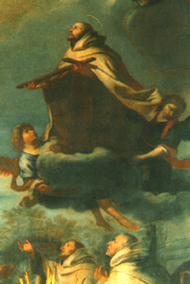
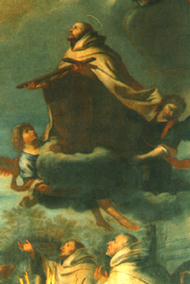
SAINT BERNARD, Abbot of Clairvaux (1090-1153)

Spiritual Bouquet: As Thou, Father, art in me and I in Thee; that they also may be one in Us. St. John 17:21

Bernard was born at the castle of Fontaines, in Burgundy near Dijon, in 1090. The grace of his person and the vigor of his intellect filled his parents with the highest hopes, and the world lay bright and smiling before him. But Bernard renounced it forever to join the monks of Citeaux, a few miles distant. Four of his brothers and a group of friends, thirty young Christians in all, went when he did to Citeaux, leaving the youngest brother, Nivard, to be the mainstay of his father in his old age. “You will now be heir to everything,” they said to him as they departed. “Yes,” said the boy; “you leave me the earth, and keep heaven for yourselves; do you consider that fair?” And he too left the world. At length their aged father came also, exchanging wealth and honor for the poverty of a monk in the monastery of Clairvaux, which Bernard with a band of monks founded in the diocese of Langres in 1115. One sister alone remained behind; she was married, and loved the world and its pleasures. Splendidly clothed, one day she came to visit Bernard, and he refused to see her. He finally consented to do so, not as her brother but as the minister of Christ. The words he then spoke moved her so deeply that two years later she retired to a convent with her husband’s consent, dying later in the reputation of sanctity.
Bernard’s holy example attracted so many novices that many other monasteries had to be built. Unsparing for himself, he at first expected too much of his monks, who were disheartened by his severity. Soon perceiving his error, he led them forward to wonderful perfection by the sweetness of his correction and the mildness of his government.
In spite of his desire to remain secluded, the fame of his sanctity spread far and wide, and many dioceses asked for him as their bishop. Through the help of Pope Eugenius III, his former subject, he escaped this dignity. Nonetheless, his retirement was continually invaded. The poor and the weak sought his protection; bishops, kings, and popes applied to him for advice; and at length Pope Eugenius himself ordered him to preach the crusade. By his fervor, eloquence, and miracles Bernard kindled the enthusiasm of Christendom, and two large armies were organized. Their defeat was only due, said the Saint, to their sins, but many had saved their souls by their dedication to the glory of God. Bernard died in 1153. His very precious writings have earned for him the title of the last Father of the Holy Church and one of its most famous Doctors.

Reflection: Saint Bernard used to say to those who applied for admission to the monastery, “If you desire to enter here, leave at the threshold the body you have brought with you from the world; here there is room only for your soul.” Every day he asked himself the question: “Why have you come here, Bernard?” Read whole post......

Saturday, August 19, 2006

St John of the Cross "Dark night of the soul" - CHAPTER X

Of the way in which these souls are to conduct themselves in this dark night.
part one

DURING the time, then, of the aridities of this night of sense (wherein God effects the change of which we have spoken above, drawing forth the soul from the life of sense into that of the spirit—that is, from meditation to contemplation—wherein it no longer has any power to work or to reason with its faculties concerning the things of God, as has been said), spiritual persons suffer great trials, by reason not so much of the aridities which they suffer, as of the fear which they have of being lost on the road, thinking that all spiritual blessing is over for them and that God has abandoned them since they find no help or pleasure in good things. Then they grow weary, and endeavour (as they have been accustomed to do) to concentrate their faculties with some degree of pleasure upon some object of meditation, thinking that, when they are not doing this and yet are conscious of making an effort, they are doing nothing. This effort they make not without great inward repugnance and unwillingness on the part of their soul, which was taking pleasure in being in that quietness and ease, instead of working with its faculties. So they have abandoned the one pursuit, yet draw no profit from the other; for, by seeking what is prompted by their own spirit, they lose the spirit of tranquillity and peace which they had before. And thus they are like to one who abandons what he has done in order to do it over again, or to one who leaves a city only to re-enter it, or to one who is hunting and lets his prey go in order to hunt it once more. This is useless here, for the soul will gain nothing further by conducting itself in this way, as has been said.
2. These souls turn back at such a time if there is none who understands them; they abandon the road or lose courage; or, at the least, they are hindered from going farther by the great trouble which they take in advancing along the road of meditation and reasoning. Thus they fatigue and overwork their nature, imagining that they are failing through negligence or sin. But this trouble that they are taking is quite useless, for God is now leading them by another road, which is that of contemplation, and is very different from the first; for the one is of meditation and reasoning, and the other belongs neither to imagination nor yet to reasoning. Read whole post......
SCRIPTURE CORNER

ARK OF THE COVENANT, PRAY FOR US

in Exodus chapter 25 we read that Israelites kept in the Ark of the old Covenenant, the tablets of Commandments Moses received from God on Mount Sion, Aaron's staff and the vessel of manna. The Ark is a beautiful symbol of the Immaculate Virgin who was hiding in the ark of her soul the true manna, which is Christ the true Shepherd and Lawmaker. She was always faithful and obedient to the law of God executed by the priests. God does not lead us alone but through people of authority given by Him. For Our Lord says: He that heareth you, heareth me; and he that despiseth you, despiseth me and he that despiseth me, despiseth Him that sent me. Lk 10:16 and: Let every soul be subject to to higher powers; for there is no power but from God: and those that are, are ordained of God. Therefore he that resisteth the power resisteth the ordinance of God. And they that resist, purchase for themselves damnation. Rom 13: 1-2. Be subject therefore to God, but resist the devil, and he will fly from you. Jn 4:
Read whole post......

Friday, August 18, 2006

St. John of the Cross "Dark night of the soul - CHAPTER IX

Of the signs by which it will be known that the spiritual person is walking along the way of this night and purgation of sense.
part three

8. The third sign whereby this purgation of sense may be recognized is that the soul can no longer meditate or reflect in the imaginative sphere of sense as it was wont, however much it may of itself endeavour to do so. For God now begins to communicate Himself to it, no longer through sense, as He did aforetime, by means of reflections which joined and sundered its knowledge, but by pure spirit, into which consecutive reflections enter not; but He communicates Himself to it by an act of simple contemplation, to which neither the exterior nor the interior senses of the lower part of the soul can attain. From this time forward, therefore, imagination and fancy can find no support in any meditation, and can gain no foothold by means thereof.
9. With regard to this third sign, it is to be understood that this embarrassment and dissatisfaction of the faculties proceed not from indisposition, for, when this is the case, and the indisposition, which never lasts for long, comes to an end, the soul is able once again, by taking some trouble about the matter, to do what it did before, and the faculties find their wonted support. But in the purgation of the desire this is not so: when once the soul begins to enter therein, its inability to reflect with the faculties grows ever greater. For, although it is true that at first, and with some persons, the process is not as continuous as this, so that occasionally they fail to abandon their pleasures and reflections of sense (for perchance by reason of their weakness it was not fitting to wean them from these immediately), yet this inability grows within them more and more and brings the workings of sense to an end, if indeed they are to make progress, for those who walk not in the way of contemplation act very differently. For this night of aridities is not usually continuous in their senses. At times they have these aridities; at others they have them not. At times they cannot meditate; at others they can. For God sets them in this night only to prove them and to humble them, and to reform their desires, so that they go not nurturing in themselves a sinful gluttony in spiritual things. He sets them not there in order to lead them in the way of the spirit, which is this contemplation; for not all those who walk of set purpose in the way of the spirit are brought by God to contemplation, nor even the half of them—why, He best knows. And this is why He never completely weans the senses of such persons from the breasts of meditations and reflections, but only for short periods and at certain seasons, as we have said. Read whole post......

Thursday, August 17, 2006

St. John of the Cross "Dark night of the soul - CHAPTER IX

Of the signs by which it will be known that the spiritual person is walking along the way of this night and purgation of sense.
part two

4. For the cause of this aridity is that God transfers to the spirit the good things and the strength of the senses, which, since the soul's natural strength and senses are incapable of using them, remain barren, dry and empty. For the sensual part of a man has no capacity for that which is pure spirit, and thus, when it is the spirit that receives the pleasure, the flesh is left without savour and is too weak to perform any action. But the spirit, which all the time is being fed, goes forward in strength, and with more alertness and solicitude than before, in its anxiety not to fail God; and if it is not immediately conscious of spiritual sweetness and delight, but only of aridity and lack of sweetness, the reason for this is the strangeness of the exchange; for its palate has been accustomed to those other sensual pleasures upon which its eyes are still fixed, and, since the spiritual palate is not made ready or purged for such subtle pleasure, until it finds itself becoming prepared for it by means of this arid and dark night, it cannot experience spiritual pleasure and good, but only aridity and lack of sweetness, since it misses the pleasure which aforetime it enjoyed so readily.
5. These souls whom God is beginning to lead through these solitary places of the wilderness are like to the children of Israel, to whom in the wilderness God began to give food from Heaven, containing within itself all sweetness, and, as is there said, it turned to the savour which each one of them desired. But withal the children of Israel felt the lack of the pleasures and delights of the flesh and the onions which they had eaten aforetime in Egypt, the more so because their palate was accustomed to these and took delight in them, rather than in the delicate sweetness of the angelic manna; and they wept and sighed for the fleshpots even in the midst of the food of Heaven. To such depths does the vileness of our desires descend that it makes us to long for our own wretched food and to be nauseated by the indescribable blessings of Heaven.
6. But, as I say, when these aridities proceed from the way of the purgation of sensual desire, although at first the spirit feels no sweetness, for the reasons that we have just given, it feels that it is deriving strength and energy to act from the substance which this inward food gives it, the which food is the beginning of a contemplation that is dark and arid to the senses; which contemplation is secret and hidden from the very person that experiences it; and ordinarily, together with the aridity and emptiness which it causes in the senses, it gives the soul an inclination and desire to be alone and in quietness, without being able to think of any particular thing or having the desire to do so. If those souls to whom this comes to pass knew how to be quiet at this time, and troubled not about performing any kind of action, whether inward or outward, neither had any anxiety about doing anything, then they would delicately experience this inward refreshment in that ease and freedom from care. So delicate is this refreshment that ordinarily, if a man have desire or care to experience it, he experiences it not; for, as I say, it does its work when the soul is most at ease and freest from care; it is like the air which, if one would close one's hand upon it, escapes.
7. In this sense we may understand that which the Spouse said to the Bride in the Songs, namely: 'Withdraw thine eyes from me, for they make me to soar aloft.' For in such a way does God bring the soul into this state, and by so different a path does He lead it that, if it desires to work with its faculties, it hinders the work which God is doing in it rather than aids it; whereas aforetime it was quite the contrary. The reason is that, in this state of contemplation, which the soul enters when it forsakes meditation for the state of the proficient, it is God Who is now working in the soul; He binds its interior faculties, and allows it not to cling to the understanding, nor to have delight in the will, nor to reason with the memory. For anything that the soul can do of its own accord at this time serves only, as we have said, to hinder inward peace and the work which God is accomplishing in the spirit by means of that aridity of sense. And this peace, being spiritual and delicate, performs a work which is quiet and delicate, solitary, productive of peace and satisfaction and far removed from all those earlier pleasures, which were very palpable and sensual. This is the peace which, says David, God speaks in the soul to the end that He may make it spiritual. And this leads us to the third point. Read whole post......
SCRIPTURE CORNER

RICHES AND THE LOVE OF GOD


Make unto you friends of the mammon of iniquity; that when you shall fall, they may receive you into everlasting dwellings Lk 16, 9

And it came to pass, that the beggar died, and was carried by the angels into Abraham's bosom. And the rich man also died and was buried in hell. Lk 16, 22

he that loveth riches shall reap no fruit from them Eccl 5, 9

the workman is worthy of his meat Mt 10, 10

Beware of the scribes who desire to walk in long robes, and love salutations in the marketplace, and the first chairs in the synagogues, and the chief rooms at feasts Lk 20, 46

Use your wealth wisely for the love of God and your neighbour otherwise you will meet the end of the rich man from the Gospel Lk 16,22. Read whole post......

Wednesday, August 16, 2006

St. John of the Cross "Dark night of the soul - CHAPTER IX

Of the signs by which it will be known that the spiritual person is walking along the way of this night and purgation of sense.
part one

BUT since these aridities might frequently proceed, not from the night and purgation of the sensual desires aforementioned, but from sins and imperfections, or from weakness and lukewarmness, or from some bad humour or indisposition of the body, I shall here set down certain signs by which it may be known if such aridity proceeds from the aforementioned purgation, or if it arises from any of the aforementioned sins. For the making of this distinction I find that there are three principal signs.
2. The first is whether, when a soul finds no pleasure or consolation in the things of God, it also fails to find it in any thing created; for, as God sets the soul in this dark night to the end that He may quench and purge its sensual desire, He allows it not to find attraction or sweetness in anything whatsoever. In such a case it may be considered very probable that this aridity and insipidity proceed not from recently committed sins or imperfections. For, if this were so, the soul would feel in its nature some inclination or desire to taste other things than those of God; since, whenever the desire is allowed indulgence in any imperfection, it immediately feels inclined thereto, whether little or much, in proportion to the pleasure and the love that it has put into it. Since, however, this lack of enjoyment in things above or below might proceed from some indisposition or melancholy humour, which oftentimes makes it impossible for the soul to take pleasure in anything, it becomes necessary to apply the second sign and condition.
3. The second sign whereby a man may believe himself to be experiencing the said purgation is that the memory is ordinarily centred upon God, with painful care and solicitude, thinking that it is not serving God, but is backsliding, because it finds itself without sweetness in the things of God. And in such a case it is evident that this lack of sweetness and this aridity come not from weakness and lukewarmness; for it is the nature of lukewarmness not to care greatly or to have any inward solicitude for the things of God. There is thus a great difference between aridity and lukewarmness, for lukewarmness consists in great weakness and remissness in the will and in the spirit, without solicitude as to serving God; whereas purgative aridity is ordinarily accompanied by solicitude, with care and grief as I say, because the soul is not serving God. And, although this may sometimes be increased by melancholy or some other humour (as it frequently is), it fails not for that reason to produce a purgative effect upon the desire, since the desire is deprived of all pleasure and has its care centred upon God alone. For, when mere humour is the cause, it spends itself in displeasure and ruin of the physical nature, and there are none of those desires to sense God which belong to purgative aridity. When the cause is aridity, it is true that the sensual part of the soul has fallen low, and is weak and feeble in its actions, by reason of the little pleasure which it finds in them; but the spirit, on the other hand, is ready and strong. Read whole post......

Tuesday, August 15, 2006

SCRIPTURE CORNER

GATE OF HEAVEN, PRAY FOR US

The Church venerates Immaculate Virgin Mary as our gate to heaven. In her, holy fear of God has been transformed into unity with Him which enabled us to see Him and heaven. For Our Lord says:

Blessed are the clean of heart: for they shall see God. (Matt 5, 8)

'Clean heart' means heart free from inordinate attractions and affections to things temporal. Our Lady is the Gate of Heaven because through her came our Redeemer who said of Himself:

I am the door. By me, if any man enter in, he shall be saved: and he shall go in and go out, and he shall find pastures. (John 10, 9)

Through Our Lady's prayers and intercession countless souls are saved. Read whole post......
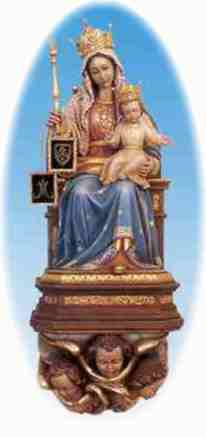
The ASSUMPTION of the BLESSED VIRGIN MARY
(† ca. 57 A.D.)


Spiritual Bouquet: Ask, and you shall receive, that your joy may be full. St. John 16:24

On this great feast day the Church commemorates the happy departure from mortal life of the Blessed Virgin Mary, and Her translation into the kingdom of Her Son, where He crowned Her with immortal glory and enthroned Her above all the other Saints and heavenly spirits.

After the triumphant Conqueror of hell and death ascended into heaven, His blessed Mother had remained at Jerusalem, persevering in prayer with the disciples, until She received with them the Holy Ghost. She desired to assist the Church in its beginnings, and Her prayer was granted. It is generally believed that She lived for a good many years, until the age of 72 or 73. This supposition is based on the fact that Saint Dennis the Areopagite, who was converted by Saint Paul in the year 54, visited Her not long afterward, according to his own narration. That account is judged authentic by reliable authorities, among them Saint Thomas Aquinas. Finally She paid voluntarily the debt of fallen human nature to God, although like Adam at his creation, She was entirely innocent and exempt from the penalty of the painful separation of soul and body incurred by death. She might have been transported alive to Heaven, but chose instead to die, as Her Son also had chosen to die. If the death of the Saints is called a sweet sleep, how much more does the Dormition of the Queen of Saints, exempt from all sin, merit that name?

It is a traditional belief of the Holy Church that the body of the Blessed Virgin was raised up by God on the third day, and introduced at once into glory by a singular privilege. The Assumption of the Blessed Virgin Mary is the consummation of the other great mysteries by which Her life was supremely admirable; it is Her true birthday and the crowning of all Her incomparable virtues which we admire singly in Her other festivals.

Reflection:
While we contemplate in profound sentiments of veneration, astonishment, and praise, the glory to which Mary is raised by Her triumph on this day, we ought, for our own advantage, to consider by what means She arrived at this sublime degree of honor and happiness, that we may walk in Her footsteps as God intends. For Mary is imitable in Her daily life. The same path which conducted Her to glory will lead us there; we shall be sharers of Her reward if we imitate Her virtues. Let us ask ourselves in all situations what She might have done, and act accordingly.

Source: Little Pictorial Lives of the Saints, a compilation based on Butler’s Lives of the Saints and other sources by John Gilmary Shea (Benziger Brothers: New York, 1894).
Read whole post......

Monday, August 14, 2006

St John of the Cross "Dark night of the soul" - CHAPTER VIII

Wherein is expounded the first line of the first stanza, and a beginning is made of the explanation of this dark night.


THIS night, which, as we say, is contemplation, produces in spiritual persons two kinds of darkness or purgation, corresponding to the two parts of man's nature—namely, the sensual and the spiritual. And thus the one night or purgation will be sensual, wherein the soul is purged according to sense, which is subdued to the spirit; and the other is a night or purgation which is spiritual, wherein the soul is purged and stripped according to the spirit, and subdued and made ready for the union of love with God. The night of sense is common and comes to many: these are the beginners; and of this night we shall speak first. The night of the spirit is the portion of very few, and these are they that are already practised and proficient, of whom we shall treat hereafter.
2. The first purgation or night is bitter and terrible to sense, as we shall now show. The second bears no comparison with it, for it is horrible and awful to the spirit, as we shall show presently. Since the night of sense is first in order and comes first, we shall first of all say something about it briefly, since more is written of it, as of a thing that is more common; and we shall pass on to treat more fully of the spiritual night, since very little has been said of this, either in speech or in writing, and very little is known of it, even by experience.
3. Since, then, the conduct of these beginners upon the way of God is ignoble, and has much to do with their love of self and their own inclinations, as has been explained above, God desires to lead them farther. He seeks to bring them out of that ignoble kind of love to a higher degree of love for Him, to free them from the ignoble exercises of sense and meditation (wherewith, as we have said, they go seeking God so unworthily and in so many ways that are unbefitting), and to lead them to a kind of spiritual exercise wherein they can commune with Him more abundantly and are freed more completely from imperfections. For they have now had practice for some time in the way of virtue and have persevered in meditation and prayer, whereby, through the sweetness and pleasure that they have found therein, they have lost their love of the things of the world and have gained some degree of spiritual strength in God; this has enabled them to some extent to refrain from creature desires, so that for God's sake they are now able to suffer a light burden and a little aridity without turning back to a time which they found more pleasant. When they are going about these spiritual exercises with the greatest delight and pleasure, and when they believe that the sun of Divine favour is shining most brightly upon them, God turns all this light of theirs into darkness, and shuts against them the door and the source of the sweet spiritual water which they were tasting in God whensoever and for as long as they desired. (For, as they were weak and tender, there was no door closed to them, as Saint John says in the Apocalypse, iii, 8). And thus He leaves them so completely in the dark that they know not whither to go with their sensible imagination and meditation; for they cannot advance a step in meditation, as they were wont to do afore time, their inward senses being submerged in this night, and left with such dryness that not only do they experience no pleasure and consolation in the spiritual things and good exercises wherein they were wont to find their delights and pleasures, but instead, on the contrary, they find insipidity and bitterness in the said things. For, as I have said, God now sees that they have grown a little, and are becoming strong enough to lay aside their swaddling clothes and be taken from the gentle breast; so He sets them down from His arms and teaches them to walk on their own feet; which they feel to be very strange, for everything seems to be going wrong with them.
4. To recollected persons this commonly happens sooner after their beginnings than to others, inasmuch as they are freer from occasions of backsliding, and their desires turn more quickly from the things of the world, which is necessary if they are to begin to enter this blessed night of sense. Ordinarily no great time passes after their beginnings before they begin to enter this night of sense; and the great majority of them do in fact enter it, for they will generally be seen to fall into these aridities.
5. With regard to this way of purgation of the senses, since it is so common, we might here adduce a great number of quotations from Divine Scripture, where many passages relating to it are continually found, particularly in the Psalms and the Prophets. However, I do not wish to spend time upon these, for he who knows not how to look for them there will find the common experience of this purgation to be sufficient. Read whole post......
Sunday, August 13, 2006

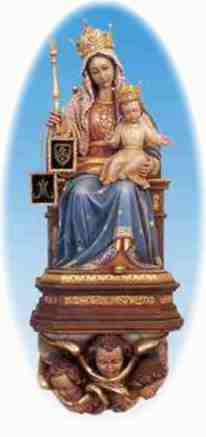
THE DORMITION of MARY, MOTHER OF OUR LORD (First Century)

Spiritual Bouquet:
You shall weep and lament, but the world shall rejoice; and you shall be sorrowful, but your sorrow shall be turned into joy. (St. John 16:20 )

Father Bourdaloue, a famous preacher of the 17th century French court, said in a sermon on the Assumption: “Never was there a death more precious in the sight of God than that of the Virgin, because there was never a life more filled with merits than Hers. The death of the Blessed Virgin was precious not only by the merits which preceded it, but also by the graces and favors which accompanied it. But what made it precious in God’s sight is above all the dispositions of mind and heart with which She received it... What then was Her disposition of mind? She envisaged death in the light of the purest faith, as the fulfillment of her wishes, as the means of being promptly reunited with Her Son and Her God, whose absence had for so long been a source of sorrow for Her. Her disposition of heart? Seeing death in this light, She desired it with all the ardor of the most fervent charity. Far more fervently than Saint Paul She longed to be disengaged from the bonds of the flesh, to live with Jesus Christ...”

The bishop of Meaux, Bossuet, preaches in the same vein: “If the great Apostle wants to break the bonds of the flesh to go to meet his Master at the Father’s right hand, what must the emotion of a maternal heart be? ... And what regret had the Virgin not experienced, seeing Herself separated for so long from a Son whom She loved as She alone could love? ... She prayed, ‘Ah, my Lord! permit my love to act! It will soon detach my soul from my mortal body, and transport me to You, in whom alone I live.’ If you believe me, holy souls, you will not labor long to seek any other cause for Her death. This love, so ardent, so strong, so inflamed, could not utter a single sigh incapable of breaking all the bonds of that body; it did not send forth a single desire to heaven which did not take with it the soul of Mary. Ah! I said earlier that the death of Mary was miraculous; now I speak a little differently, and say that it is not so much Her death that is a miracle; Her death is rather the cessation of a miracle. The continuous miracle was that Mary could live, separated from Her Beloved.”

We see from these texts why the departure of the soul of Our Lady is not termed a “death” like that of other mortals, but rather a “dormition” — a “falling asleep in the Lord”, as the early Christians called it. (Cf. Acts 7:60). All writers on the subject are unanimous — it was Her supreme love for God, nothing else, which was its cause. Tradition affirms that She knew in advance that Her departure was at hand, and prepared with incredible fervor for the holy moment, when She would hear the voice of Her Son say: “Come to Your eternal repose, O blessed Mother: arise and come, You who are My Heart’s friend, the most beautiful of women. The winter is over, the springtime begins; come, My all-beautiful one, My beloved; there is no stain in You; I prefer Your perfumes to all others.”

Source: Somme des Grandeurs de Marie, by Abbé Z.-C. Jourdain (H. Walzer: Paris, 1900), Vol. II.
Read whole post......

Saturday, August 12, 2006

St John of the Cross "Dark night of the soul" - CHAPTER VII

Of imperfections with respect to spiritual envy and sloth.


WITH respect likewise to the other two vices, which are spiritual envy and sloth, these beginners fail not to have many imperfections. For, with respect to envy, many of them are wont to experience movements of displeasure at the spiritual good of others, which cause them a certain sensible grief at being outstripped upon this road, so that they would prefer not to hear others praised; for they become displeased at others' virtues and sometimes they cannot refrain from contradicting what is said in praise of them, depreciating it as far as they can; and their annoyance thereat grows because the same is not said of them, for they would fain be preferred in everything. All this is clean contrary to charity, which, as Saint Paul says, rejoices in goodness. And, if charity has any envy, it is a holy envy, comprising grief at not having the virtues of others, yet also joy because others have them, and delight when others outstrip us in the service of God, wherein we ourselves are so remiss.
2. With respect also to spiritual sloth, beginners are apt to be irked by the things that are most spiritual, from which they flee because these things are incompatible with sensible pleasure. For, as they are so much accustomed to sweetness in spiritual things, they are wearied by things in which they find no sweetness. If once they failed to find in prayer the satisfaction which their taste required (and after all it is well that God should take it from them to prove them), they would prefer not to return to it: sometimes they leave it; at other times they continue it unwillingly. And thus because of this sloth they abandon the way of perfection (which is the way of the negation of their will and pleasure for God's sake) for the pleasure and sweetness of their own will, which they aim at satisfying in this way rather than the will of God.
3. And many of these would have God will that which they themselves will, and are fretful at having to will that which He wills, and find it repugnant to accommodate their will to that of God. Hence it happens to them that oftentimes they think that that wherein they find not their own will and pleasure is not the will of God; and that, on the other hand, when they themselves find satisfaction, God is satisfied. Thus they measure God by themselves and not themselves by God, acting quite contrarily to that which He Himself taught in the Gospel, saying: That he who should lose his will for His sake, the same should gain it; and he who should desire to gain it, the same should lose it.
4. These persons likewise find it irksome when they are commanded to do that wherein they take no pleasure. Because they aim at spiritual sweetness and consolation, they are too weak to have the fortitude and bear the trials of perfection. They resemble those who are softly nurtured and who run fretfully away from everything that is hard, and take offense at the Cross, wherein consist the delights of the spirit. The more spiritual a thing is, the more irksome they find it, for, as they seek to go about spiritual matters with complete freedom and according to the inclination of their will, it causes them great sorrow and repugnance to enter upon the narrow way, which, says Christ, is the way of life.
5. Let it suffice here to have described these imperfections, among the many to be found in the lives of those that are in this first state of beginners, so that it may be seen how greatly they need God to set them in the state of proficients. This He does by bringing them into the dark night whereof we now speak; wherein He weans them from the breasts of these sweetnesses and pleasures, gives them pure aridities and inward darkness, takes from them all these irrelevances and puerilities, and by very different means causes them to win the virtues. For, however assiduously the beginner practises the mortification in himself of all these actions and passions of his, he can never completely succeed—very far from it—until God shall work it in him passively by means of the purgation of the said night. Of this I would fain speak in some way that may be profitable; may God, then, be pleased to give me His Divine light, because this is very needful in a night that is so dark and a matter that is so difficult to describe and to expound.
The line, then, is:

In a dark night. Read whole post......
SAINT CLARE OF ASSISI Foundress and Abbess (1194-1253)

Spiritual Bouquet:
If they have persecuted Me, they will persecute you also; if they have kept My word, they will keep yours also. St. John 15:20

On Palm Sunday, March 19, 1212, a maiden eighteen years of age left her rich and noble family to retire for her reception as a religious to the little church of the Portiuncula. This maiden was Saint Clare. Already she had learned from Saint Francis to scorn the world, and was secretly resolved to live for God alone. There she was met by Saint Francis and his brethren, and at the altar of Our Lady, Saint Francis cut off her hair, clothed her in the habit of penance, a piece of sackcloth, with a cord as a cincture. Thus was she espoused to Christ. Saint Francis placed her for the moment in a Benedictine convent.

It was in a tiny house outside Assisi that she founded her Order. Two weeks after Clare’s consecration, her sister Agnes left home secretly to go to join her, at the age of fourteen years. Agnes succeeded in her intention, despite their father’s strong opposition and a convoy of twelve men who attempted to take her back home by force. While Clare prayed in the convent, Agnes became so heavy they were unable to move her. Later their mother and other noble ladies joined them. They went barefoot, observed perpetual abstinence, constant silence, and perfect poverty.

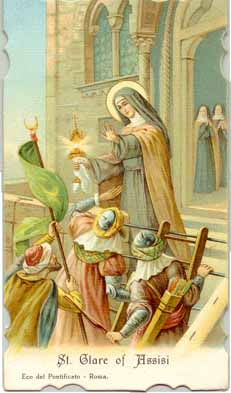
Saint Clare is celebrated for a miracle which occurred when the Saracen army of Frederick II was ravaging the valley of Spoleto. A legion of infidels advanced to assault the convent outside Assisi. The Saint, who was ill in the infirmary, rose and went, supported by her religious, to the door of the convent; there she had the Blessed Sacrament placed in a monstrance above the gate of the monastery facing the enemy. She knelt before it and prayed, “Deliver not to beasts, O Lord, the souls of those who confess Your Name!” A voice from the Host replied, “My protection will never fail you.” A sudden panic seized the infidel army, which took flight; and the Saint’s convent was spared.

Although Saint Clare herself never left her monastery of Saint Damian, her Order spread in many places not only in Europe but elsewhere, and some four thousand convents, divided into several branches, shelter her disciples. Many Saints have come from these, especially from the groups which have maintained the original absolute poverty of her Constitutions. The Sisters of the original Order live by charity, and their convents possess nothing. Saint Clare died in 1253, as the Passion was being read, and Our Lady and the Angels conducted her to glory.

Sources: Les Petits Bollandistes: Vies des Saints, by Msgr. Paul Guérin (Bloud et Barral: Paris, 1882), Vol. 9; Little Pictorial Lives of the Saints, a compilation based on Butler’s Lives of the Saints and other sources by John Gilmary Shea (Benziger Brothers: New York, 1894).

after www.magnificat.ca

Prayer in honour of St Clare

O Blessed Clare
you were a "light" in your day,
radiating the joy and peace
of knowing Jesus.

Be a light to us on our
journey. Gently lead us
to that deep and lasting
union with our Divine Lover.

Help us to put our complete
trust in the One
who loves us,
so that we too may pour out
our lives in service.

Gracious Clare,
teach us your way
of openess and gratitude
to every gift of God.

St Clare's Monastery in Duncan, B.C.

affter www.franciscancards.com Read whole post......

Friday, August 11, 2006

SCRIPTURE CORNER

LOVE OF THE COUNTRY FOR THE LOVE OF GOD


And when he drew near, seeing the city, he wept over it. Luke 19, 41.

To the Greeks and to the barbarians to the wise and to the unwise, I am a debtor; Rom 1, 14

Render therefore to Caesars the things that are Caesars, and to God, the things that are God's. Matt 22, 21

For there is no distinction of the Jew and the Greek: for the same is Lord over all, rich unto all that call upon him. Rom 10, 12

This is meritorious to love the country of our birth, but with God and for God, any form of nationalism though must to be avoided. Read whole post......