Monday, August 07, 2006

St John of the Cross "Dark night of the soul" - CHAPTER V

Of the imperfections into which beginners fall with respect to the sin of wrath.


BY reason of the concupiscence which many beginners have for spiritual consolations, their experience of these consolations is very commonly accompanied by many imperfections proceeding from the sin of wrath; for, when their delight and pleasure in spiritual things come to an end, they naturally become embittered, and bear that lack of sweetness which they have to suffer with a bad grace, which affects all that they do; and they very easily become irritated over the smallest matter—sometimes, indeed, none can tolerate them. This frequently happens after they have been very pleasantly recollected in prayer according to sense; when their pleasure and delight therein come to an end, their nature is naturally vexed and disappointed, just as is the child when they take it from the breast of which it was enjoying the sweetness. There is no sin in this natural vexation, when it is not permitted to indulge itself, but only imperfection, which must be purged by the aridity and severity of the dark night.
2. There are other of these spiritual persons, again, who fall into another kind of spiritual wrath: this happens when they become irritated at the sins of others, and keep watch on those others with a sort of uneasy zeal. At times the impulse comes to them to reprove them angrily, and occasionally they go so far as to indulge it and set themselves up as masters of virtue. All this is contrary to spiritual meekness.
3. There are others who are vexed with themselves when they observe their own imperfectness, and display an impatience that is not humility; so impatient are they about this that they would fain be saints in a day. Many of these persons purpose to accomplish a great deal and make grand resolutions; yet, as they are not humble and have no misgivings about themselves, the more resolutions they make, the greater is their fall and the greater their annoyance, since they have not the patience to wait for that which God will give them when it pleases Him; this likewise is contrary to the spiritual meekness aforementioned, which cannot be wholly remedied save by the purgation of the dark night. Some souls, on the other hand, are so patient as regards the progress which they desire that God would gladly see them less so. Read whole post......
SCRIPTURE CORNER

TOWARDS HOLINESS

As children of obedience, not fashioned according to the former desires of your ignorance: But accordingly to him that hath called you, who is holy, be you also [in all manner of conversation] holy. 1 Pt 1, 14.

As he chose us in him before the foundation of the world, that we should be holy and unspotted in his sight in charity. Eph 1, 4

There shall not enter into it any thing defiled, or that worketh abomination or make a lie, but they that are written in the book of life of the Lamb. Rev 21, 27

This is the will of God our sanctification and because of this, it is possible to achieve. Read whole post......
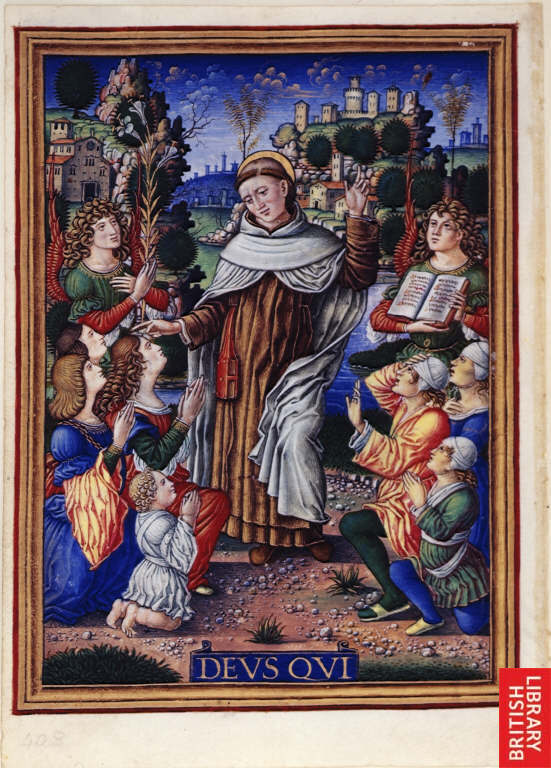
St ALBERT OF TRAPANI
Carmelite Friar, 1307

Carmelite hermit and missionary. He was born in Trapani, Sicily, and joined the Carmelite Order. After ordination, he was sent to nearby Messina, where he gathered thousands with his preaching and miracles. After serving as a missionary, Albert entered a monastic hermitage near Messina. He remained there until his death.
after http://www.catholic.org/saints/

Let us pray.
Lord God,
you made St. Albert of Trapani
a model of purity and prayer,
and a devoted servant of Our Lady.
May we practise these same virtues
and so be worthy always
to share the banquet of your grace.
We ask this through Christ our Lord.
Amen
prayer after www.carmelite.org


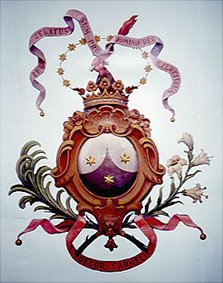
THE FRESCO OF SAINT ALBERT OF TRAPANI

It is a large fresco depicted on 1471, where s. Albert is surrounded by fourteen medallions of carmelite saints. Above, on the left: the Archangel Gabriel at the Annunciation; below st. Veronica (1472). Above, on the right our Lady at the Annunciation; below, st. Sebastian (1472)

after http://www.santuariodelcarmine-sanfelice.it/l_inglese/art.asp?Argomento=710&Id_Rec=245 Read whole post......

Sunday, August 06, 2006

SCRIPTURE CORNER

TOWARDS HOLINESS

For in many things we all offend. Jas 3,2

For he knoweth our frame. He remembereth that we are dust. Ps 102,14

For there is no just man upon earth, that doth good, and sinneth not. Ecc 7:21

peace to men of good will. Lk 2,14

We all can be saints and we must be. It is nothing extraordinary, it does not depend on excessive mortifications, fasts, penances, night vigils and long prayers. It is very simple, it is faithful following the rules of christian life in utmost simplicity for God and with God. Let us look at and follow the example of the greatest saints: the Most Holy Family living in the little house in Nazareth. All we need is a good will. Read whole post......

Saturday, August 05, 2006

SCRIPTURE CORNER

TOWARDS HOLINESS

"Good master, what good shall I do that I may have life everlasting?" (Mt 19, 16)

"And let the just feast, and rejoice before God" (Ps 67, 4)

"I must not return, nor go with thee". (3 Kings 13, 16)

"Blessed be the man that trusteth in the Lord, and the Lord shall be his confidence". (Jr 17, 7)

Holy fear of God is good for the soul but in complete trust in His mercy avoiding unreasonable scruples and worries.
Read whole post......
The DEDICATION of SAINT MARY of the SNOWS (435)

Spiritual Bouquet: Greater love than this no one has, that one lays down his life for his friends. St. John 15:13

There are in Rome three patriarchal churches in which, on different feast days, the Pope officiates. These are the Basilicas of Saint Peter on the Vatican Hill, Saint John Lateran, and Saint Mary Major on the Esquiline Hill. The last-named, the Liberian Basilica, was founded in the time of Pope Liberius, in the fourth century; it was consecrated to the Virgin Mary by Sixtus III in the year 435, under the title of Saint Mary ad Nives, or at the snow, because the Mother of God Herself chose, and indicated by a miracle, its site to be that of Her first church in Rome.

In the fourth century a patrician by the name of John and his pious spouse had no children; already advanced in age and without heirs, they resolved to consecrate their wealth to the Most Blessed Virgin. They prayed in order to know how the Queen of Heaven would like them to use their fortune. On August 5, 366, She appeared to each of them in a dream and told them that Her Divine Son’s and Her own will was that their wealth be employed in the construction of a church on Mount Esquiline, at a place which in the morning they would find covered with snow. They consulted together when the dawn broke, and went to the Pope at once to tell him what God had made known to them. He himself had had a similar dream and could not doubt that this was a celestial prodigy. He assembled the clergy and people, and all went in procession towards the indicated place, to verify the reality of the marvel. When they arrived on the hilltop, they saw an area covered with snow, extending over a space sufficient to build a vast church. It was built at the expense of the noble couple with great magnificence, and given the name of Saint Mary of the Snows.

The same Basilica is sometimes entitled Saint Mary ad Praesepe, of the Manger, from the holy crib or manger of Bethlehem, in which the Infant Jesus was laid at His birth. It was transported to Rome and kept in a sumptuous subterranean chapel of the church. Today this Basilica bears the name of Saint Mary Major, because it is, both by its beauty and its antiquity, the first of the numerous Roman churches dedicated to Mary.

Sources: Little Pictorial Lives of the Saints, a compilation based on Butler’s Lives of the Saints and other sources by John Gilmary Shea (Benziger Brothers: New York, 1894); Lives of the Saints for Every Day of the Year (Reprint of the work of John Gilmary Shea, with Appendix including recently canonized Saints) (Benziger Brothers: New York, 1955).

after www.magnificat.ca

The picture depicts Our Lady of the Snows and St Fransis of Assisi Read whole post......

Friday, August 04, 2006

SCRIPTURE CORNER

ON THE IMITATION OF CHRIST

If any man minister to me, let him follow me; and where I am, there also shall my minister be. If any man minister to me, him will my Father honour. Jn 12, 26

Jesus said to him: I am the way, and the truth, and the life. No man cometh to the Father, but by me. Jn 14,6

This things I have spoken to you, that in me you may have peace. In the world you shal have distress: but have confidence, I have overcome the world. Jn 16, 33

Let not your heart be troubled. You believe in God, believe also in me. Jn 14,1 Read whole post......
CHAPTER IV part two

"Dark night of the soul" by St John of the Cross

4. The third source whence these impure motions are apt to proceed in order to make war upon the soul is often the fear which such persons have conceived for these impure representations and motions. Something that they see or say or think brings them to their mind, and this makes them afraid, so that they suffer from them through no fault of their own.
5. There are also certain souls of so tender and frail a nature that, when there comes to them some spiritual consolation or some grace in prayer, the spirit of luxury is with them immediately, inebriating and delighting their sensual nature in such manner that it is as if they were plunged into the enjoyment and pleasure of this sin; and the enjoyment remains, together with the consolation, passively, and sometimes they are able to see that certain impure and unruly acts have taken place. The reason for this is that, since these natures are, as I say, frail and tender, their humours are stirred up and their blood is excited at the least disturbance. And hence come these motions; and the same thing happens to such souls when they are enkindled with anger or suffer any disturbance or grief.
6. Sometimes, again, there arises within these spiritual persons, whether they be speaking or performing spiritual actions, a certain vigour and bravado, through their having regard to persons who are present, and before these persons they display a certain kind of vain gratification. This also arises from luxury of spirit, after the manner wherein we here understand it, which is accompanied as a rule by complacency in the will.
7. Some of these persons make friendships of a spiritual kind with others, which oftentimes arise from luxury and not from spirituality; this may be known to be the case when the remembrance of that friendship causes not the remembrance and love of God to grow, but occasions remorse of conscience. For, when the friendship is purely spiritual, the love of God grows with it; and the more the soul remembers it, the more it remembers the love of God, and the greater the desire it has for God; so that, as the one grows, the other grows also. For the spirit of God has this property, that it increases good by adding to it more good, inasmuch as there is likeness and conformity between them. But, when this love arises from the vice of sensuality aforementioned, it produces the contrary effects; for the more the one grows, the more the other decreases, and the remembrance of it likewise. If that sensual love grows, it will at once be observed that the soul's love of God is becoming colder, and that it is forgetting Him as it remembers that love; there comes to it, too, a certain remorse of conscience. And, on the other hand, if the love of God grows in the soul, that other love becomes cold and is forgotten; for, as the two are contrary to one another, not only does the one not aid the other, but the one which predominates quenches and confounds the other, and becomes strengthened in itself, as the philosophers say. Wherefore Our Saviour said in the Gospel: 'That which is born of the flesh is flesh, and that which is born of the Spirit is spirit.' That is to say, the love which is born of sensuality ends in sensuality, and that which is of the spirit ends in the spirit of God and causes it to grow. This is the difference that exists between these two kinds of love, whereby we may know them.
8. When the soul enters the dark night, it brings these kinds of love under control. It strengthens and purifies the one, namely that which is according to God; and the other it removes and brings to an end; and in the beginning it causes both to be lost sight of, as we shall say hereafter. Read whole post......
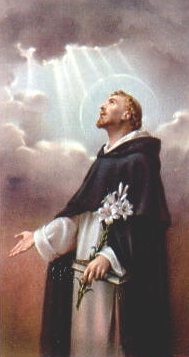
SAINT DOMINIC Founder(1170-1221)

Spiritual Bouquet: These things I have spoken to you that My joy may be in you, and that your joy may be made full. St. John 15:11

Saint Dominic de Guzman was born in Spain in 1170. As a student, he sold his books to feed the poor during a famine, and offered himself to ransom a slave. At the age of twenty-five, after taking the religious habit he became acting Superior of the Canons Regular of Saint Augustine in Osma, and was soon offered an episcopal chair at Compostella. He answered as afterward he also answered many times: “God has not sent me to be a bishop, but to preach.” He accompanied his prelate to southern France on a commission for the king of Castille. There his heart was well-nigh broken by the ravages of the Albigensian heresy, a variant of ancient Manicheanism, and the source of devastating wars in southern France. His life from that time on was devoted to the conversion of heretics and the defense of the Faith.

In the year 1199, while he was still a Canon Regular of Saint Augustine and was preaching near the Spanish coasts, he was taken captive, with all his audience and a Brother in religion, by a band of pirates. They placed the prisoners in their galleys at the oars. When a furious storm broke, the young Saint exhorted the disciples of Mohammed to think seriously of their souls, to open their eyes to the truth of Christianity, and above all, to invoke the Mother of God. They did not listen until his third exhortation, at a moment when it was clear the ship and passengers could not be saved. They swore to him then that if the God of Christians preserved them by the intercession of His Holy Mother, they would dedicate themselves to their service. Immediately the storm ceased, and the pirates kept their word.

When in his 46th year, and with six companions, he began the great Order of Preaching Friars, this Order with that of the Friars Minor, founded by his contemporary friend Saint Francis of Assisi, was the chief means God employed to renew Christian fervor during the Middle Ages. In addition, Saint Dominic founded his Second Order for nuns for the education of Catholic girls, and his Third Order, or Tertiaries, for persons of both sexes living in the world. God abundantly blessed the new Order, and France, Italy, Spain, and England welcomed the Preaching Friars. Our Lady took them under Her special protection. During a debate with the heretics, a book by the Saint, defending Her Immaculate Conception, was thrown into the flames along with one by the heretics, to see whether one might be spared. Saint Dominic’s was not injured, and many heretics were converted.

It was in 1208, while Saint Dominic knelt in the little chapel of Notre Dame de La Prouille, and implored the great Mother of God to save the Church, that Our Lady appeared to him and gave him the Rosary, bidding him to go forth and preach it. During the famous battles in southern France against the Albigensians, with his rosary in hand he revived the courage of the Catholic armies, led them to victory against overwhelming numbers, and finally subdued the heresy. His nights were spent in prayer; and, though all beheld him as an Angel of purity, before morning broke he would scourge himself to blood. His words rescued countless souls, and three times raised the dead to life. At length, on August 6, 1221, at the age of fifty-one, he gave up his soul to God.

Reflection: “God has never refused me what I have asked,” said Saint Dominic. How could God refuse to respond to the single intention of His Saints, which is His own — the salvation and sanctification of souls? Saint Dominic has left us the Rosary that we may learn, with Mary’s help, to ask what pleases God, and then to pray easily and simply with the same trust.

Sources: Les plus illustres captifs, by Rev. Fr. Calixte de la Providence, Trinitarian (Delhomme et Briguet: Lyons, 1892), Vol. I; Little Pictorial Lives of the Saints, a compilation based on Butler’s Lives of the Saints and other sources by John Gilmary Shea (Benziger Brothers: New York, 1894).

after www.magnificat.ca
Read whole post......

Thursday, August 03, 2006

SCRIPTURE CORNER

Topic: Imitation of Christ

For my yoke is sweet and my burden is light. Mt 11, 30

[on the practice of virtue and mortifications]The disciple is not above the master, nor the servant above his lord. It is enough for the disciple that he be as his master, and the servant as his lord. Mt 10, 24, 25

[on detachment] So likewise every one of you that doth not renounce all that he possesseth, cannot be my disciples. Lk 14,33

because I go to prepare a place for you, and if I shall go, and prepare a place for you, I will come again, and will take you to myself; that where I am, you also may be. Jn 14,2,3 Read whole post......
CHAPTER IV part one
"Dark Night of the Soul" by St. John of the Cross

Of other imperfections which these beginners are apt to have with respect to the third sin, which is luxury.

MANY of these beginners have many other imperfections than those which I am describing with respect to each of the deadly sins, but these I set aside, in order to avoid prolixity, touching upon a few of the most important, which are, as it were, the origin and cause of the rest. And thus, with respect to this sin of luxury (leaving apart the falling of spiritual persons into this sin, since my intent is to treat of the imperfections which have to be purged by the dark night), they have many imperfections which might be described as spiritual luxury, not because they are so, but because the imperfections proceed from spiritual things. For it often comes to pass that, in their very spiritual exercises, when they are powerless to prevent it, there arise and assert themselves in the sensual part of the soul impure acts and motions, and sometimes this happens even when the spirit is deep in prayer, or engaged in the Sacrament of Penance or in the Eucharist. These things are not, as I say, in their power; they proceed from one of three causes.
2. The first cause from which they often proceed is the pleasure which human nature takes in spiritual things. For when the spirit and the sense are pleased, every part of a man is moved by that pleasure to delight according to its proportion and nature. For then the spirit, which is the higher part, is moved to pleasure and delight in God; and the sensual nature, which is the lower part, is moved to pleasure and delight of the senses, because it cannot possess and lay hold upon aught else, and it therefore lays hold upon that which comes nearest to itself, which is the impure and sensual. Thus it comes to pass that the soul is in deep prayer with God according to the spirit, and, on the other hand, according to sense it is passively conscious, not without great displeasure, of rebellions and motions and acts of the senses, which often happens in Communion, for when the soul receives joy and comfort in this act of love, because this Lord bestows it (since it is to that end that He gives Himself), the sensual nature takes that which is its own likewise, as we have said, after its manner. Now as, after all, these two parts are combined in one individual, they ordinarily both participate in that which one of them receives, each after its manner; for, as the philosopher says, everything that is received is in the recipient after the manner of the same recipient. And thus, in these beginnings, and even when the soul has made some progress, its sensual part, being imperfect, oftentimes receives the Spirit of God with the same imperfection. Now when this sensual part is renewed by the purgation of the dark night which we shall describe, it no longer has these weaknesses; for it is no longer this part that receives aught, but rather it is itself received into the Spirit. And thus it then has everything after the manner of the Spirit.
3. The second cause whence these rebellions sometimes proceed is the devil, who, in order to disquiet and disturb the soul, at times when it is at prayer or is striving to pray, contrives to stir up these motions of impurity in its nature; and if the soul gives heed to any of these, they cause it great harm. For through fear of these not only do persons become lax in prayer—which is the aim of the devil when he begins to strive with them—but some give up prayer altogether, because they think that these things attack them more during that exercise than apart from it, which is true, since the devil attacks them then more than at other times, so that they may give up spiritual exercises. And not only so, but he succeeds in portraying to them very vividly things that are most foul and impure, and at times are very closely related to certain spiritual things and persons that are of profit to their souls, in order to terrify them and make them fearful; so that those who are affected by this dare not even look at anything or meditate upon anything, because they immediately encounter this temptation. And upon those who are inclined to melancholy this acts with such effect that they become greatly to be pitied since they are suffering so sadly; for this trial reaches such a point in certain persons, when they have this evil humour, that they believe it to be clear that the devil is ever present with them and that they have no power to prevent this, although some of these persons can prevent his attack by dint of great effort and labour. When these impurities attack such souls through the medium of melancholy, they are not as a rule freed from them until they have been cured of that kind of humour, unless the dark night has entered the soul, and rids them of all impurities, one after another. Read whole post......
Wednesday, August 02, 2006

Today opens the SCRIPTURE CORNER
with topics for daily reflections under the patronage of Our Lady of Mount Carmel

PERSONAL SANCTIFICATION

For this is the will of God, your sanctification. 1Thes 4,3

Be you therefore perfect, as also your heavenly Father is perfect. Mt 5, 48

[The Lord spoke to Moses, saying]: Speak to all the congregation of the children of Israel, and thou shalt say to them: Be you holy, because I the Lord your God am holy. Leviticus 19,2

for it is written: You shall be holy, for I am holy. 1Peter 1, 16

As he chose us in him before the foundation of the world, that we should be holy and unspotted in his sight in charity. Ephesians 1,4

and he that is holy, let him be sanctified still. Rev 22,11

[of heaven] There shall not enter into it any thing defiled, or that worketh abomination or maketh a lie, but they that are written in the book of the Lamb. Rev 21, 27 Read whole post......
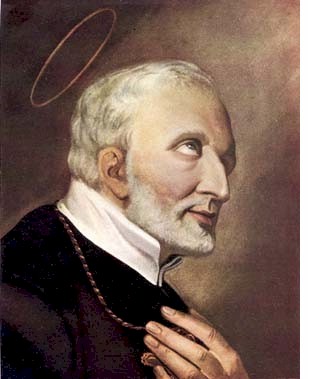
SAINT ALPHONSUS LIGUORI
Bishop and Doctor of the Church (1696-1787)

Spiritual Bouquet: As the Father has loved Me, I also have loved you. St. John 15:9

Saint Alphonsus was born of noble parents near Naples, in 1696. His spiritual formation was entrusted to the Oratorian Fathers of that city, and from his boyhood Alphonsus was known as a very devout little Brother of the Minor Oratory. At the early age of sixteen he became a doctor in civil law; and entering this career with ardor, he met great success and renown. A mistake, however, by which he lost an important case, showed him the vanity of human fame and glory. He decided to abandon the legal profession at the age of twenty-seven, to labor for the glory of God alone. Alphonsus’ father long opposed his decision, but as a man of virtue consented at last.

Saint Alphonsus was ordained a priest in 1726, and he soon became as renowned a preacher as he had been a lawyer. His father stopped in a church to pray one day, and amazed, heard his son preaching; he suddenly saw clearly how God had marvelously elevated his son, and was filled with joy, saying: “My son has made God known to me!” As for Alphonsus, he loved and devoted himself to the most neglected souls in the region of Naples. He was a very perfect confessor, and wrote a manual which has been used ever since for the instruction of those who administer the sacrament of Penance. A musician of the first rank, Saint Alphonsus gave up his instruments to devote himself more perfectly to his apostolic labors; he nonetheless composed joyous religious hymns for the poor folk he heard singing in the streets, that they might glorify God and not waste their voices and efforts in vain and worldly songs.

To extend and continue his work, he later founded the missionary Congregation of the Most Holy Redeemer, for the evangelization of the poor. At the age of sixty-six he became Bishop of Saint Agatha, a suffragan diocese of Naples, and undertook the reform of his diocese with the zeal of a Saint. He made a vow never to waste a moment of time, and, though his life was spent in prayer and work, he also composed a vast number of books. These volumes were filled with such great science, unction, and wisdom that in 1871 he was declared by Pius IX a Doctor of the Church. Saint Alphonsus wrote his first book at the age of forty-nine, and in his eighty-third year had published about sixty volumes; at that time his director forbade him to continue writing. The best known of his books is his volume entitled “The Glories of Mary”, by which he exalts the graces and narrates the wondrous deeds of mercy of the Mother of God for those who invoke Her.

Very many of these books were written in the half hours snatched from his labors as a missionary, as a religious Superior, and finally as a Bishop, often in the midst of unrelenting bodily and mental sufferings. With his left hand he would hold a piece of marble against his aching head, while his right hand wrote. Yet he counted no time lost which was spent in charity. He did not refuse to maintain a long correspondence with a simple soldier who asked for his advice, or to play the harpsichord in his declining years, while he taught his novices to sing spiritual canticles. He lived in times of religious laxity, and met with many persecutions and disappointments. During his last seven years he was prevented by constant sickness from offering the adorable Sacrifice, but he received Holy Communion daily, and his love for Jesus Christ and his trust in Mary’s prayers sustained him to the end. He died in 1787, in his ninety-first year.

Reflection: Let us do with all our heart and attention the duty of each day, leaving to God the result as well as the care of the future.

Source: Little Pictorial Lives of the Saints, a compilation based on Butler’s Lives of the Saints and other sources by John Gilmary Shea (Benziger Brothers: New York, 1894).

after www.magnificat.ca

Chapter from the work of St Alphonsus "Uniformity to God's will"

2. Uniformity in all Things.

The essence of perfection is to embrace the will of God in all things,prosperous or adverse. In prosperity, even sinners find it easy to unite themselves to the divine will; but it takes saints to unite themselves to God's will when things go wrong and are painful to self-love. Our conduct in such instances is the measure of our love of God. St. John of Avila used to say: One Blessed be God in times of adversity, is worth more than a thousand acts of gratitude in times of prosperity [20].Furthermore, we must unite ourselves to God's will not only in things that come to us directly from his hands, such as sickness, desolation, poverty, death of relatives, but likewise in those we suffer from man for example, contempt, injustice, loss of reputation, loss of temporal goods and all kinds of persecution. On these occasions we must remember that whilst God does not will the sin, he does will our humiliation, our poverty, or our mortification, as the case may be. It is certain and of faith, that whatever happens, happens by the will of God: I am the Lord forming the light and creating the darkness, making peace and creating evil [21].From God come all things, good as well as evil. We call adversities evil; actually they are good and meritorious, when we receive them as coming from God's hands: Shall there be evil in a city which the Lord hath not done [22]? Good things and evil, life and death, poverty and riches are from God [23]. It is true, when one offends us unjustly, God does not will his sin, nor does he concur in the sinners bad will; but God does, in a general way, concur in the material action by which such a one strikes us, robs us or does us an injury, so that God certainly wills the offense we suffer and it comes to us from his hands. Thus the Lord told David he would be the author of those things he would suffer at the hands of Absalom: I will raise up evils against thee out of thy own house, and I will take thy wives before thy face and give them to thy neighbor [24] . Hence too God told the Jews that in punishment for their sins, he would send the Assyrians to plunder them and spread destruction among them: The Assyrian is the rod and staff of my anger. I will send him to take away the spoils [25] . Assyrian wickedness served as God's scourge for the Hebrews [26] is St. Augustine's comment on this text. And our Lord himself told St. Peter that his sacred passion came not so much from man as from his Father: The chalice which my Father hath given me, shall I not drink it [27]? When the messenger came to announce to Job that the Sabeans had plundered his goods and slain his children, he said: The Lord gave and the Lord taketh away [28]. He did not say: The Lord hath given me my children and my possessions, and the Sabeans have taken them away. He realized that adversity had come upon him by the will of God. Therefore he added: As it hath pleased the Lord, so is it done. Blessed be the name of the Lord [29]. We must not therefore consider the afflictions that come upon us as happening by chance or solely from the malice of men; we should be convinced that what happens, happens by the will of God. Apropos of this it is related that two martyrs, Epictetus and Atho, being put to the torture by having their bodies raked with iron hooks and burnt with flaming torches, kept repeating: Work thy will upon us, O Lord. Arrived at the place of execution, they exclaimed: Eternal God, be thou blessed in that thy will has been entirely accomplished in us [30]. Cesarius points up what we have been saying by offering this incident in the life of a certain monk: Externally his religious observance was the same as that of the other monks, but he had attained such sanctity that the mere touch of his garments healed the sick. Marveling at these deeds, since his life was no more exemplary than the lives of the other monks, the superior asked him one day what was the cause of these miracles. He replied that he too was mystified and was at a loss how to account for such happenings. What devotions do you practice? asked the abbot. He answered that there was little or nothing special that he did beyond making a great deal of willing only what God willed, and that God had given him the grace of abandoning his will totally to the will of God. Prosperity does not lift me up, nor adversity cast me down, added the monk. I direct all my prayers to the end that God's will may be done fully in me and by me.That raid that our enemies made against the monastery the other day, in which our stores were plundered, our granaries put to the torch and our cattle driven off did not this misfortune cause you any resentment? queried the abbot. No, Father, came the reply. On the contrary, I returned thanks to God's is my custom in such circumstances fully persuaded that God does all things, or permits all that happens, for his glory and for our greater good; thus I am always at peace, no matter what happens. Seeing such uniformity with the will of God, the abbot no longer wondered why the monk worked so many miracles [31] .


_________________________________________________________________

[20] St. John Avil. Letters 41.

[21] Isaias 45:6, 7.

[22] Amos, 3:6.

[23] Eccli. 11:14.

[24] 2 Kings, 12:11.

[25] Isaias, 10:5, 6.

[26] St. Aug. in Ps. 73.

[27] St. John, 18:11.

[28] Job. 1:21.

[29] Ibid.

[30] ML (Vitae Patrum) 73-402, etc.

[31] Caesarius: Dial. distin. 10: cap. 9.
_________________________________________________________________
Read whole post......

Tuesday, August 01, 2006

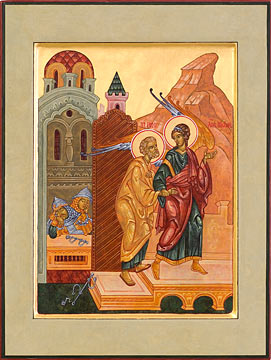
SAINT PETER'S CHAINS (44 A.D.)

Spiritual Bouquet: In this is My Father glorified, that you bear much fruit. St. John 15:8

In the year 44 King Herod Agrippa, after putting to death Saint James, son of Zebedee, was still avid for popular approval by the Jews. He had Saint Peter cast into prison, intending to put him to death publicly after the Passover; but the entire Church of Jerusalem was offering up prayers to God “without ceasing” (Acts 12:5) for the deliverance of the Chief Pastor of His flock, and God heard them favorably.

The king had taken all possible precautions to prevent the escape of his prisoner. He was guarded day and night by sixteen soldiers, four of whom kept sentry duty in turn — two in the same dungeon with him, and two at the gate. Saint Peter was fastened to the ground by two chains, and a soldier watched on either side of him. He lay fast asleep on the very night before the day fixed for his execution, when it pleased God to deliver him out of the hands of his enemies. In the middle of the night, a bright light shone in the prison, and an Angel appeared beside him. He woke him from his sleep and bade him instantly rise, fasten his cincture, put on his sandals and cloak, and follow him. The Apostle did so, for the chains had fallen off his wrists. Following his heavenly guide, he passed after him through the first and second watches, and when they arrived at the iron gate which led into the city, that gate opened before them of its own accord. The Angel conducted him through one street, then, suddenly disappearing, left him to seek refuge.

The Apostle went directly to the house of Mary, mother of John Mark, where several disciples were assembled and sending up their prayers to heaven for his deliverance. As he stood knocking, a young woman who had been sent to the door, hearing Peter’s voice, ran back in joy and informed the group that their Pastor was at the door. They paid no attention to her, saying she was beside herself, or that it was probably his Guardian Angel. But the knocking continued until they opened the door, and Saint Peter, entering, told them of his miraculous escape. Having enjoined them to notify the rest of the brethren, he departed to regions of greater security, carrying wherever he went the divine blessing and life.

Reflection: This miracle clearly confirms the divine promise, “If two of you consent upon earth about anything at all for which they ask, it shall be done for them by My Father in heaven.” (Matt. 18:19)

Sources: New Testament, Acts of the Apostles, Chapter 12; Little Pictorial Lives of the Saints, a compilation based on Butler’s Lives of the Saints and other sources by John Gilmary Shea (Benziger Brothers: New York, 1894).

after www.magnificat.ca Read whole post......

Monday, July 31, 2006

SAINT IGNATIUS of LOYOLA Founder of the Society of Jesus (1491-1556)

Spiritual Bouquet: He who abides in Me, and I in him, bears much fruit; for without Me, you can do nothing. St. John 15:5

Saint Ignatius was born at Loyola in Spain, in the year 1491. He served his king as a courtier and a soldier until his thirtieth year. At that time a cannon ball broke the right leg of the young officer, who in a few days had reached the brink of death and received the Last Sacraments. It was the eve of the feast day of Saint Peter and Saint Paul; he fell asleep afterwards and believed he saw Saint Peter in a dream, restoring him to health by touching his wound. When he woke, his high fever was gone and he was out of danger, although lame. To pass the time of his convalescence after three operations, he asked for books; the Life of Christ and lives of the Saints were brought to him. He read them distractedly at first, then with profound emotion. He underwent a violent combat, but finally grace won out. He began to treat his body with the utmost rigor and rose every night to weep over his sins. One night, he consecrated himself to the Saviour through the intercession of Our Lady, Refuge of Sinners, swearing inviolable fidelity to the Son and His Mother. Not long afterwards, to fortify him in his good resolutions, Mary appeared to him surrounded by light, holding in Her arms the Child Jesus. His heart purified by this vision, Ignatius made a general confession and a pilgrimage to Montserrat, to venerate a miraculous image of the Mother of God and implore Her protection, then bought a rude long habit for the pilgrimage he was planning to make to Jerusalem. He set out on foot, wearing only one sandal for his lame leg. He spent some time at Manreza caring for the sick and undertaking a life of austerity equaled only by the most celebrated anchorites. Living by alms, fasting on bread and water, wearing a hair shirt, he remained kneeling every day for six or seven hours in prayer. The devil made vain efforts to discourage him. He fell ill, however, and was carried to the hospital from the cavern where he was staying. It was only out of obedience to his director at Montserrat that he ceased his extreme penance, and found again, through his obedience, the peace of soul he had lost. At Manreza he composed his famous Spiritual Exercises for retreatants, which ever since have brought to grace and fervor great numbers of souls. After a journey to Rome and other points of pilgrimage in Italy, he embarked for the Holy Land. He wished to remain there to work for the conversion of souls, but was commanded by the enlightened Provincial of the Franciscans, under obedience, to return to Europe. He was then thirty-three years old. Ignatius had already won certain Spanish compatriots to join him in the service of God; it was for them that he had composed the Exercises. With them he undertook studies for several years, and at the end of that time had four companions. He taught catechism while at Alcala, and virtually reformed the entire youth of that city. In 1528, when he was already 37 years old, he went to Paris to study in the greatest poverty, eating his meals at a hospital with the poor. He was persecuted when he converted a number of young persons. It was in Paris, with six young companions, that at Montmartre the Society of Jesus was founded. They made a vow to go to Jerusalem in absolute poverty, or if this proved impossible, which it did, to go to Rome to the Vicar of Christ, and place themselves at his disposition for the service of the Church and the salvation of souls. Our Lord promised Saint Ignatius that the precious heritage of His Passion would never be lacking to his Society. By this term, heritage, the Saviour referred to the contradictions and persecutions the just must always face. Founded to combat error, the Company of Jesus has always had to bear the fury of those who favor it. When Saint Ignatius was cast into prison at Salamanca on suspicion of heresy, he said to a friend who expressed his sympathy, “It is a sign that you have little love of Christ in your heart, or you would not deem it so hard a fate to be in chains for His sake. All Salamanca does not contain as many fetters, manacles, and chains as I would gladly wear for love of Jesus Christ.” Saint Ignatius went to receive his crown on July 31, 1556.

Reflection: Ask Saint Ignatius to obtain for you the grace to desire ardently the greater glory of God, even though it may cost you much suffering and humiliation.

Sources: Little Pictorial Lives of the Saints, a compilation based on Butler’s Lives of the Saints, and other sources by John Gilmary Shea (Benziger Brothers: New York, 1894); Les Petits Bollandistes: Vies des Saints, by Msgr. Paul Guérin (Bloud et Barral: Paris, 1882), Vol. 9; Vie des Saints pour tous les jours de l’année, by Abbé L. Jaud (Mame: Tours, 1950). Read whole post......

Sunday, July 30, 2006

EIGHT SUNDAY AFTER PENTECOST
"Our riches" fragments from "Divine Intimacy" by Fr Gabriel of St Mary Magdalen OCD

PRESENCE OF GOD-Teach me, O Lord, to be a faithful, wise administrator of Your goods

MEDITATION
2. Today's Gospel (Lk 16, 1-9) teaches us by means of a parable - which at first sight seems a little disconcerting - how to be wise in administering the great riches of our life of grace. When Jesus spoke this parable, He certainly had no intention of praising the conduct of the "unjust" stewart who, after wasting his master's goods during his whole stewardship, continued to steal even when he learned that he was to be discharged. However, Jesus did praise him for the clever way he made sure of his own future. The lesson of the parable hinges on this point: "The children of this world are wiser in their generation than the children of light. And I say to you: make unto your friends of the mammon of iniquity; that when you shall fall, they may receive you into everlasting dwellings." Jesus exhorts the "children of light" not to be less shrewd in providing for their eternal interests than the "children of darkness" are in assuring for themselves the goods of earth.
We also, like the stewart in the parable, have received from God a patrimony to administer, that is, our natural gifts, and more particularly, our supernatural gifts, and all the graces, holy inspirations, and promptings to good which God has bestowed upon us. The hour for rendering an account will come for us too, and we shall have to admit that we have often been unfaithful in trafficking with the gifts of God, in making the treasures of grace fructify in our soul. How can we atone for our infidelities? This is the moment to put into practice the teaching of the parable by which, as St. Augustine says, "God admonishes all of us to use earthly goods to make friends for ourselves among the poor. They, in turn, becoming the friends of their benefactors, will be the cause of their admission into heaven." In other words, we must pay our debts to God by charity toward our neighbour, for Sacred Scripture tells us, "Charity covereth a multitude of sins" (1 Pt 4,8). This does not mean material charity alone, but also spiritual charity and not in great things only, but in little ones too - yes, even in the very least things, such as a glass of water given for the love of God. These little acts of charity, which are always within our power, are the riches by which we pay our debts and put in order "our stewardship".

COLLOQUY
....Bestow Your gifts on me, O Lord our God, so that made rich by You, I may serve and please You, and every day return thanks to You for all that Your mercy has done for me. I cannot serve You or please You without making use of Your own gifts to me" (cf. St. Augustine). Read whole post......

Saturday, July 29, 2006

SAINT MARTHA Virgin (†84)

Spiritual Bouquet: Every branch that bears fruit My Father will cleanse, that it may bear more fruit. St. John 15:2

Saint John tells us that Jesus loved Martha and Mary and Lazarus (John 11:5), but only a few glimpses are vouchsafed us of them in the Gospels. First, the sisters are set before us: Martha received Jesus into her house, and was busy in outward, loving, lavish service, while Mary sat in silence at the feet she had bathed with her tears. Then we learn that their brother is ill when they send word to Jesus concerning their brother Lazarus, “Lord, he whom Thou lovest is sick.” (John 11:3) In His own time the Lord came, and they went out to meet Him; then follows that scene of unutterable tenderness and of sublimity unsurpassed: the silent mourning of Mary; Martha strong in faith, but realizing so vividly, with her practical turn of mind, the fact of death, and hesitating: “Lord, by this time he is already decayed! He has been dead four days.”

And then once again, on the eve of His Passion, we see Jesus at Bethany, with His resurrected disciple. Martha, true to her character, is serving; Mary, as at first, pours the precious ointment, in adoration and love, on His divine head, as a preliminary to His burial. (John 12:1-4) We do not hear of the beloved family again in the Scriptures, but tradition tells us that when the storm of persecution came, the family of Bethany, with a few companions, were put into a boat without oars or sail, and borne miraculously to the coast of France. Martha assembled a holy company of women, with whom she lived in great austerity of life and admirable sanctity at Tarascon where her tomb is venerated. Saint Mary’s tomb is at La Sainte-Baume; Saint Lazarus is venerated as the founder of the Church of Marseilles. It is this family which brought to France the relics of Saint Anne.

Sources: Little Pictorial Lives of the Saints, a compilation based on Butler’s Lives of the Saints, and other sources by John Gilmary Shea (Benziger Brothers: New York, 1894); Les Petits Bollandistes: Vies des Saints, by Msgr. Paul Guérin (Bloud et Barral: Paris, 1882), Vol. 9.

after www.magnificat.ca Read whole post......

Friday, July 28, 2006

Of some imperfections which some of these souls are apt to have, with respect to the second capital sin, which is avarice, in the spiritual sense.
chapter III, "Dark night of the soul" by St. John of the Cross

MANY of these beginners have also at times great spiritual avarice. They will be found to be discontented with the spirituality which God gives them; and they are very disconsolate and querulous because they find not in spiritual things the consolation that they would desire. Many can never have enough of listening to counsels and learning spiritual precepts, and of possessing and reading many books which treat of this matter, and they spend their time on all these things rather than on works of mortification and the perfecting of the inward poverty of spirit which should be theirs. Furthermore, they burden themselves with images and rosaries which are very curious; now they put down one, now take up another; now they change about, now change back again; now they want this kind of thing, now that, preferring one kind of cross to another, because it is more curious. And others you will see adorned with agnusdeis and relics and tokens, like children with trinkets. Here I condemn the attachment of the heart, and the affection which they have for the nature, multitude and curiosity of these things, inasmuch as it is quite contrary to poverty of spirit which considers only the substance of devotion, makes use only of what suffices for that end and grows weary of this other kind of multiplicity and curiosity. For true devotion must issue from the heart, and consist in the truth and substances alone of what is represented by spiritual things; all the rest is affection and attachment proceeding from imperfection; and in order that one may pass to any kind of perfection it is necessary for such desires to be killed.
2. I knew a person who for more than ten years made use of a cross roughly formed from a branch that had been blessed, fastened with a pin twisted round it; he had never ceased using it, and he always carried it about with him until I took it from him; and this was a person of no small sense and understanding. And I saw another who said his prayers using beads that were made of bones from the spine of a fish; his devotion was certainly no less precious on that account in the sight of God, for it is clear that these things carried no devotion in their workmanship or value. Those, then, who start from these beginnings and make good progress attach themselves to no visible instruments, nor do they burden themselves with such, nor desire to know more than is necessary in order that they may act well; for they set their eyes only on being right with God and on pleasing Him, and therein consists their covetousness. And thus with great generosity they give away all that they have, and delight to know that they have it not, for God's sake and for charity to their neighbour, no matter whether these be spiritual things or temporal. For, as I say, they set their eyes only upon the reality of interior perfection, which is to give pleasure to God and in naught to give pleasure to themselves.
3. But neither from these imperfections nor from those others can the soul be perfectly purified until God brings it into the passive purgation of that dark night whereof we shall speak presently. It befits the soul, however, to contrive to labour, in so far as it can, on its own account, to the end that it may purge and perfect itself, and thus may merit being taken by God into that Divine care wherein it becomes healed of all things that it was unable of itself to cure. Because, however greatly the soul itself labours, it cannot actively purify itself so as to be in the least degree prepared for the Divine union of perfection of love, if God takes not its hand and purges it not in that dark fire, in the way and manner that we have to describe. Read whole post......

Thursday, July 27, 2006

Of certain spiritual imperfections which beginners have with respect to the habit of pride
part two after "Dark night of the soul" by St John of the Cross

5. Some of these beginners, too, make little of their faults, and at other times become over-sad when they see themselves fall into them, thinking themselves to have been saints already; and thus they become angry and impatient with themselves, which is another imperfection. Often they beseech God, with great yearnings, that He will take from them their imperfections and faults, but they do this that they may find themselves at peace, and may not be troubled by them, rather than for God's sake; not realizing that, if He should take their imperfections from them, they would probably become prouder and more presumptuous still. They dislike praising others and love to be praised themselves; sometimes they seek out such praise. Herein they are like the foolish virgins, who, when their lamps could not be lit, sought oil from others.
6. From these imperfections some souls go on to develop many very grave ones, which do them great harm. But some have fewer and some more, and some, only the first motions thereof or little beyond these; and there are hardly any such beginners who, at the time of these signs of fervour, fall not into some of these errors. But those who at this time are going on to perfection proceed very differently and with quite another temper of spirit; for they progress by means of humility and are greatly edified, not only thinking naught of their own affairs, but having very little satisfaction with themselves; they consider all others as far better, and usually have a holy envy of them, and an eagerness to serve God as they do. For the greater is their fervour, and the more numerous are the works that they perform, and the greater is the pleasure that they take in them, as they progress in humility, the more do they realize how much God deserves of them, and how little is all that they do for His sake; and thus, the more they do, the less are they satisfied. So much would they gladly do from charity and love for Him, that all they do seems to them naught; and so greatly are they importuned, occupied and absorbed by this loving anxiety that they never notice what others do or do not; or if they do notice it, they always believe, as I say, that all others are far better than they themselves. Wherefore, holding themselves as of little worth, they are anxious that others too should thus hold them, and should despise and depreciate that which they do. And further, if men should praise and esteem them, they can in no wise believe what they say; it seems to them strange that anyone should say these good things of them.
7. Together with great tranquillity and humbleness, these souls have a deep desire to be taught by anyone who can bring them profit; they are the complete opposite of those of whom we have spoken above, who would fain be always teaching, and who, when others seem to be teaching them, take the words from their mouths as if they knew them already. These souls, on the other hand, being far from desiring to be the masters of any, are very ready to travel and set out on another road than that which they are actually following, if they be so commanded, because they never think that they are right in anything whatsoever. They rejoice when others are praised; they grieve only because they serve not God like them. They have no desire to speak of the things that they do, because they think so little of them that they are ashamed to speak of them even to their spiritual masters, since they seem to them to be things that merit not being spoken of. They are more anxious to speak of their faults and sins, or that these should be recognized rather than their virtues; and thus they incline to talk of their souls with those who account their actions and their spirituality of little value. This is a characteristic of the spirit which is simple, pure, genuine and very pleasing to God. For as the wise Spirit of God dwells in these humble souls, He moves them and inclines them to keep His treasures secretly within and likewise to cast out from themselves all evil. God gives this grace to the humble, together with the other virtues, even as He denies it to the proud.
8. These souls will give their heart's blood to anyone that serves God, and will help others to serve Him as much as in them lies. The imperfections into which they see themselves fall they bear with humility, meekness of spirit and a loving fear of God, hoping in Him. But souls who in the beginning journey with this kind of perfection are, as I understand, and as has been said, a minority, and very few are those who we can be glad do not fall into the opposite errors. For this reason, as we shall afterwards say, God leads into the dark night those whom He desires to purify from all these imperfections so that He may bring them farther onward. Read whole post......

Tuesday, July 25, 2006

SAINT JAMES the GREATER Apostle Patron of Spain (†44)

Spiritual Bouquet: I will not leave you orphans; I will come to you. St. John 14:18

Among the twelve Apostles, three were chosen to be the close companions of our Blessed Lord, and of these James was one. He, with Peter and John, was admitted to the house of Jairus when his dead child was raised to life (Luke 8:40 ff.); only these three were taken up to the high mountain of Thabor and beheld the face of Jesus shining as the sun, and His garments white as snow (Mark 9:2-7). These three alone witnessed the fearful agony in Gethsemane. (Luke 22:39-45). What was it that won James a place among the favorite three? Faith, burning, impetuous and outspoken, the straightforwardness of the true Israelite, were visible in him; but these qualities needed purifying before the “Son of Thunder” could proclaim the Gospel of peace. It was James who suggested fire from heaven to consume the inhospitable Samaritans, and who sought a place of honor beside Christ in His kingdom. Yet Our Lord, in rebuking his presumption, prophesied his faithfulness unto death. (Mark 10:38-40) He went to Spain after the death of Our Lord, and remained there for nine years, according to tradition. The famous Basilica of Saint James of Compostello, one of the most frequented pilgrimage sites of Europe, the site also of countless miracles, commemorates the memory of the nation’s beloved Apostle. In the year 44 Saint James, who was at that time in Jerusalem, was brought before King Herod Agrippa. The Apostle had been preaching fearlessly there, curing the sick and the blind, and delivering possessed persons. Two magicians were sent by the authorities to stop his doings by their charms, but both were converted. His enemies were not defeated by that, however, and paid two Roman captains to incite a sedition during the Apostle’s preaching, then seize him as its author. A certain Josias, a scribe among the Pharisees, put a cord around his neck and took him before the third Herod, grandson of the first, murderer of the Innocents, and nephew of the second, who had the Baptist decapitated. This new sycophant of the Roman Emperors, desiring to conciliate the Jews and make them forget his non-Jewish origins, decided to do so by persecuting the Christians. Without delay he condemned Saint James to die by the sword. The Apostle’s fearless confession of Jesus crucified so moved the scribe Josias, that he too confessed Christ and begged pardon of the Saint. He was taken with the Apostle to the place of execution, where Saint James and his convert died together. The Apostle won the three crowns of heroism: he is a Doctor par excellence of the Faith, he was the first Apostle to be martyred, and according to Saint Epiphanus and other historians, he always conserved his virginity. He is the patron of Spain. A Spanish author by the name of Tamayo reports fifteen different apparitions of Saint James to the kings and princes of Spain, followed each time by some specific assistance for the benefit of the land.

Reflection: We must all desire a place in the kingdom of our Father; but can we drink the chalice which He holds out to each one of us? Possumus, we must say with Saint James — “We can!” — but only in the strength of Him who drank it first for us.

Sources: Little Pictorial Lives of the Saints, a compilation based on Butler’s Lives of the Saints, and other sources by John Gilmary Shea (Benziger Brothers: New York, 1894); Les Petits Bollandistes: Vies des Saints, by Msgr. Paul Guérin (Bloud et Barral: Paris, 1882), Vol. 9.

after www.magnificat.ca Read whole post......